Free industrial accident cleanup tool
Industrial Accident Cleanup Insurance Claim Organizer
A guided checklist from finding the policy to tracking the carrier decision, with a printable summary of where the claim stands.
Insurance after a serious workplace injury is a puzzle with pieces that do not fit neatly. Workers' compensation covers the employee's injury. But it rarely covers the cost of cleaning the facility. Commercial property coverage may or may not include biohazard cleanup. Often it does only under certain add-ons. A chemical spill can bring in a pollution policy with its own notice rules. Meanwhile, the general liability insurer may want to know about the accident, even if no claim is expected. The organizer walks you through each step. You find the right policies and describe the cause of loss in the words insurers use. You give notice on time, record the damage, get a written plan, and track each insurer's decision.
The tool builds a progress checklist as you go. It creates a printable summary of what you have done and what is still open. It is built for a facility or risk manager who is also planning the restart and cannot let a notice deadline slip. Nothing here predicts what an insurer will decide. The site has no tie to any insurer. Coverage questions belong to your broker and, when the stakes are high, your lawyer. What the organizer offers is structure. When the adjuster calls, you have the policy numbers, the timeline, the photos, and the contractor's plan in one place.
How to use it
- 1Before you start, gather your commercial property, general liability, workers' compensation, and any pollution or environmental policies.
- 2Work through each step. Enter policy details, the cause of loss, and the dates you notified each insurer.
- 3Attach or note the photos, the contractor's plan, and the waste records you have. That way the checklist shows what you actually have.
- 4Print or copy the summary for your broker. Update the tracker as each insurer responds.
Prefer to ask a person?
Your request is sent to the follow-up inbox. A coordinator can reply by email. Not for emergencies; call 911 first if anyone is in danger.
Organize an insurance claim
Industrial Accident Cleanup insurance claim organizer
A checklist to keep the claim orderly. It stores nothing on our servers; copy the summary to your own notes.
0 of 18 steps recorded (0%)
Print or paste the summary into your own records. Coverage is the carrier's decision under the policy; keep every answer in writing.
A worked example
Here is a made-up example. At a metal shop, a press accident killed a worker and left blood and hydraulic fluid across a work area. The owner is dealing with the family, OSHA, and a police hold. She has not thought about insurance beyond workers' compensation. She opens the organizer. The first step prompts her to find the commercial property policy. It asks her to check for wording about biohazard or pollution cleanup, which she asks her broker to confirm. The cause-of-loss step helps her describe the event in words insurers will recognize. It keeps the worker's injury apart from the property damage. The notice step lists each insurer. It asks her to write down when and how she told each one. Because of the hydraulic fluid, she finds that the pollution add-on has a short reporting deadline she nearly missed. The records step reminds her to keep the contractor's photos and product logs. The written plan step creates a request she sends to the cleanup company. Over the next few weeks, she updates the tracker as adjusters respond. The printed summary becomes the cover sheet for the insurance section of the incident file. It saves her from explaining the timeline again on every call.

Numbers behind claim organizer decisions
- 2,888
OSHA issued 2,888 Hazard Communication citations in fiscal 2024, making it the second most-cited standard for the third consecutive year.
Read with care: Preliminary count as of Sept. 5, 2024; state-plan citations excluded.
Source: OSHA (via Safety+Health) (2024)United States federal OSHA citations, FY2024 (Oct 2023-Sep 2024)
- $4,000
Hazmat cleanup projects cost a national average of about $4,000, with a typical range of $3,000 to $5,000 and extremes of $1,500 to $25,000.
Read with care: Cost-guide estimate, not a survey of industrial contracts; large facility incidents can exceed the range.
Source: Fixr (2025)United States, consumer cost guide updated January 2025
- every 3 years
Hazmat employees must receive recurrent DOT training at least once every three years.
Read with care: Records must be kept for the prior three years plus 90 days after employment ends.
Source: DOT PHMSA (49 CFR via Cornell LII) (2024)United States, all hazmat employees
- 29
OSHA approves 29 State Plans, 22 covering private and public workers and 7 covering only state and local government employees.
Read with care: State plans must be at least as effective as federal OSHA but may differ in detail.
Source: OSHA (2024)United States states and territories
These figures are public research and agency data, not this network's own job records. Keep each number with its population, year and limits; none of them predicts cost, timing or outcome at a specific property.
Insurance Claim Organizer questions for industrial accident cleanup
Why does the organizer separate workers' compensation from the property claim?
The two claims have different insurers, adjusters, and purposes. Workers' compensation covers the injured employee's care and wages. Cleaning the facility is a property or pollution matter. Mixing them in one conversation confuses adjusters and can delay both. The tool keeps them side by side. That way you can track notice, records, and decisions for each one, without losing the link between them.
What if I cannot find biohazard language in our property policy?
If the policy does not mention it, that does not settle the question either way. Coverage may exist under a broader section. Or it may be excluded by how the policy defines pollution. Ask your broker to review the full policy and any add-ons. Write their answer in the organizer. Do not assume you are covered, or not covered, based on a quick look at the summary page.
Should I wait for the carrier before hiring a contractor?
Waiting for a coverage decision while a soiled area sits unused usually creates more risk than it prevents. Most policies require you to protect property from more damage. Give notice quickly and record everything. Hire a qualified contractor, and keep the insurer informed about the plan. The organizer helps you show that you acted reasonably if coverage is questioned later.
Does a chemical release always involve a pollution policy?
Not always, but it should always make you ask. Many property policies exclude pollutants. Pollution coverage often has strict notice deadlines. If any process chemical, fuel, or lubricant was part of the accident, note it in the cause-of-loss step. Then ask your broker whether you should also notify a pollution or environmental policy.
Can the summary be used as the insurance section of our incident file?
Yes. The printable summary is designed as a cover sheet. It lists policies, notice dates, papers collected, and open items. Put the actual documents behind it. Auditors and company risk teams like having one page that shows the status of every insurer conversation at a glance. Update it whenever an insurer responds, so the page stays current with the file.
What if the injured person was a contractor rather than our employee?
Note that in the organizer. It changes who handles the injured person's care. It may also bring the contractor's own liability coverage into the talk about cleanup. Write down the contractor company and their insurer contact, if you have it. Also note any agreement between you about who covers which losses or insurance. Your broker can then help figure out which policies may apply, instead of assuming your own property policy stands alone.
How do I record conversations with adjusters in the organizer?
Use the notes area to log the date, the adjuster's name and company, what you asked, what they said, and anything they asked for. Add a line when you send documents, so you can show what was sent and when. Keep entries short and factual. If an adjuster gives an important instruction by phone, such as approval to go ahead, ask them to confirm it by email. Note that as well.
Related community polls
Every count is a real visitor vote; nothing is seeded or padded. One vote per poll per device, and you can change your answer.
After a serious injury on the floor, what was your hardest early decision?
How did your facility handle cleanup after a serious blood incident?
Other industrial accident cleanup tools
Cost Range Estimator
Set the affected area, surface types, severity and extras to see an educational cost range and the factors that move it.
OpenProvider Vetting Checklist
Fifteen questions to ask any remediation provider, a readiness score, and a copyable list of what is still unanswered.
OpenFirst 24 Hours Planner
Tell the planner a few facts about the situation and get an ordered list of who to call, what not to touch, and what to photograph.
OpenWaste & Disposal Classifier
Five questions about the material point to the likely waste category and which authority to confirm the rules with.
OpenDIY or Call a Pro? Risk Check
Eight yes-or-no questions that produce a risk level and explain when professional help is the safer choice.
OpenMore on industrial accident cleanup
Industrial Accident Cleanup services
See how workplace injury cleanup, chemical spill response, equipment cleaning, and confined space work are planned and ordered for plants and job sites.
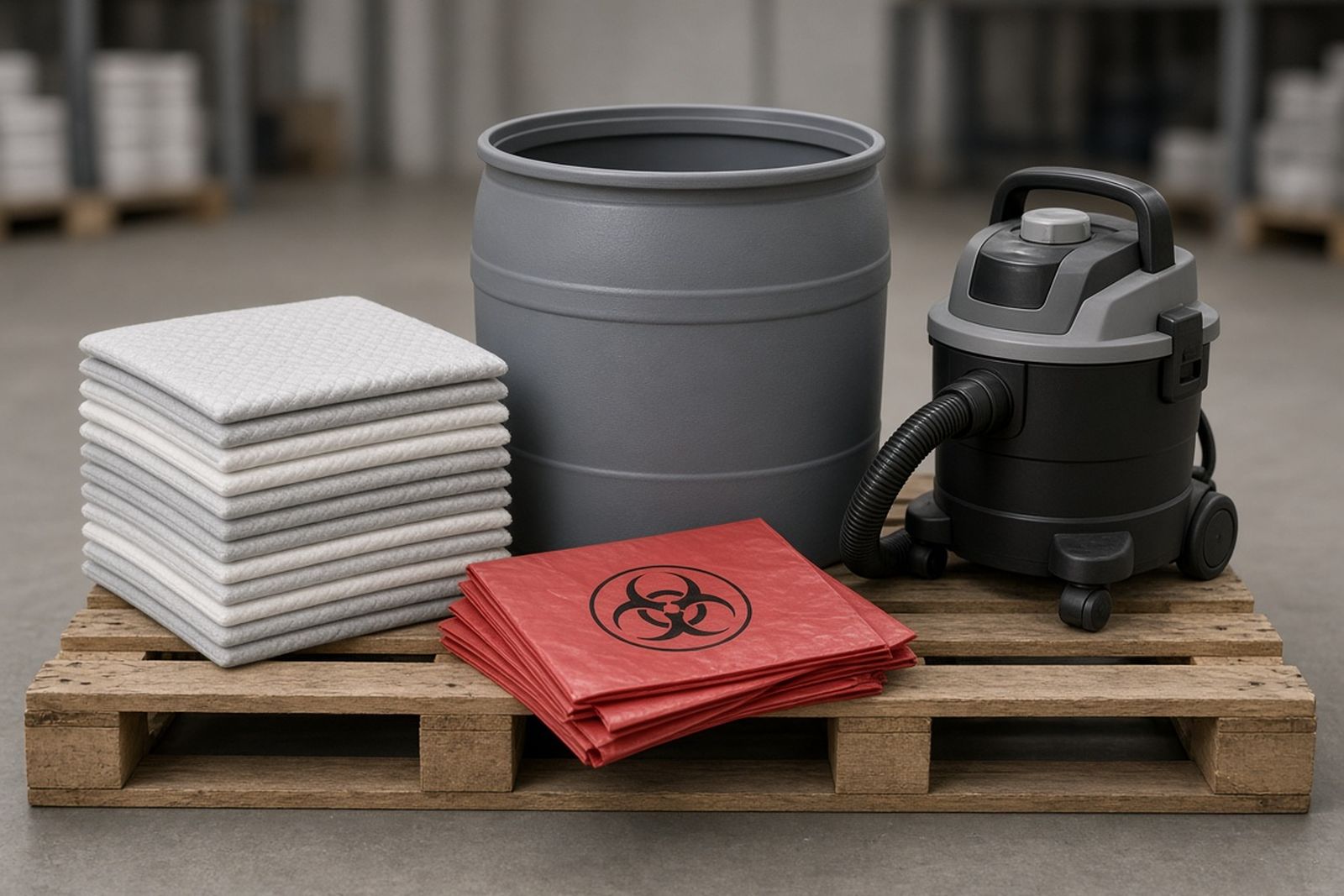
Costs explained
What drives the price, published cost ranges, and how to read a written quote line by line.
Insurance and payment
Which policies may respond, how to document a claim, and what to do if coverage is denied.
Community polls
Compare your instincts with other operations and safety leaders on scene holds, restart pressure, choosing a contractor, and supporting affected workers.
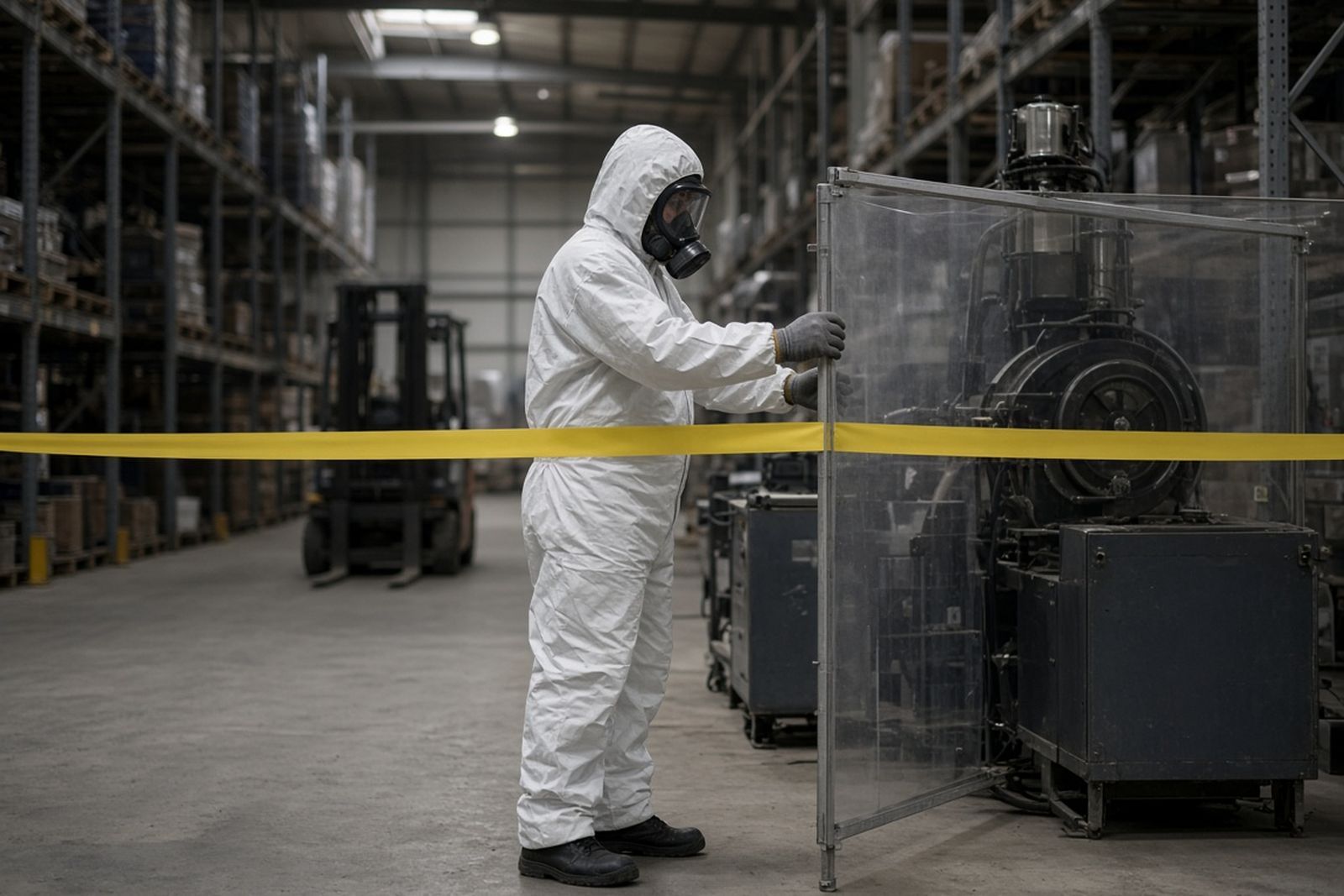
Knowledge quiz
Test what you know about spotting hazards, scene control, sealing off areas, disinfecting, waste paths, and records before an accident puts it to use.
Articles and resources
Practical articles on OSHA report deadlines and working with investigators. Others cover sites shared by several employers, planning the restart, and hard lessons other plants learned.