Industrial Accident Cleanup: Regulations
How to identify the worker-safety, waste, transport, environmental, and local rules that may apply to industrial accident cleanup. Confirm jurisdiction-specific requirements with the issuing authority.
The regulations category helps you sort out which rules apply to an industrial cleanup and who is responsible for each one. Articles explain how OSHA workplace rules shape the work. These include rules on germs carried in blood and on hazardous waste work. Other articles show how state programs and local agencies can add their own rules. Some explain how to research waste sorting when one accident produces both regulated medical waste and chemical residues. They also explain why shipping names and the waste shipping record matter once materials leave your dock. Throughout, the articles point you to the agency that actually governs your location. They do not assume one national answer.
Get an email reply about industrial accident cleanup
Send a short message to the follow-up inbox. A coordinator can reply by email. This form does not send emergency help; call 911 first if anyone is in danger.
Getting the rules right matters because your facility usually stays the official source of the waste and the employer on record. This is true even when a contractor does the hands-on work. So your company may be responsible for disposal paperwork, records, and worker protections long after the crew leaves. Rules vary by state and county. Check with the local authority before assuming a rule does or does not apply. These articles do not replace advice from your compliance team or lawyer. But they help you ask informed questions and spot gaps in a contractor's paperwork. They also explain why some steps cannot be skipped to save time.
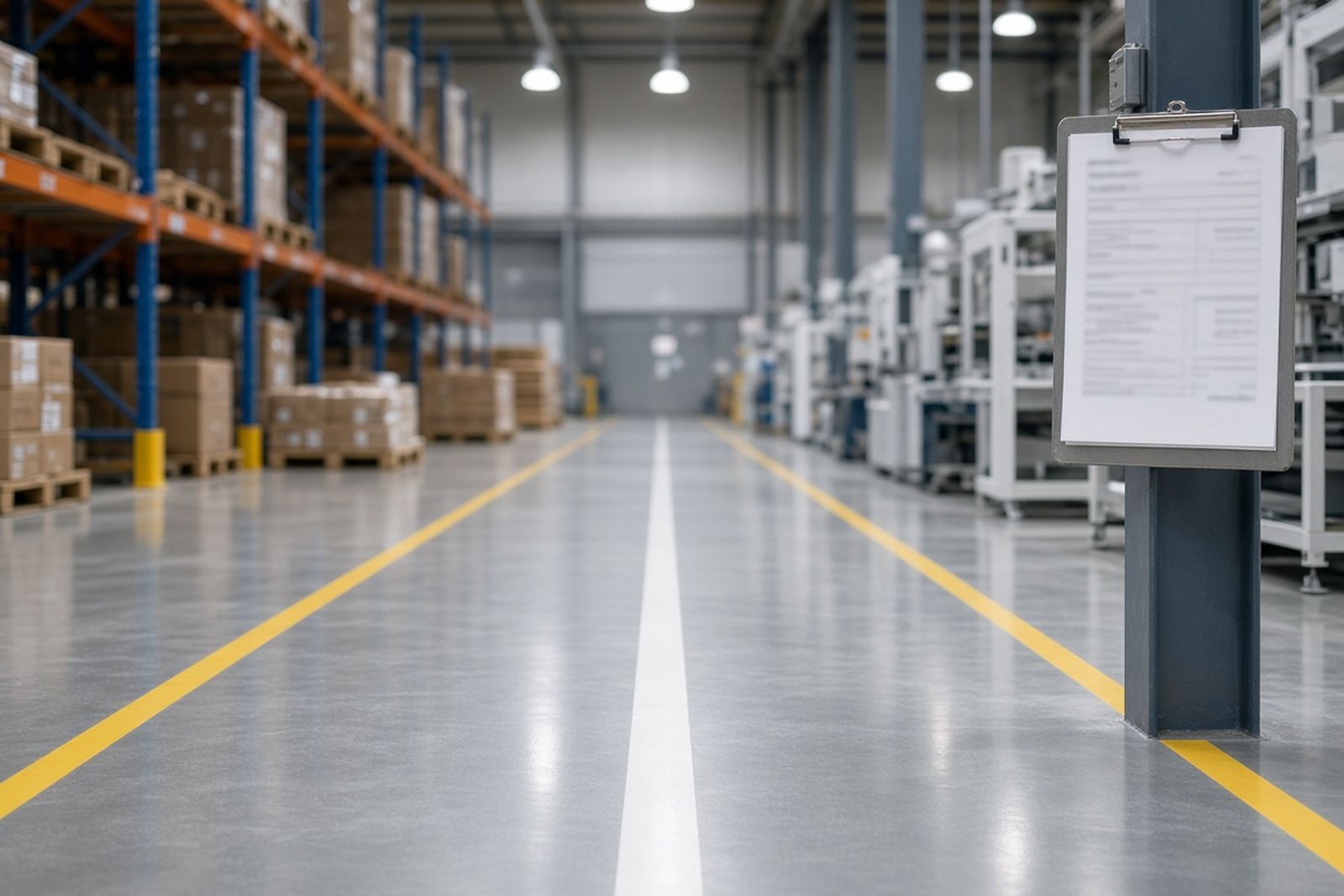
OSHA Regulations and Industrial Accident Cleanup
After a serious injury on the floor, OSHA rules shape who cleans the scene and how. These cover reports, lockout, blood and chemicals.
Several OSHA rules come together after an industrial accident. You must report qualifying injuries under 29 CFR 1904. You must leave the area as it is if investigators ask. And you must lock out equipment, meaning shut off and lock its power, before anyone cleans it. Workers assigned to clean blood fall under the Bloodborne Pathogens standard. Chemical spills may bring duties under chemical safety rules or HAZWOPER. Many plants use trained outside cleanup companies so that production staff are not exposed.
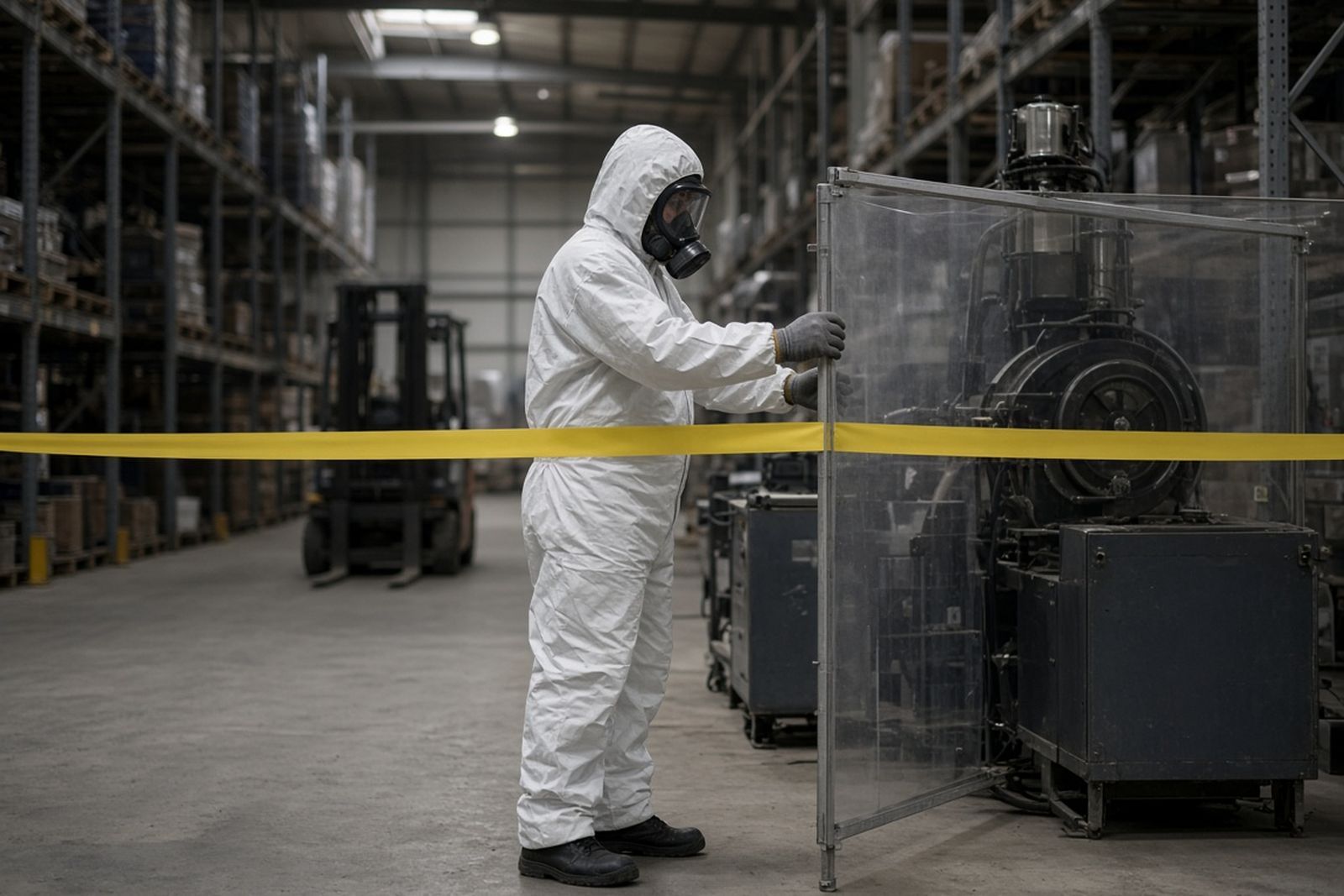
Which Federal, State, and Local Rules Apply to Industrial Accident Cleanup?
After a serious workplace injury, OSHA, environmental, shipping, state and local rules may all apply. Here is how plant managers can map them before cleanup.
Industrial accident cleanup can involve several layers of rules at once. At the federal level, OSHA covers injury reports and worker safety. EPA and the Chemical Safety Board may require reports of chemical releases. DOT sets rules for hauling waste. States add state plans, environmental agencies and medical waste rules. Locally, police, medical examiners, fire departments and sewer utilities may have a say. Map these ahead of time so cleanup does not clash with any of them.
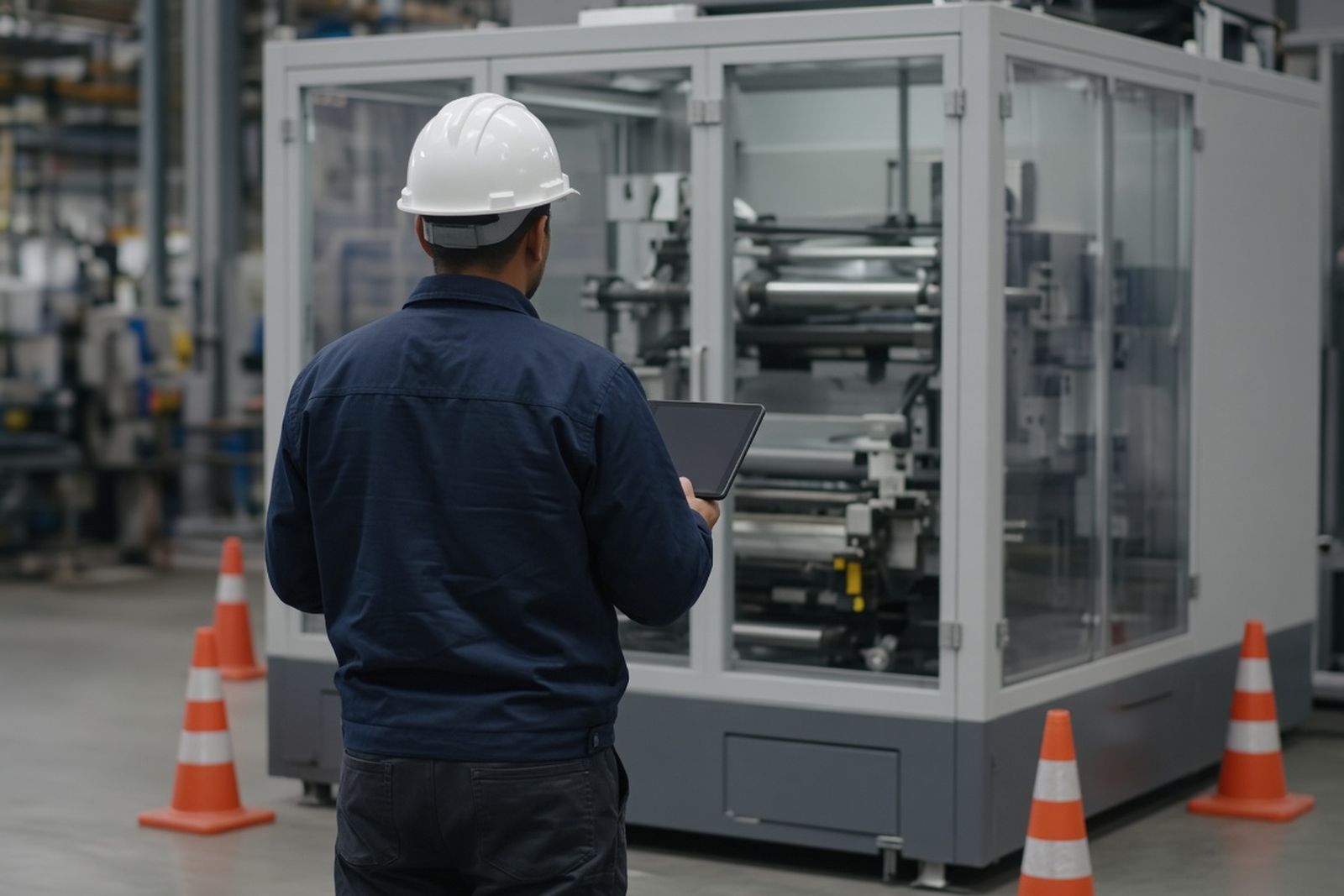
How to Research Waste Rules for Industrial Accident Cleanup
Industrial cleanup waste can mix blood, oils, chemicals, metal bits and wash water. Here is how safety teams look up which rules apply to each kind of waste.
Sort industrial cleanup waste into separate streams before you look up the rules. Materials with blood on them usually fall under state medical waste rules. Materials soaked with oil or chemicals need a hazardous waste decision under EPA's program. That decision depends on your waste-maker status. Wash water is covered by your wastewater permit or your utility. DOT rules apply to shipping. Keep streams apart, write down each decision and confirm with your state environmental agency.
Sourced figures on regulations
- 3.1 per 100 FTE
Waste management and remediation services had a total recordable injury rate of 3.1 cases per 100 full-time workers in 2023.
Read with care: Rate covers all remediation and waste work, not biohazard cleanup specifically.
Source: BLS (2023)United States private industry, NAICS 562, 2023
- 54%
54% of respondents expressing a view considered environmental regulation insufficient.
Read with care: Self-reported behaviour; event-specific communications.
Source: Savoia et al. (2015)690 West Virginia adults surveyed online in February 2014, including affected and unaffected areas.
- 97.9%
97.9% in the nearer zone recalled mercaptan odor versus 77.6% in the farther zone.
Read with care: Reported symptoms and odor; not measured individual exposure doses.
Source: Behbod et al. (2014)204 household representatives surveyed in two distance zones, September 2012.
These figures are public research and agency data, not this network's own job records. Keep each number with its population, year and limits; none of them predicts cost, timing or outcome at a specific property.
What research has found
Findings from published studies of people and properties in situations like this one. They describe what researchers observed in a specific group; they are not predictions for your case.
Different faucets within one home could have different concentrations.
Message-presentation style had little impact in this experiment.
Regulations: common questions
Who is responsible for the waste generated during an industrial cleanup?
In many cases, the facility where the waste came from is treated as the official source of that waste. This is true even if a contractor packs and hauls it. That role can come with duties for sorting it correctly, labeling it, and keeping disposal records. Contracts sometimes hand off tasks. But they may not shift the legal responsibility underneath. Confirm the setup with your environmental staff and the agency that oversees waste in your area.
Do we need to report a workplace injury cleanup to a regulator?
Reporting duties usually depend on the injury itself, the kind of chemical spill, and where you are. They do not usually depend on the cleanup. Your safety and legal teams should review injury records and any required spill reports separately. A cleanup provider can give you paperwork that supports those choices. But it should not tell you that reporting is not needed. Rules vary by state and county, so check locally.
How can we check whether a contractor follows the right disposal rules?
Ask where each type of waste will be treated or disposed of. Ask for copies of the shipping papers when they are issued. Compare the waste descriptions with what was actually removed from your site. A provider should be comfortable naming the receiving site. It should also be able to explain how it chose the waste category. Vague answers about just hauling materials away deserve follow-up before you sign.
Does a cleanup contractor need permits to work in our facility?
That depends on your location, the type of waste, and local rules. Some states or cities require registration or permits to haul certain waste. Ask the contractor which permits or registrations apply to your job, and ask for copies. Your own site permits, such as for wastewater, may also limit what the contractor can do. Check those before the work begins.
Are there rules about how long we can keep incident waste on site?
Often there are. They depend on the waste type, your facility's status, and your state. Medical waste and hazardous waste may each have their own storage rules. Ask your environmental coordinator or the contractor before you plan to hold waste until a routine pickup. Write down when you started collecting it. Keep the containers closed and labeled while you wait.
Who should keep track of regulatory deadlines after an incident?
Assign one person to track reporting deadlines, agency requests, and follow-up promises. This is usually your EHS or environmental lead. Keep a shared calendar or log. Deadlines can come from several agencies at once. Missing one can cause problems even when the response itself was sound. Name a backup for when that person is away. Review the log together at the end of each day.
How do regulations differ between a plant and a construction site?
Construction work often falls under different worker safety rules than general industry. Several employers usually share the site. Waste and environmental rules may also apply differently on temporary sites. Before cleanup starts, make clear who controls the site, who reports, and who handles the waste. Put those answers in writing, since control of the site can shift as a project moves from one stage to the next.
Related community polls
Every count is a real visitor vote; nothing is seeded or padded. One vote per poll per device, and you can change your answer.
After a serious injury on the floor, what was your hardest early decision?
How did your facility handle cleanup after a serious blood incident?
More on industrial accident cleanup
Industrial Accident Cleanup services
See how workplace injury cleanup, chemical spill response, equipment cleaning, and confined space work are planned and ordered for plants and job sites.
Costs explained
What drives the price, published cost ranges, and how to read a written quote line by line.
Insurance and payment
Which policies may respond, how to document a claim, and what to do if coverage is denied.
Planning tools
Planners and checklists built for facility managers. They cover cost ranges, contractor checks, insurance steps, first-day actions, waste sorting, and in-house risk.
Community polls
Compare your instincts with other operations and safety leaders on scene holds, restart pressure, choosing a contractor, and supporting affected workers.
Knowledge quiz
Test what you know about spotting hazards, scene control, sealing off areas, disinfecting, waste paths, and records before an accident puts it to use.