Short answer
Almost never. Industrial accidents happen at businesses or jobsites, and homeowners policies usually leave out business activity. Cleanup after a workplace injury is usually reviewed under the business's commercial property or package policy. Workers' comp handles the hurt worker. Liability coverage handles anyone else who was affected. The narrow exception is home workshops or farms. There, the policy wording and any business add-on decide the answer.
Why is homeowners insurance usually the wrong policy for this?
People look for homeowners coverage after an industrial accident for good reasons. It is the policy most of us know best. After a scary event on the floor, a plant manager or small business owner may just start with what is familiar.
But a homeowners policy is written to protect a home and the belongings of the people who live there. Most policies limit or leave out property used for business. They also limit injuries tied to business activity. A press line, a collapsed warehouse rack or a forklift accident at a warehouse falls squarely in the world of business insurance.
If the accident happened at a business site or a construction site, talk with your company's broker, risk manager or company insurance contact. Do not start with the homeowners insurer of anyone involved.
Policies that usually respond after a workplace injury
An industrial accident usually touches several kinds of coverage at once. Each one is built for a different part of the loss. Knowing the general types helps you send questions to the right people quickly.
Which policy pays for the cleanup itself, and whether any does, depends on your policy wording, add-ons and the insurer's review. Ask your broker to walk you through how your coverage is set up instead of guessing.
- Workers' compensation, which handles the hurt worker's medical care and lost wages under state rules
- Commercial property or a business owner's package policy, which may be reviewed for damage to the building, equipment and stock
- General liability, which may come into play if a visitor, contractor or member of the public was affected
- Equipment breakdown coverage, which some businesses carry for machine failures
- Pollution or environmental coverage, which may matter if the accident released chemicals
- A contractor's or owner's policy on a construction site, where contracts may say who is responsible
How common serious workplace incidents are
Serious accidents are not rare. That is part of why business insurance programs are built the way they are.
The Bureau of Labor Statistics reported that private employers recorded 2.6 million workplace injuries and illnesses that were not fatal in 2023, or 2.4 cases per 100 full-time workers. Many of those events involve blood, body fluids or debris. These must be cleaned before a line or area can go back into use.
That number is national and covers every industry. It is useful for showing the scale of the problem when you talk with leaders about being ready. It is not a way to predict what will happen at your site.
When could a homeowners policy be part of the conversation?
In a few narrow cases, it might be worth asking a homeowners insurer. A serious injury in a detached garage workshop, a farm building or a home-based metal or wood shop can blur the line between home and workplace.
Even then, the answer depends a lot on the facts. Was the activity a hobby or a business? Was there a home business add-on or a separate farm or business policy? Was the hurt person a family member, a friend helping out or a paid worker? Each of those details can change which policy is reviewed.
If you are in one of these gray areas, call your agent. Describe what happened plainly and ask which policy they think applies. Get their answer in writing. Do not start removing evidence or materials on a large scale until you know what the insurer wants to see.
Records to capture before the floor is cleaned
Industrial accident scenes often have more people involved than any other kind of cleanup. OSHA, police, a medical examiner, your own safety team, your insurer and maybe an equipment maker may all want to understand what happened. Once cleanup starts, the physical record changes.
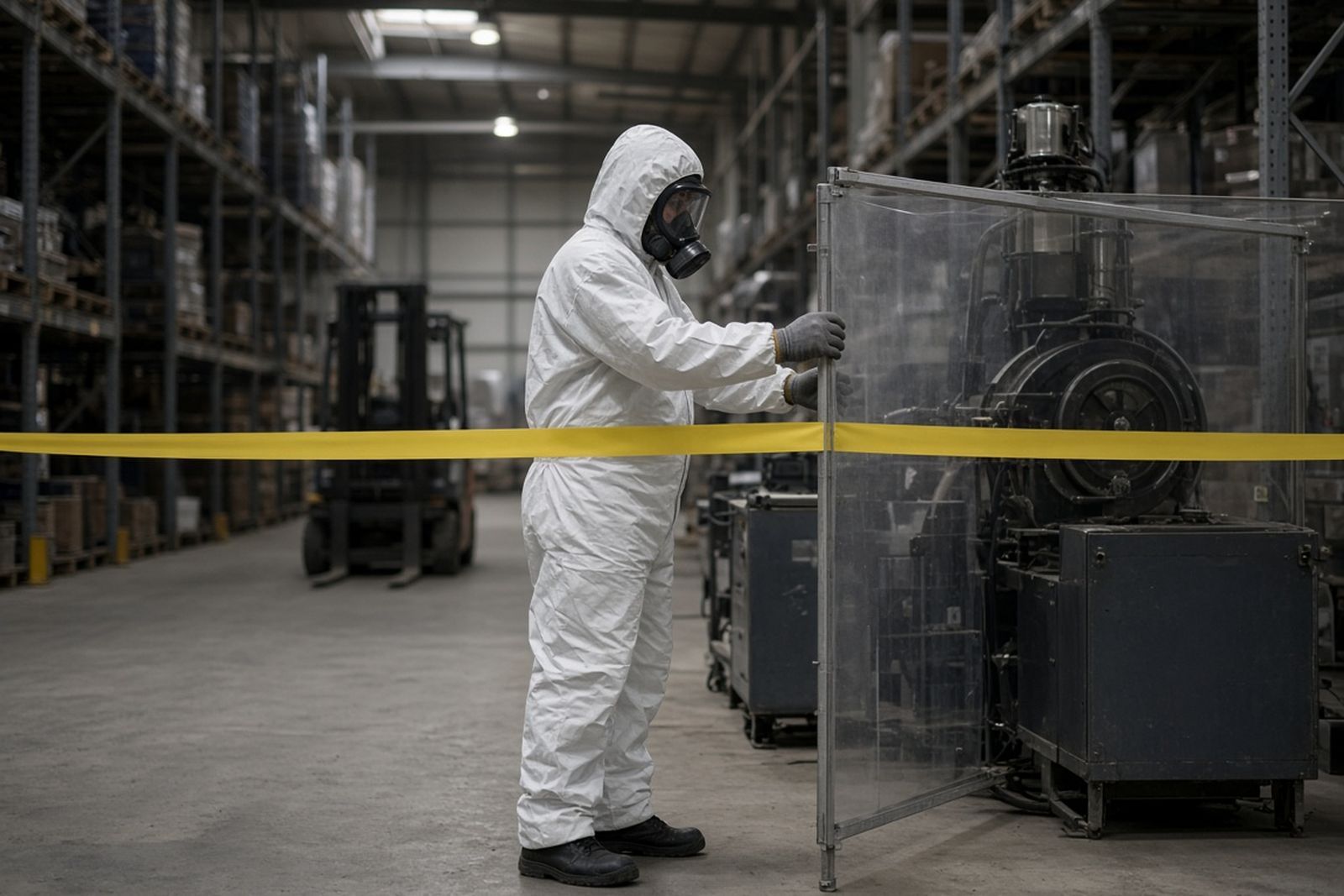
Hold the area until you are told it can be released. When you report a qualifying accident to OSHA, ask whether the scene should be left as it is. Write down the answer and the name of the person you spoke with. Take photos from the edge of the area. Note what equipment was running, and keep a log of everyone who enters.
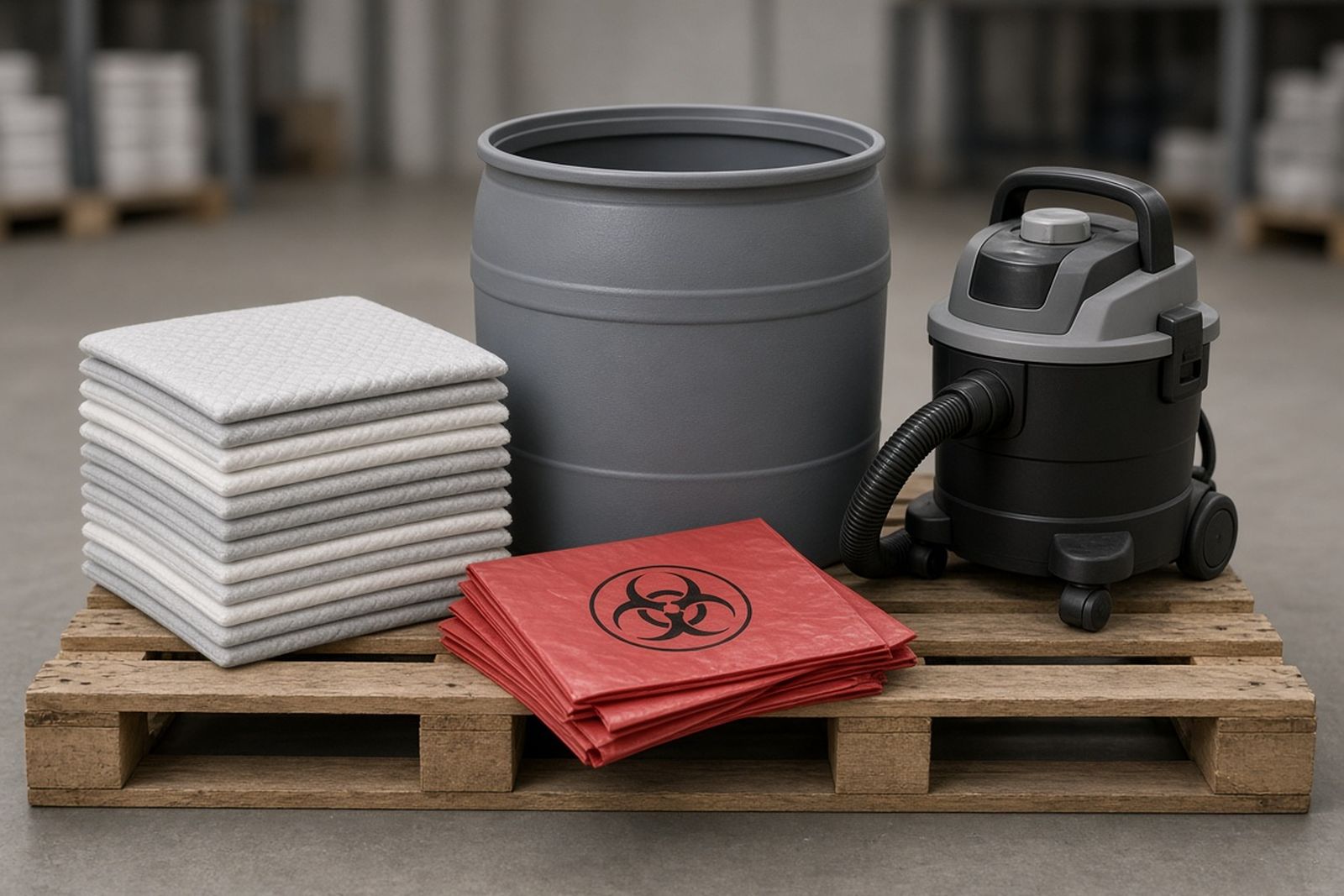
Your cleanup company should add its own records. These include a scope of work that describes the affected surfaces and equipment. They also include the products used and how long they stayed wet, the items removed and waste disposal records. That packet helps both the claim and your own review of what caused the accident.
Sorting it out at a small cabinet shop: an illustrative case
This example is made up, not taken from a real claim. Picture the owner of a four-person cabinet shop in a business unit in an industrial park. Late on a Friday afternoon, a worker is badly hurt on a table saw. Blood reaches the saw, the floor around it and a stack of finished panels.
The owner's first thought is to call the homeowners insurer, since it is the only policy they deal with often. Instead, they call their business insurance agent. The agent confirms that workers' comp will handle the worker's care. The agent also says the shop's business owner's policy will be reviewed for the cleanup and the damaged panels.
The owner reports the hospital stay to OSHA and asks whether to leave the scene as it is. The owner keeps the area roped off until told it can be released. A cleanup company then cleans and disinfects the saw and floor. It records the damaged panels and provides a disposal record. The owner sends everything to the agent.
Whether any part of the cleanup is paid in the end depends on that shop's policy. The owner's job was to send the questions to the right place and keep good records.
How do you look after your crew while the insurance questions get sorted out?
Insurance talks can take days or weeks. It is easy for them to push aside the people who saw the accident. Coworkers who helped the hurt person, shut down equipment or just saw what happened may be shaken long after the floor is clean.
Do not ask workers to help clean the area. Blood and body fluids carry a risk of exposure. On top of that, going back to that spot to scrub it can be upsetting. Leave the work to trained cleanup workers. If you can, keep the area screened from view while they work.
Check whether your company offers an employee assistance program. Share that information with the whole shift, not only with the people you think were affected. Many people who struggle do not ask for help on their own. A short, sincere message from a supervisor about what happened often matters more than a formal policy.
When the area reopens, walk it with the crew first. Explain what was cleaned, what was replaced and what changed in the process or machine guards. People go back to work with more confidence when they see the space is safe and the accident led to action.
Can the remediation contractor deal with the insurer for you?
A cleanup company can record conditions, write an itemized estimate, share photos and answer an adjuster's questions if you allow it. That help can be valuable, above all for a small business without a risk manager on staff.
The company cannot decide coverage or promise payment. Be careful if anyone says a certain policy will surely pay. Be careful, too, if anyone asks you to sign over your insurance benefits without explaining it. Read contracts closely. Ask who is responsible for any amount the insurer does not pay.
Keep your own copies of everything the company sends to the insurer. You are still the policyholder, and you are the one who will answer follow-up questions.
If your company has a team for safety and the environment, bring them in first. Do this before the cleanup company calls the insurer. The team may have preferred vendors or a standard report form. Its contracts may already say who talks with insurers after an accident.
Questions for your broker or risk manager
A short list of direct questions will help you get clear answers during a stressful week. Write the answers down, along with the date and the name of the person who gave them.
Confirm each point with your insurer before you assume who is responsible or who will pay you back.
- Which of our policies do you expect to review the cleanup and damaged property?
- Is there a deductible, a lower limit or an exclusion that applies to biohazard cleanup?
- Do you need to inspect before soiled materials or equipment are cleaned or thrown out?
- Can we approve emergency cleanup now, and what records do you need from the cleanup company?
- Does any coverage for lost business income apply while the area is closed?
- Will you confirm your position in writing?