Short answer
Industrial accident cleanup time depends on when investigators release the scene, how much equipment must be locked out and disassembled, how far fluids spread across porous floors and machine cavities, and how waste must be sorted. A contained floor incident may be handled within a shift, while machinery involvement, chemical mixing, or a fatality investigation can extend work across several days.
Why does the clock often start later than you expect?
After a serious workplace injury, the first priority is the injured person, and the second is often the investigation. Depending on severity, law enforcement, the employer's own safety team, an insurer, and in some cases OSHA or a state plan agency may need to document the scene before anything is touched.
Cleanup cannot responsibly begin until the scene is released. That wait can be short when the cause is clear, or much longer when the incident is serious or the circumstances are disputed. Contractors who start early risk destroying evidence and creating problems for everyone involved.
It helps to ask the investigating parties directly when the area will be released and whether any equipment, components, or materials must be preserved. A reputable provider will ask the same question before arriving.
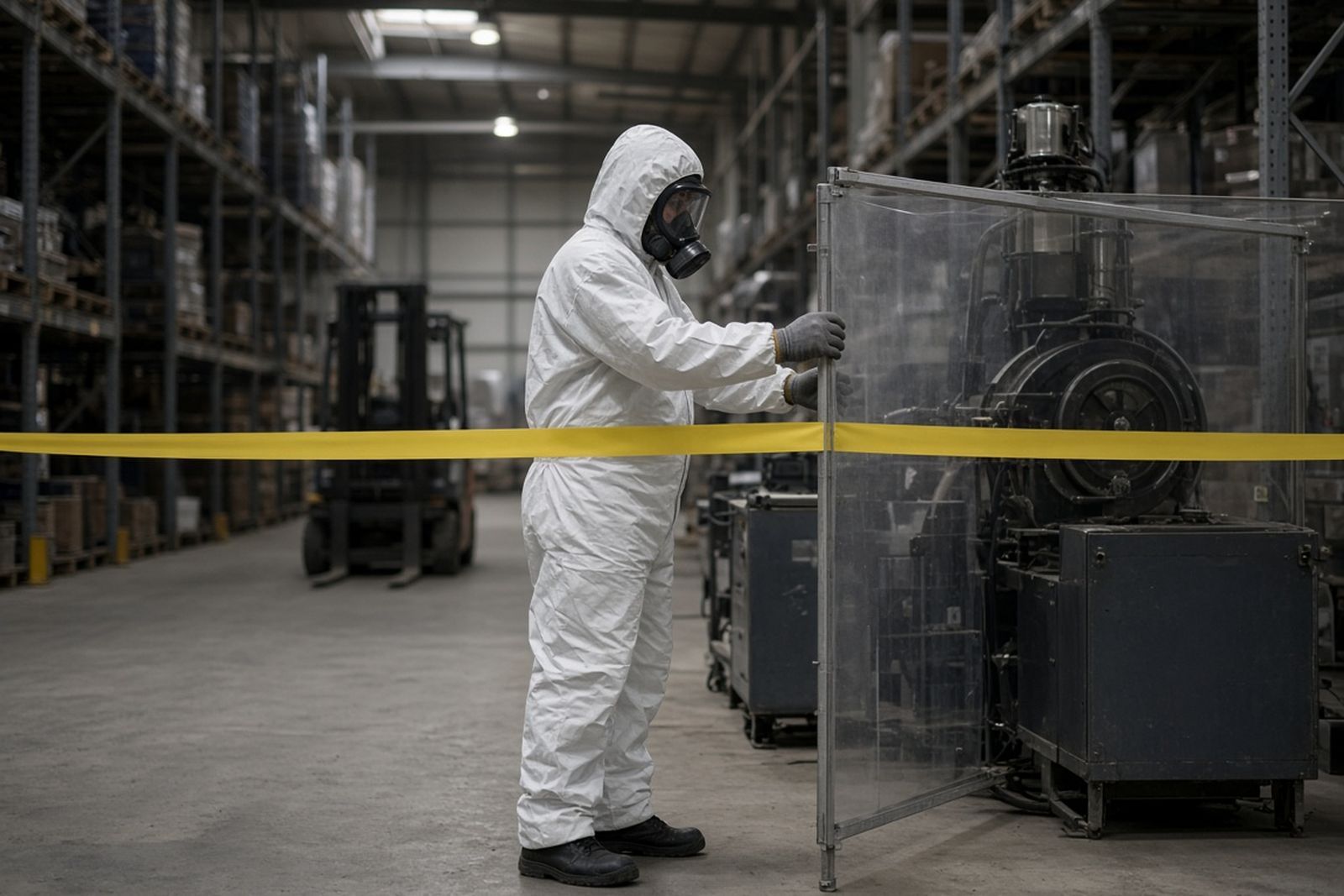
While you wait, you can still prepare. Barricade the area, keep staff away, gather safety data sheets for chemicals used nearby, and identify who at the plant will authorize lockout and coordinate with the crew.
Lockout and tagout on the schedule
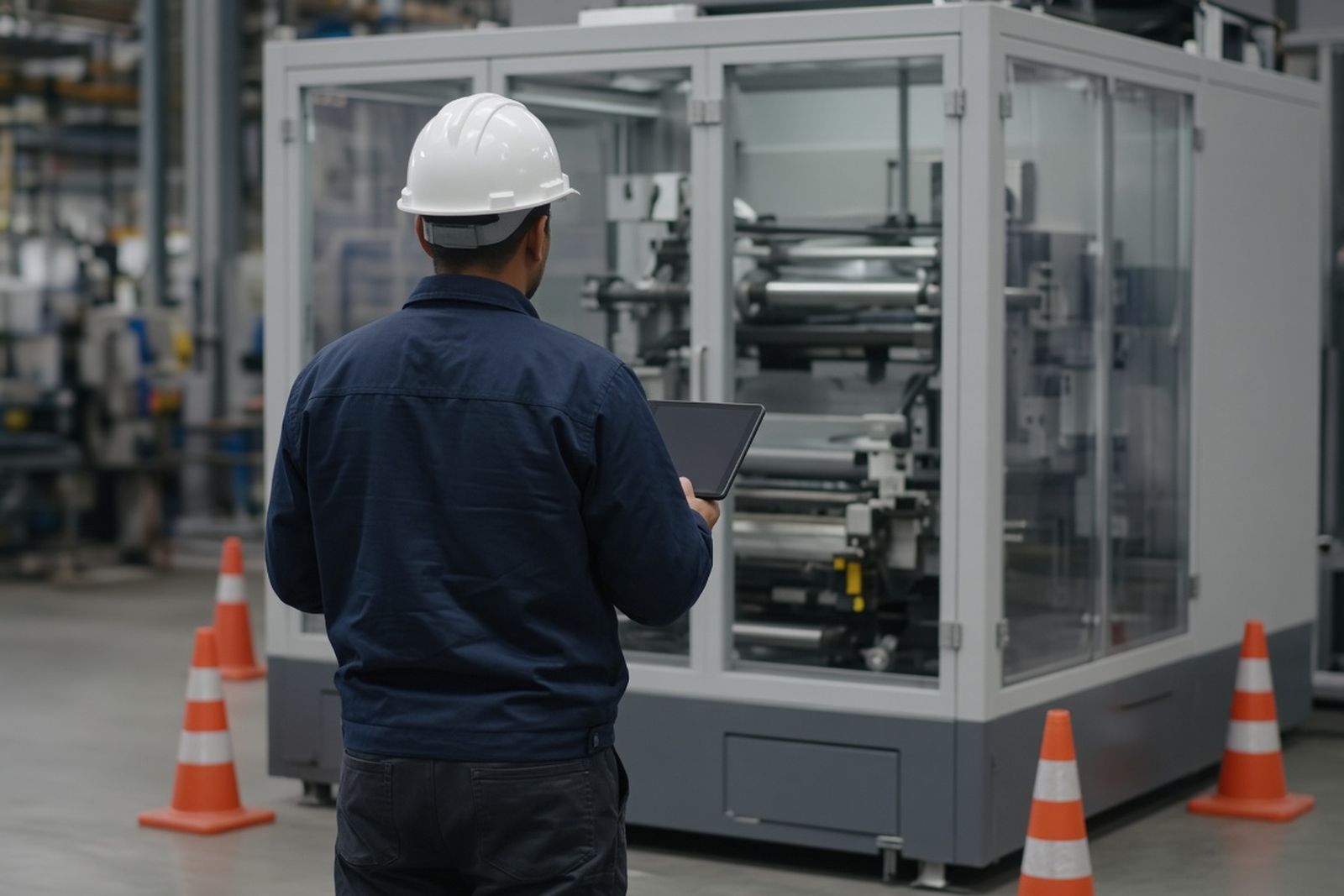
If an accident involved machinery, cleanup crews may need to work inside or around that equipment. Before anyone reaches into a press, conveyor, mixer, or saw, all energy sources have to be isolated and verified. That includes electrical, hydraulic, pneumatic, thermal, gravitational, and stored mechanical energy.
Lockout itself is not usually slow, but coordination can be. The site's authorized employees must apply their own locks, verify zero energy, and in many plants sign off on a permit or checklist. If the machine was damaged in the accident, verifying energy isolation can take longer because gauges, switches, or guards may not behave normally.
Build that coordination into your schedule. A cleanup crew that arrives before maintenance staff are available may spend its first hours waiting.
Plan for the end of the job as well. Releasing lockout, testing the equipment, and confirming guards are back in place before production resumes all take time, and they belong to the plant rather than the cleanup crew.
Contained floor incidents
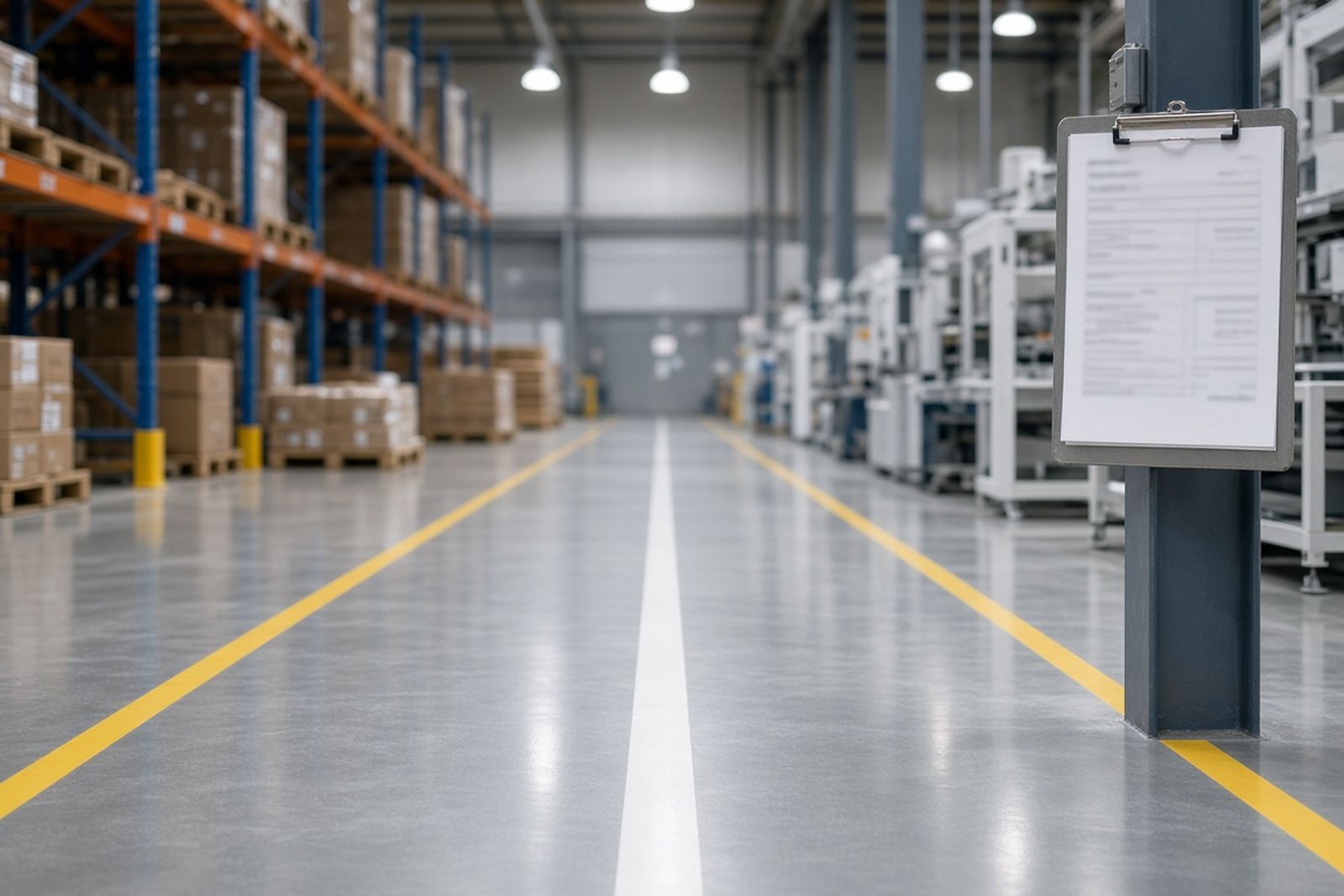
Some workplace injuries leave contamination only on the floor or a small work surface, such as a laceration at a workbench or a fall in a warehouse aisle. If the floor is sealed or coated and fluids have not reached joints or drains, cleanup can often be finished within a single shift.
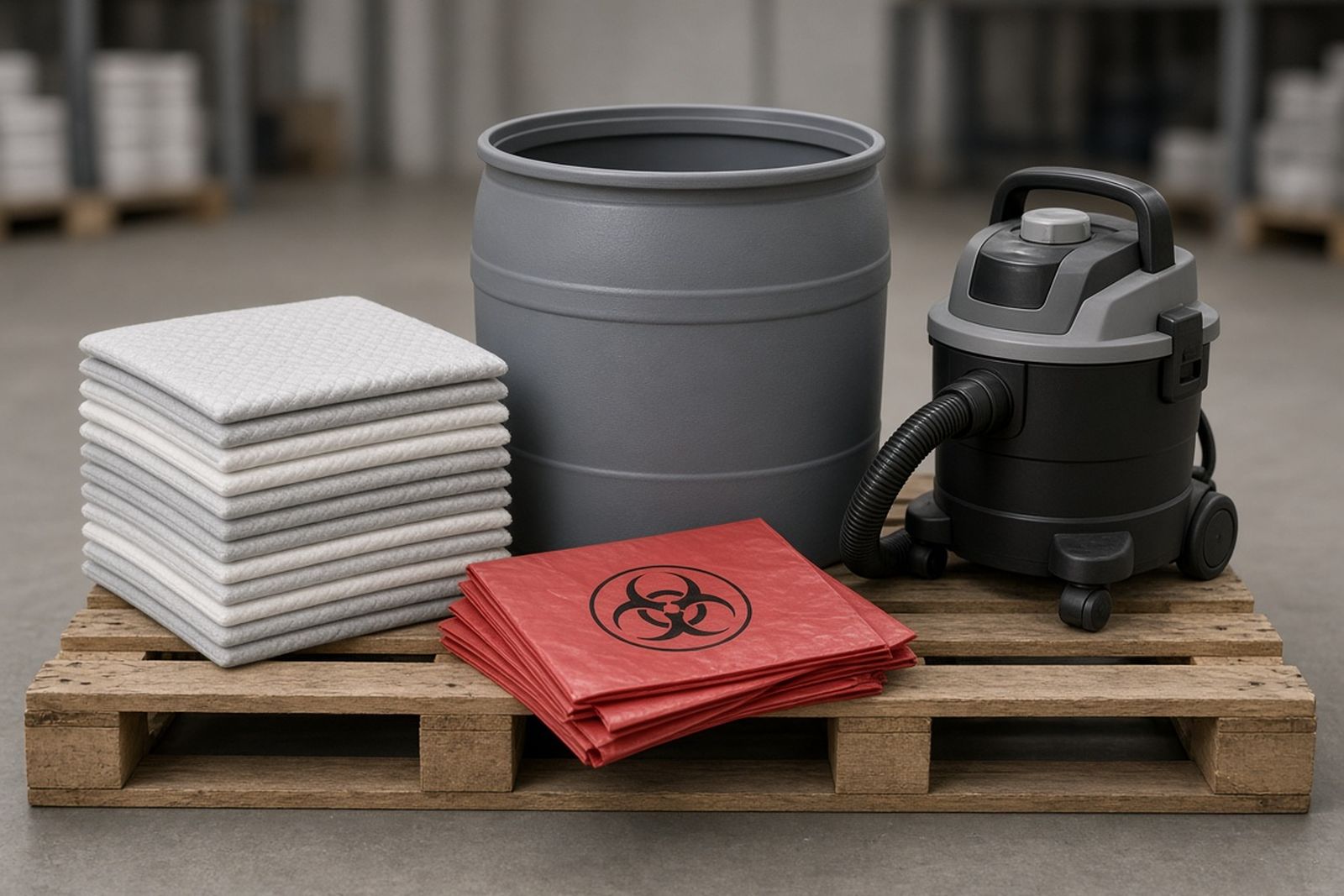
Even then, the steps take time. Crews contain the area, remove bulk material, degrease if the floor has oil or coolant on it, clean with detergent, rinse, disinfect with a registered product for its full contact time, and document the work. Industrial floors are rarely just dirty with blood. They almost always carry process residues that must be dealt with first.
Unsealed concrete or damaged coatings can change a quick job into a longer one. Fluid that soaks into pores or joints may need extraction, repeated treatment, or cutting and patching.
Storage racks, pallets, and stacked inventory near the incident can add hours. Anything that absorbed fluid has to be evaluated, and product may need to be quarantined for the quality team to review.
Why do machinery incidents take longer?
Equipment traps contamination in guards, belt paths, rollers, gearboxes, and control housings. Reaching those areas often requires partial disassembly, following the manufacturer's service instructions and the plant's maintenance procedures.
Some components cannot be verified clean and must be replaced. Conveyor belts, fabric covers, rubber seals, and certain filters fall into this category. If replacements are not on hand, the line may stay down until parts arrive, even after cleaning is complete.
Sensitive electronics add more care. Sensors, controls, and wiring may need targeted methods that do not introduce liquid. Food, beverage, and pharmaceutical equipment also has to meet sanitation standards before it can return to production, which usually means additional rinsing and verification.
When chemicals are involved too
Some accidents involve a release of process chemicals along with injury. That can include acids, caustics, solvents, oils, or reactive materials. Those situations require the chemical hazard to be controlled before biohazard cleanup can proceed.
When injury and release occur together, the scene often needs a hazmat response first and biohazard remediation second.
Neutralizing, absorbing, and removing chemicals can take significant time and may require a separate contractor with hazardous materials credentials. Your cleanup provider should tell you clearly if the work falls outside its scope.
Waste from mixed scenes can be difficult to classify. A single absorbent pad might carry both chemical and biological hazards, and determining how it must be handled can add steps before disposal is arranged.
Timeline sketch: a press incident at a stamping plant
The following timeline is an illustrative sketch, not a record of a real job. At a stamping plant, an operator suffers a serious hand injury at a press during the night shift. Emergency responders treat and transport the worker. The plant's safety manager locks out the press and contacts the insurer and the relevant agency.
Investigators document the scene the next morning and release it around midday. The cleanup crew arrives, meets the maintenance lead, and confirms lockout. Blood is present on the press bed, the die, the lower guard, the floor beneath the press, and a nearby parts bin. The floor has a film of stamping lubricant.
The crew removes the lower guard under supervision, bags the parts bin contents after the quality manager approves disposal, degreases and disinfects the press surfaces and die, and scrubs and extracts the floor. The die is set aside for the tooling shop to inspect before reuse. By the end of the second day, cleanup is complete and documented, and maintenance begins its own checks before the press restarts.
The injured worker's crew is offered time away from the area and access to support services while the work is done.
Seven factors that stretch a job
Across many kinds of industrial incidents, the same handful of issues tend to add time.
- A delayed scene release from investigators or insurers
- Maintenance staff unavailable to apply or verify lockout
- Fluids reaching floor joints, drains, pits, or sumps
- Components that must be replaced rather than cleaned
- Chemical releases requiring separate hazmat work
- Sanitation verification for food or pharmaceutical lines
- Waste that needs classification before disposal
How can you shorten downtime safely?
Preparation is the most effective way to reduce downtime. Keep an updated list of your equipment, floor coatings, chemicals, and sanitation requirements. Know who on site can authorize lockout at any hour. Stock common replacement parts for high-risk equipment. Identify a qualified cleanup provider before you need one and share your site's safety rules with them.
During the incident, assign a single point of contact who can make decisions quickly. Many delays come from crews waiting for approvals.
Consider shift patterns too. A cleanup that starts late in the day may be paused overnight if the plant cannot provide supervision or lockout verification after hours. Agreeing in advance on whether work can continue across shifts, and who will be present, often saves a full day on larger jobs.
Restart pressure and workforce communication
Resist pressure to restart early. A line that returns to service with residue in a belt path or a guard can expose the next operator and create quality problems.
Communicate with the rest of the workforce as well. Telling employees which areas are closed, for how long, and why reduces the chance that someone walks through a work zone, moves a barricade, or restarts nearby equipment while the crew is still inside.
How do you know when the area can return to production?
Return to service should follow a clear sign-off. The cleanup provider documents what was cleaned, the products and contact times used, what was removed, and how waste was handled. The plant's safety, maintenance, and sanitation leads each confirm their part of the process.
If your plant uses ATP testing or microbial sampling, running those checks on cleaned equipment gives you objective evidence that fits your existing records.
Keep the documentation with your incident file. If questions come up later from an insurer, an auditor, or a customer who received product from that line, a clear record of when cleanup started, what was done, and when the area was released answers them quickly.
Reporting duties, waste classification, and scene release procedures can depend on the agencies involved and the type of facility you operate.