Short answer
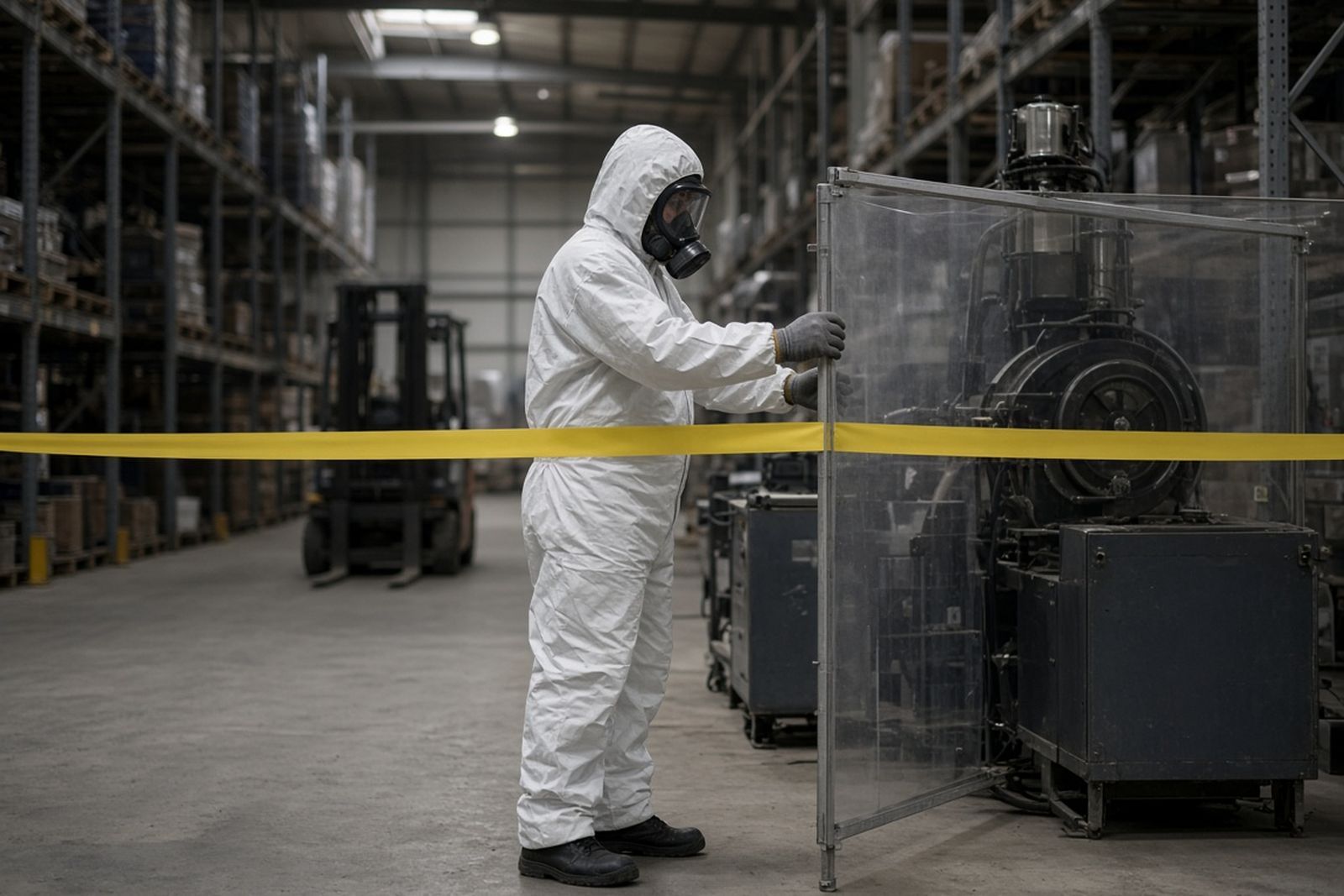
PPE for industrial accident cleanup should come from a written assessment of the specific scene, not a generic biohazard kit. Blood and body fluids call for fluid-resistant gloves, coveralls, and eye protection, but plants also add hydraulic oil, coolant, sharp metal, hot surfaces, and heavy equipment. That usually means chemical-rated gloves over cut-resistant liners, safety footwear, hard hats under overhead hazards, and hearing or respiratory protection where required.
Why is industrial accident PPE different from other biohazard cleanup?
In a home or office, the main hazard during a blood cleanup is the blood itself. On a manufacturing floor, in a warehouse, or on a construction site, blood is often mixed with hydraulic fluid, cutting oil, product, metal fines, or broken components. The equipment involved may still hold stored energy, and the surrounding area has its own hazards that do not stop just because one machine is shut down.
That combination is why a remediation crew cannot simply bring its usual kit. The PPE has to protect against biological exposure and the plant's own hazards at the same time, and it has to fit within the site's existing rules, such as mandatory hearing protection zones or food safety requirements.
OSHA's PPE standard, 29 CFR 1910.132, requires employers to assess these hazards and select equipment to match. When an outside crew is involved, the host facility and the contractor should share their assessments so nothing falls through the gap.
Nine things the hazard assessment should cover
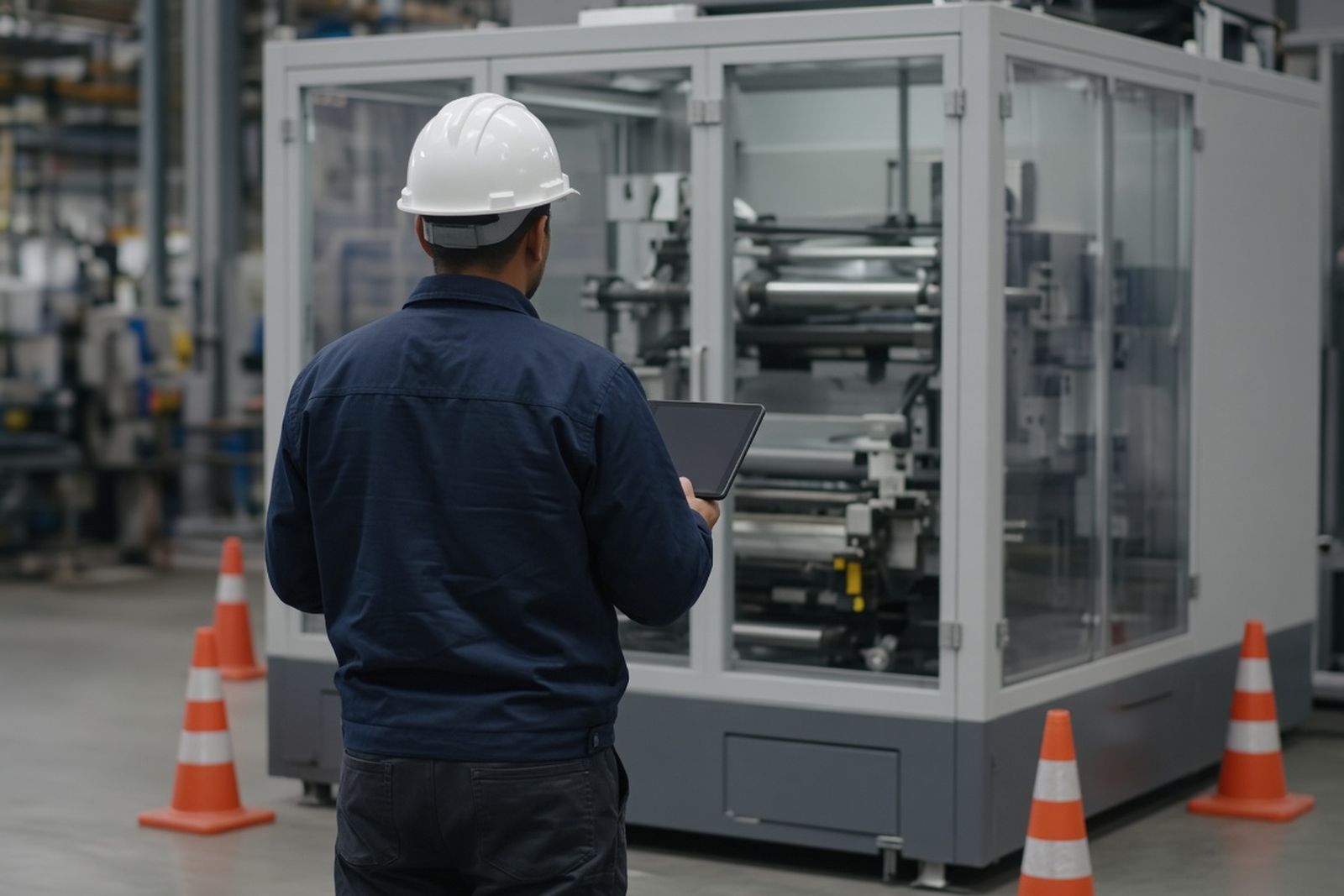
Start with a walk-through alongside someone who knows the equipment, usually a maintenance lead or the area supervisor. Look at the incident footprint, the equipment surfaces, the floor, drains, and anything overhead.
Write down each task the crew will perform and which hazards apply to it. Removing guards, wiping a conveyor belt, scrubbing a grated floor, and cleaning inside an electrical enclosure after it has been de-energized each have different exposures.
Ask about the history of the area, too. Operators often know about recurring leaks, sharp burrs on a particular guard, or a drain that backs up, and none of that will be obvious to a crew seeing the equipment for the first time.
- Blood and body fluids on equipment, floors, and fixtures
- Process fluids such as hydraulic oil, coolant, lubricants, or solvents
- Sharp edges from damaged guards, sheet metal, broken glass, or tooling
- Stored energy in hydraulics, pneumatics, springs, or suspended loads
- Hot surfaces on ovens, presses, or recently running motors
- Noise from adjacent lines that remain in operation
- Dust, fumes, or residues that may need respiratory protection
- Slip hazards where fluids mix on smooth concrete or steel grating
- Forklift and vehicle traffic near the work area
How common these exposures are
Harmful exposures are a significant source of serious workplace injury. The Bureau of Labor Statistics reported that exposure to harmful substances or environments produced an annualized 224,450 days-away, restricted or transfer cases in private industry in 2023-24., a category that covers many kinds of exposure, not only cleanup, but shows how often chemical and environmental hazards lead to lost or restricted work.
Crews that clean industrial scenes work in some of the most hazardous parts of a plant. Use a national figure like this to support the time and budget a proper assessment takes, not to predict what will happen in your facility.
Gloves and hand protection
Hand protection is usually the most complex decision on an industrial scene. A single glove rarely handles fluid resistance, chemical resistance, and cut resistance equally well.
A layered approach often works best. A cut-resistant liner protects against sheet metal and broken parts, and a chemical-resistant outer glove, selected using the safety data sheets for both the disinfectant and any process fluids present, protects against liquid exposure. Extended cuffs help when reaching into machine frames or under conveyors.
Check compatibility carefully. Some glove materials that hold up well against water-based disinfectants swell or break down with oils and solvents. If the scene includes several chemicals, ask the glove manufacturer for data on each, or choose a material rated for the most aggressive one.
Replace outer gloves whenever they tear, become saturated, or are about to move from a heavily contaminated area to a cleaner one.
Body, eye, head, and foot protection
Fluid-resistant coveralls keep blood and oil off skin and clothing, but on an industrial floor they should also be durable enough to survive contact with rough surfaces. Chemical-resistant suits may be needed when process fluids are involved. Choose options that do not create a snag or entanglement hazard near equipment that could be accidentally energized.
Eye protection should be splash-rated goggles, often with a face shield when cleaning overhead or using pressurized water. If the plant requires safety glasses throughout, goggles can be worn instead where splash is possible.
Most facilities require safety-toe footwear, and on a wet, oily floor, slip resistance matters as much as toe protection. Chemical-resistant boots or overboots may be needed. Hard hats are appropriate where overhead hazards exist, such as cranes, racking, or elevated conveyors.
High-visibility vests are worth adding when the crew works near forklift aisles or loading docks. Remediation technicians are often crouched low beside equipment, where drivers are not expecting anyone, and a vest combined with barricades and a spotter makes them far easier to see.
When respiratory protection is required
Respiratory protection depends on what is in the air and what the cleanup will put there. Scrubbing dried residues, pressure washing, using certain disinfectants in enclosed areas, or working near metal dust, fumes, or solvent vapors may all call for respirators. If the scene involves a chemical release, the facility's EHS team should decide whether air monitoring is needed before the crew enters.
When respirators are required, the employer must have a program under 29 CFR 1910.134, including medical evaluation, fit testing, and training. Contractors should bring their own program documentation; host facilities should not lend respirators to people who have not been fit tested on that model.
Hearing protection next to running lines
Hearing protection is easy to forget. If adjacent lines keep running, the crew is working in the same noise environment as production staff. Follow the plant's hearing protection requirements, and remember that heavy earmuffs can interfere with hearing warnings, so plan communication in advance.
Planning PPE after a press injury: an example
The following example is illustrative only. At a metal stamping plant, an operator suffers a serious hand injury at a hydraulic press. The injured worker is transported, the area is barricaded, and after the scene is released, the plant calls a remediation contractor.
The crew lead walks the area with the plant's maintenance supervisor. Blood has mixed with hydraulic fluid that leaked from a damaged hose and spread across the steel die surfaces and into floor grating. The press still has stored hydraulic pressure and a raised ram, and the adjacent press line is still running.
The maintenance supervisor applies lockout, bleeds the hydraulic system, and blocks the ram in accordance with the plant's energy control procedure before anyone approaches. The crew lead selects cut-resistant liners under chemical-resistant outer gloves compatible with both the hydraulic fluid and the disinfectant, oil-resistant coveralls, splash goggles with face shields, safety-toe rubber boots, hard hats, and earplugs for the noise from the adjacent line.
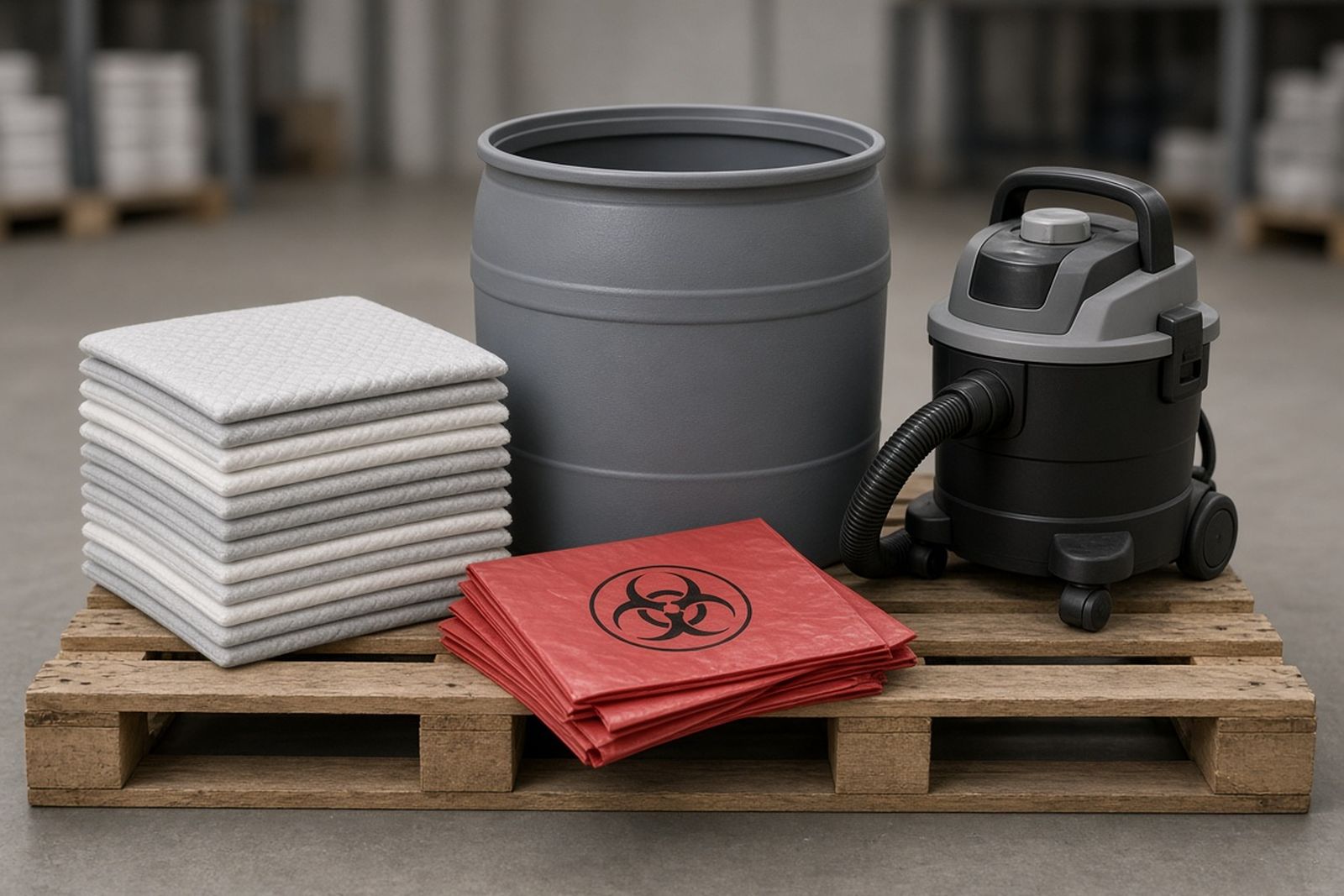
Oil-soaked absorbents are kept separate from blood-contaminated materials so each can be disposed of appropriately, and the crew documents the PPE, products, and waste streams in the job file.
Doffing and handling contaminated gear
Removing gear safely on an industrial site takes planning because the decon area needs to be close to the work but away from production traffic. Set up a defined zone with lined containers, a hand wash station or wipes, and space to sit while removing boots.
Follow a consistent order, generally outer gloves, coveralls rolled inside out, boots or overboots, eye and face protection, respirator, and finally inner gloves, followed by hand washing. Keep gear contaminated with oils separate from gear that only contacted blood if the waste streams differ.
Reusable equipment such as boots, face shields, and respirator facepieces should be cleaned according to manufacturer instructions before they leave the site or go back into service.
How do you keep PPE planning aligned with the plant's own program?
Industrial facilities usually already have a PPE program for their production workers. The cleanup assessment should build on it rather than replace it. If the plant requires cut-resistant sleeves in a given area, the remediation crew should wear them too.
After the cleanup, review the assessment with the plant's EHS team. Note anything the crew found that the plant did not know about, such as a hidden fluid accumulation or a guard that was sharper than expected.
If your plant is in a state plan state, ask the state plan office whether it adds requirements for PPE, respirators, or chemical exposure. Some industries also have their own regulators with additional expectations.
Finally, consider the people watching. Coworkers returning to the area want to see that the cleanup was careful and thorough. A crew in appropriate, well-fitted gear working methodically sends a reassuring message; a crew in improvised protection does the opposite.