Short answer
The crew's protective gear should come from a written review of your scene, not from a standard biohazard kit. Blood and body fluids call for fluid-resistant gloves, coveralls and eye protection. But your plant adds hydraulic oil, coolant, sharp metal, hot surfaces and heavy equipment. That usually means chemical-rated gloves over cut-resistant liners and safety footwear. It means hard hats under overhead dangers, and hearing or breathing protection where required.
Why is protective gear at a plant different from other biohazard cleanup?
In a home or office, the main danger during a blood cleanup is the blood itself. On your factory floor, in a warehouse or on a building site, it is different. Blood is often mixed with hydraulic fluid, cutting oil, product, fine metal dust or broken parts. The equipment involved may still hold stored energy. The area around it has its own dangers, and they do not stop because one machine is shut down.
That mix is why a cleanup crew cannot just bring its usual kit. The gear has to protect against blood and against your plant's own dangers at the same time. It also has to fit your site's rules, such as zones where hearing protection is required, or food safety rules.
OSHA's PPE standard, 29 CFR 1910.132, covers personal protective equipment, or protective gear. It requires employers to review these hazards and pick gear to match. When an outside crew is involved, you and the cleanup company should share your reviews so nothing falls through the gap.
Nine things the hazard review should cover
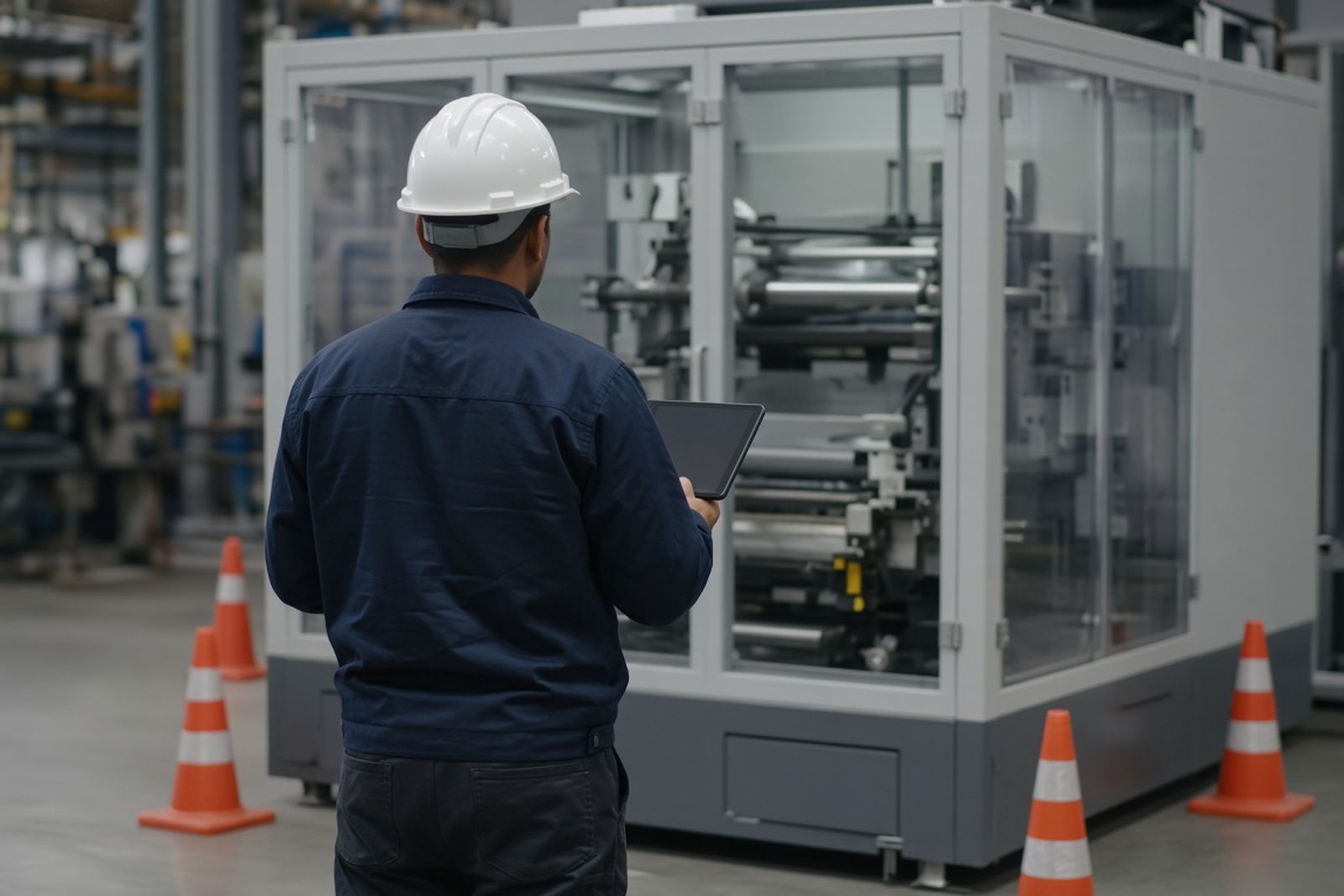
A good review starts with a walk-through next to someone who knows the equipment. That is usually your maintenance lead or the area supervisor. They look at the area the accident touched, the equipment surfaces, the floor, the drains and anything overhead.
The crew lead then writes down each task the crew will do and which hazards go with it. Taking off guards is one task. Wiping a conveyor belt is another. So is scrubbing a grated floor, or cleaning inside an electrical box after its power is cut. Each one exposes the crew to different things.
Tell the crew about the history of the area, too. Your operators often know about leaks that keep coming back, sharp burrs on a certain guard or a drain that backs up. A crew seeing your equipment for the first time will not spot any of that.
- Blood and body fluids on equipment, floors and fixtures.
- Process fluids such as hydraulic oil, coolant, lubricants or solvents.
- Sharp edges from damaged guards, sheet metal, broken glass or tooling.
- Stored energy in hydraulics, air lines, springs or hanging loads.
- Hot surfaces on ovens, presses or motors that were just running.
- Noise from nearby lines that are still running.
- Dust, fumes or residue that may call for breathing protection.
- Slippery spots where fluids mix on smooth concrete or steel grating.
- Forklift and vehicle traffic near the work area.
How common these exposures are
Harmful exposures cause a large share of serious injuries at work. The Bureau of Labor Statistics reported that exposure to harmful substances or environments produced an annualized 224,450 days-away, restricted or transfer cases in private industry in 2023-24. That group covers many kinds of exposure, not only cleanup. But it shows how often chemical and environmental hazards lead to lost or limited work.
Crews that clean plant accident scenes work in some of the most dangerous parts of your plant. Use a national figure like this to back up the time and budget a proper review takes. Do not use it to predict what will happen at your site.
Gloves and hand protection
Hand protection is usually the hardest choice on a plant scene. One glove rarely resists fluids, chemicals and cuts equally well.
Layers often work best. A cut-resistant liner protects against sheet metal and broken parts. Over it goes a chemical-resistant outer glove that protects against liquids. A good crew picks that glove using the safety data sheets for both the disinfectant and any process fluids present. Long cuffs help when the crew reaches into machine frames or under conveyors.
The glove material has to suit your fluids. Some materials hold up well against water-based disinfectants but swell or break down in oils and solvents. If your scene has several chemicals, the crew can ask the glove maker for data on each one. Or it can choose a material rated for the harshest one.
Expect the crew to change outer gloves whenever they tear or soak through. They should also change them before moving from a heavily soiled area to a cleaner one.
Body, eye, head and foot protection
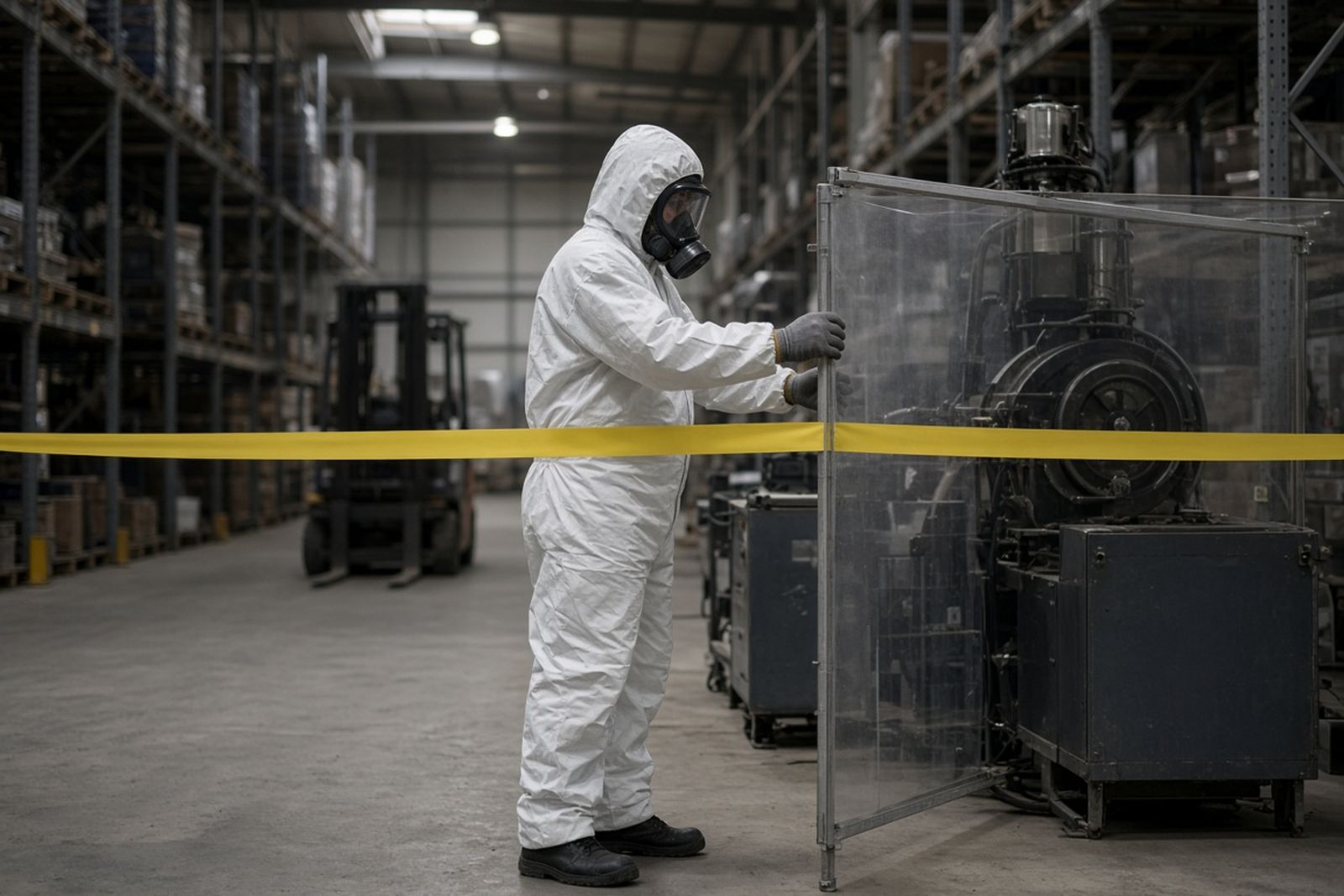
Fluid-resistant coveralls keep blood and oil off skin and clothes. On your floor they also need to be tough enough to survive rough surfaces. Chemical-resistant suits may be needed when process fluids are involved. The gear should not be able to snag or get caught near equipment that could be powered up by accident.
Eye protection should be splash-rated goggles. A face shield is often added when the crew cleans overhead or uses pressurized water. If your plant requires safety glasses everywhere, goggles can be worn in their place where a splash is possible.
Most plants require safety-toe footwear. On a wet, oily floor, grip matters as much as toe protection. Chemical-resistant boots or overboots may be needed. Hard hats are right where there are overhead dangers, such as cranes, racking or raised conveyors.
High-visibility vests are worth adding when the crew works near your forklift aisles or loading docks. Cleanup workers are often crouched low next to equipment, where your drivers do not expect anyone. A vest, along with barriers and a spotter, makes them far easier to see.
When breathing protection is required
Breathing protection depends on what is in the air and what the cleanup will put there. Respirators may be called for when the crew scrubs dried residue, pressure washes or uses certain disinfectants in closed-in areas. The same is true near metal dust, fumes or solvent vapors. If your scene involves a chemical release, your safety team should decide whether the air needs to be tested before the crew goes in.
When respirators are required, the employer must have a program under 29 CFR 1910.134. It includes a medical check, fit testing and training. The cleanup company should bring papers that show its own program. Do not lend your respirators to anyone who has not been fit tested on that model.
Hearing protection next to running lines
Hearing protection is easy to forget. If your nearby lines keep running, the crew works in the same noise as your production staff. The crew should follow your plant's hearing protection rules. Keep in mind that heavy earmuffs can make warnings hard to hear, so plan ahead how you and the crew will communicate.
Planning the gear after a press injury: an example
This example is for illustration only. At a metal stamping plant, an operator suffers a serious hand injury at a hydraulic press. The injured worker is taken to the hospital and the area is blocked off. After the scene is released, the plant calls a cleanup company.
The crew lead walks the area with the plant's maintenance supervisor. Blood has mixed with hydraulic fluid that leaked from a damaged hose. The mix has spread across the steel die surfaces and into the floor grating. The press still holds hydraulic pressure and its ram is raised. The press line next to it is still running.
Before anyone goes near, the maintenance supervisor locks out the press, bleeds the hydraulic system and blocks the ram, following the plant's lockout steps. The crew lead picks cut-resistant liners under chemical-resistant outer gloves that hold up to both the hydraulic fluid and the disinfectant. The crew also wears oil-resistant coveralls, splash goggles with face shields, safety-toe rubber boots and hard hats. They wear earplugs for the noise from the next line.
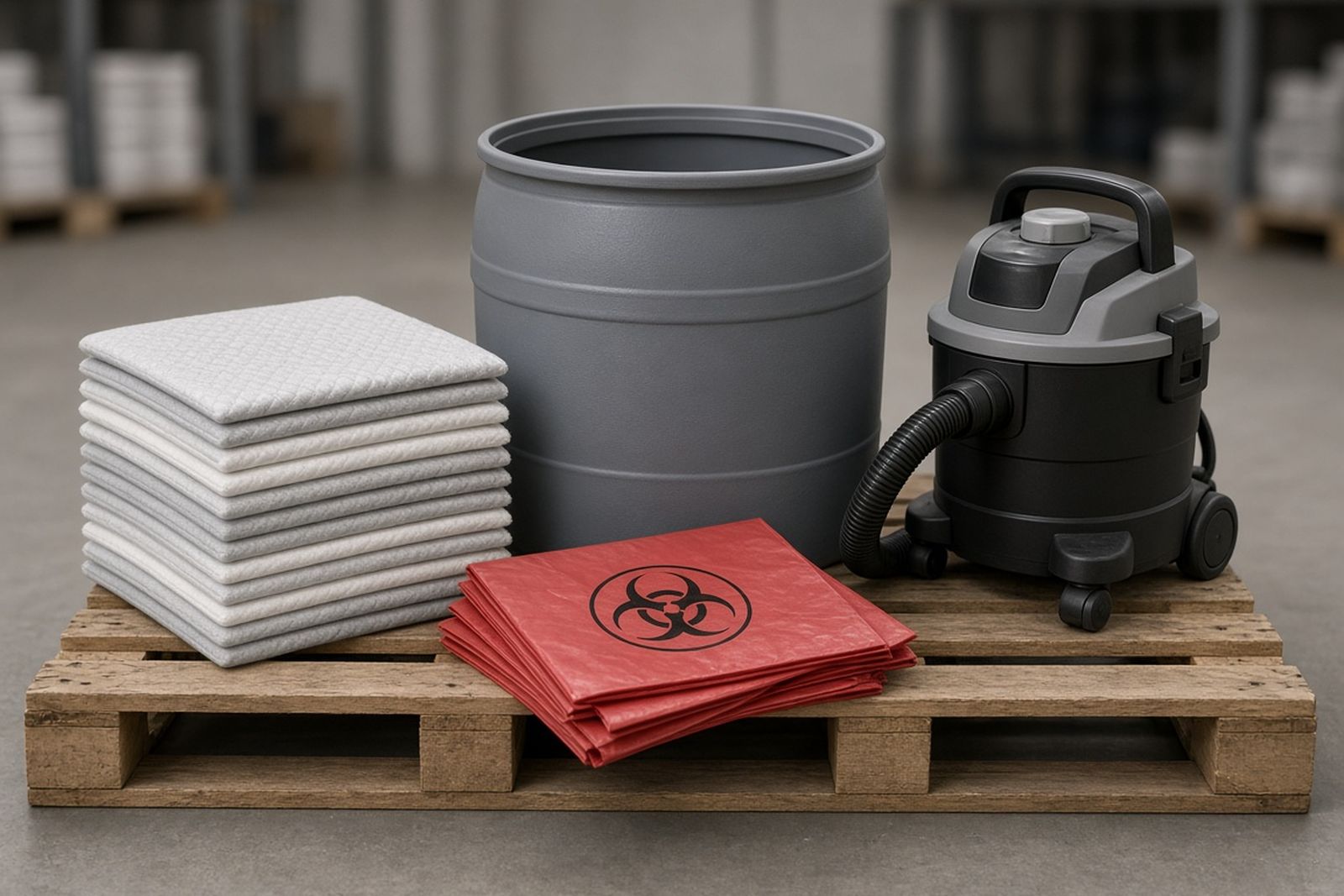
Oil-soaked absorbents are kept apart from materials with blood on them, so each can be disposed of the right way. The crew records the gear, the products and the kinds of waste in the job file.
Taking gear off and handling dirty gear
Taking gear off safely at a plant takes planning. The spot for it must be close to the work but away from your production traffic. A good crew sets up a marked area with lined containers, a hand wash station or wipes, and room to sit while pulling off boots.
The crew follows the same order each time. Outer gloves usually come off first. Then come coveralls, rolled inside out, and boots or overboots. Eye and face protection follow, then the respirator, and last the inner gloves. Then they wash their hands. If the waste goes to different places, gear soiled with oils is kept apart from gear that touched only blood.
Gear made to be used again includes boots, face shields and respirator facepieces. It should be cleaned by the maker's instructions before it leaves your site or goes back into use.
How do you keep the gear plan in line with your plant's own program?
Your plant most likely already has a protective gear program for your production workers. The cleanup review should build on it, not replace it. If you require cut-resistant sleeves in a given area, the cleanup crew should wear them too.
After the cleanup, go over the review with your safety team. Note anything the crew found that you did not know about. It might be a hidden pool of fluid or a guard that was sharper than expected.
If your plant is in a state with its own OSHA-approved plan, ask the state plan office whether it adds rules for protective gear, respirators or chemical exposure. Some industries also have their own regulators who expect more.
Last, think about the people watching. Coworkers coming back to the area want to see that the cleanup was careful and complete. A crew in proper, well-fitted gear, working step by step, puts your people at ease. A crew in makeshift protection does the opposite.