Short answer
When a contractor proposes technology for an industrial accident cleanup, judge it by the problem it solves on your equipment, the hazards it introduces, how it interacts with lockout, ignition sources, and food-contact rules, how much waste and downtime it creates, and how its results will be verified. Technology earns its place when it reaches areas hands cannot, not when it replaces careful manual cleaning.
A case for healthy skepticism
After a serious incident, you may receive proposals that feature impressive equipment: dry ice blasters, steam units, electrostatic sprayers, ultraviolet towers, robotic floor scrubbers, or cameras that inspect inside machine housings. Some of these tools are genuinely valuable. Others add cost and complexity without improving the outcome.
Skepticism is not the same as resistance. The goal is to understand what each tool actually does on your equipment, in your building, with your contaminants. A method that works beautifully in a hospital or a restaurant kitchen may perform very differently around a hydraulic press, a baking oven, or a steel-grated mezzanine.
The questions below apply to any technology a contractor proposes, whether it is new to the market or simply new to you.
What problem is the technology solving at this particular scene?
Every tool should map to a specific challenge. If blood and tissue are trapped inside a conveyor's roller assembly, a method that reaches inside that assembly without full disassembly is worth considering. If contamination sits on a flat, sealed floor, a mop and a registered disinfectant may be all that is needed.
Ask the contractor to explain, in plain terms, why it chose the technology for your situation. A good answer describes the surface, the contaminant, and why manual methods would fall short. A weak answer describes the tool's features without connecting them to your scene.
Keep in mind that most technologies are either cleaning tools, which remove soil, or disinfection tools, which act on microbes that remain. Very few do both well, and none replace the need to remove gross contamination first.
Six common options on the plant floor
The following summaries are general and not endorsements. Your contractor should explain how each would perform on your specific equipment and contaminants.
Whatever the method, ask how the crew will protect workers and the surrounding area from what the tool dislodges or releases.
- Dry ice blasting: removes soil from complex equipment without water, but can scatter debris, produces carbon dioxide that needs ventilation, and does not disinfect on its own
- Steam cleaning: loosens soil and heats surfaces, but can drive moisture into electrical components and create burn and aerosol hazards
- Pressure washing: fast on large surfaces, but can aerosolize blood and spread contamination widely, so it is often a poor choice for biological cleanup
- Electrostatic sprayers: apply disinfectant evenly to complex shapes after cleaning, but require products labeled for that method and airborne exposure controls
- UV-C devices: can supplement disinfection of exposed surfaces, but cannot reach shadowed areas or penetrate soil, and pose skin and eye hazards
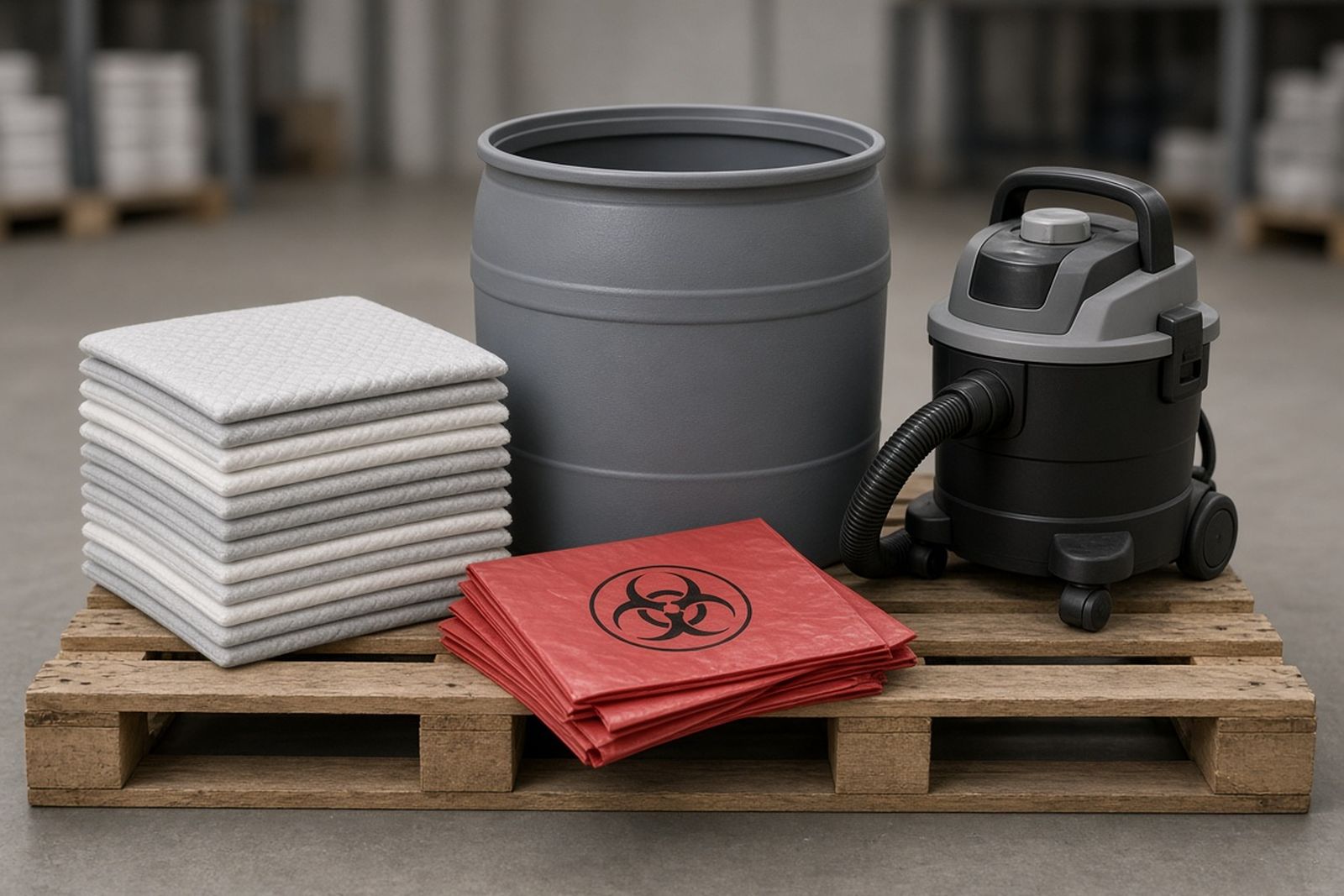
- HEPA and wet vacuums: recover debris and liquids with less spreading, and are frequently among the most useful tools on site
Automated disinfection vs. manual work
Automated systems are attractive because they seem to promise consistency. The research picture is more complicated. In a 2023 study by Knobling and colleagues, manual wiping met the study's disinfection-success criterion on 98.1% of surfaces versus 75.5% for UV-C. That study took place in a healthcare setting rather than a plant, but its lesson carries over: automated light-based disinfection struggled compared with careful hands-on work.
New application methods are not automatically improvements, and each should be evaluated on its merits. The practical takeaway is to treat automated tools as supplements. Ask a contractor proposing them how it will make sure manual cleaning is still thorough.
What new hazards could the technology bring into your plant?
Any tool that moves energy, heat, chemicals, or particles introduces hazards. In an industrial setting, those hazards can interact with your existing risks in ways a contractor from outside your industry might not anticipate.
Ignition sources are a key concern. Electrical equipment, heat, and static discharge can be dangerous in areas with flammable vapors or combustible dust, such as grain handling, woodworking, or some chemical operations. Ask whether the equipment is appropriate for your area classification and whether hot work procedures apply.
Lockout is another. Some tools require access inside machinery or connection to plant utilities such as compressed air, water, or power. Those connections and the work itself must fit within your lockout program.
Food-contact and product-contact rules matter in regulated industries. Chemicals applied by sprayers or foggers must be appropriate for the surface, and residues may need to be rinsed before production resumes. Your quality team should approve anything that touches product zones.
How will it affect downtime, waste, and your equipment?
Production managers rightly want to know how long a line will be down. Ask for realistic setup, run, and teardown times, and for any drying, ventilation, or re-entry intervals. A method that looks fast on paper may require hours of drying before equipment can be energized.
Waste generation varies widely. Pressure washing produces large volumes of contaminated water. Dry ice blasting produces little liquid but can scatter solids. Vacuums concentrate waste into containers that are easier to manage. Ask the contractor to estimate what each method will produce and how it will be handled. Ask your environmental lead to confirm disposal requirements for each waste type.
Equipment compatibility is the last piece. Heat, moisture, abrasives, and oxidizing chemicals can damage bearings, seals, sensors, and coatings. Check with your maintenance team and, where possible, the equipment manufacturer before approving a method.
When dry ice blasting might make sense: an illustration
To illustrate, take a made-up but plausible case: at a commercial bakery, a sanitation worker is injured while cleaning a dough sheeter. The line is locked out, the worker is transported, and the area is released after the investigation. Blood has reached the sheeter's rollers, the frame, the floor, and the inside of a guarded chain drive that is difficult to access.
The remediation contractor proposes manual cleaning and disinfection for the rollers, frame, and floor, using products the bakery's food safety lead has approved. For the chain drive, it proposes dry ice blasting to dislodge residue without flooding the drive with water, followed by manual wiping and disinfection of reachable surfaces.
The bakery's maintenance manager confirms that the drive has no components that would be damaged by the thermal shock, and the EHS manager arranges ventilation for the carbon dioxide produced. The area around the sheeter is isolated with plastic sheeting to contain dislodged material.
After cleaning, the food safety lead inspects the equipment, ATP readings are taken on product-contact surfaces, and the chain drive is inspected with a borescope camera. The line restarts after sign-off, and the records include a note explaining why each method was chosen.
How will you know whether the technology actually worked?
Verification should be agreed before any equipment is switched on. Otherwise, the only evidence of success is the contractor's word and a set of photographs taken from flattering angles.
Match the check to the claim. If a tool is meant to remove soil from inside a machine, a borescope or inspection camera can show whether residue remains in areas nobody can see directly. If a sprayer is meant to deliver disinfectant evenly, fluorescent tracers applied beforehand can reveal whether coverage reached the back of a bracket or the underside of a rail. If the goal is organic cleanliness on product-contact surfaces, ATP swabs compared against your own baseline give quick feedback.
None of these tools confirms that a surface is free of pathogens, and none measures chemical residues from hydraulic fluid or solvents. For those questions, your EHS and quality teams may need a different approach, sometimes involving a qualified laboratory.
Digital records, and what happens if verification fails
Digital documentation has improved here. Many contractors now provide time-stamped photos, product logs, and checklists through a shared portal. That is helpful, but only if the underlying work was sound. Treat polished reporting as a convenience, not as proof.
Finally, ask the contractor what it will do if verification fails. A clear plan for re-cleaning and retesting, recorded alongside the original results, is a mark of a professional operation.
Seven questions before approving any cleanup technology
A short, consistent set of questions will separate thoughtful proposals from equipment-driven sales pitches. Ask them before work begins and keep the answers with the job file.
If the contractor cannot answer these questions clearly, ask it to proceed with conventional methods while it gathers better information.
- What specific problem at this scene does this technology solve?
- Does it clean, disinfect, or both, and what must happen before and after it runs?
- What hazards does it introduce, and how will you control them in our facility?
- Is it appropriate for our area classification, lockout program, and product-contact rules?
- How long will it add to downtime, including drying or ventilation?
- What waste will it generate, and how will it be handled?
- How will we verify that it worked?