Free industrial accident cleanup tool
Industrial Accident Cleanup Provider Vetting Checklist
Fifteen questions to ask any remediation provider, a readiness score, and a copyable list of what is still unanswered.
Choosing a cleanup contractor for an industrial scene is a buying choice made under pressure. It is often made by someone who has never bought this service. The wrong choice can mean untrained workers in a space that needs a permit. It can mean waste leaving the site without paperwork, or a crew that cleans before the scene was released. The vetting checklist gives you fifteen questions to ask any company you are considering. They cover training under 29 CFR 1910.1030, and hazardous waste operations training (HAZWOPER) when chemicals are involved. They cover insurance, including pollution coverage, and experience with lockout teamwork. They also cover waste arrangements, how the work is checked, and how they record work for your incident file. Mark each item as confirmed once you have seen proof, not just heard a yes.
As you tick items, the tool figures out a readiness score. It also builds a list of the questions still open. That list is meant to be copied into an email to the contractor or handed to your purchasing team. That way nobody has to remember what was asked on a hectic afternoon. The checklist does not vouch for any provider. This site does not certify or endorse anyone. Its purpose is to make sure the questions get asked and the answers get written down. When the stakes are high, check proof of insurance, training records, and hauler permits directly with whoever issued them. Keep the finished checklist in the incident file, so the reasons behind your choice survive staff changes.
How to use it
- 1Open the checklist while you have the contractor on the phone or their bid in front of you.
- 2Ask each question. Mark it confirmed only when you have seen a document or heard a specific, believable answer.
- 3Review the readiness score. Read the explanation for any item you left unchecked.
- 4Copy the list of open questions into your follow-up message. Keep the final version in the incident file.
Prefer to ask a person?
Your request is sent to the follow-up inbox. A coordinator can reply by email. Not for emergencies; call 911 first if anyone is in danger.
Vet a provider before you sign
Industrial Accident Cleanup provider vetting checklist
Start with the questions specific to this kind of job. Tick each one once the provider has answered it in writing or shown you the document. Your progress stays on this device only.
Readiness: 0 of 21 confirmed (0%)
21 questions still need a written answer. Copy the list and send it to the provider before you sign anything.
A worked example
Here is a made-up example. At a distribution center, a forklift accident has caused a serious injury. Blood is spread across a loading dock apron and into a floor drain grate. The facility manager has two contractors calling back. He opens the checklist for the first one. The company confirms its workers are trained in blood safety and sends proof of insurance. But when asked about pollution coverage and experience protecting drains, the person on the phone is vague. They cannot explain how they would work with the site's lockout steps for the dock leveler. They have no ready answer about which hauler takes their regulated waste. The manager marks those items unconfirmed. The score comes back low, with a clear list of what is still open. The second contractor walks him through how it seals off drains and names its waste hauler. It explains its photo record format. It asks him whether the scene has been released before talking about price. Most items are confirmed on the call. The few left are documents the company agrees to send. The manager copies the open items into an email to each firm and adds the answers to the incident file. He chooses based on proof instead of gut feeling.

Numbers behind vetting checklist decisions
- 3.1 per 100 FTE
Waste management and remediation services had a total recordable injury rate of 3.1 cases per 100 full-time workers in 2023.
Read with care: Rate covers all remediation and waste work, not biohazard cleanup specifically.
Source: BLS (2023)United States private industry, NAICS 562, 2023
- 54%
54% of respondents expressing a view considered environmental regulation insufficient.
Read with care: Self-reported behaviour; event-specific communications.
Source: Savoia et al. (2015)690 West Virginia adults surveyed online in February 2014, including affected and unaffected areas.
- 11
Six of 11 interviewees described concerns or problems from inhaling cleaning chemicals.
Read with care: Small voluntary sample; no causal inference; survey item nonresponse substantial.
Source: Wilson et al. (2023)59 Arizona survey respondents and 11 interviewees from maid services and a school district.
- 70.8%
70.8% favoured combining methods for cleaning and disinfection.
Read with care: Reported knowledge and practices, not observed compliance or infection outcomes.
Source: Centeleghe et al. (2024)137 healthcare-professional respondents; convenience/purposive online sample across the pandemic.
These figures are public research and agency data, not this network's own job records. Keep each number with its population, year and limits; none of them predicts cost, timing or outcome at a specific property.
Provider Vetting Checklist questions for industrial accident cleanup
Which checklist items matter most for an industrial scene?
Lockout teamwork, choosing products that are safe with your chemicals, testing and sorting waste, and awareness of scene release matter most. They separate contractors ready for industrial work from those who mainly work in homes. Some providers cannot describe how they will handle powered equipment. Others plan to start before every hold is lifted. Either way, they are not ready for your site, no matter how they score elsewhere.
What counts as confirming an item?
Confirming means you saw proof or got a specific, believable answer you could repeat to your safety lead. Proof of insurance that names pollution coverage counts. So does a training list or a described procedure. A general promise that they are fully certified does not count. If you are unsure, leave the item open and ask for the document.
Should our purchasing department use this instead of its own vendor process?
Use it alongside your existing process, not instead of it. Purchasing will still need tax forms, service agreements, and site safety orientations. The checklist fills the gap between general vendor setup and the specific skills an accident calls for. It also gives purchasing a ready list of what to ask for.
How do I verify HAZWOPER or bloodborne pathogen training claims?
Ask for training certificates with the worker's name and date, and the name of the training group. HAZWOPER is hazardous waste operations training under 29 CFR 1910.120. It has set hour requirements and yearly refreshers, so recent dates matter. Blood safety training should also be yearly. Your EHS lead can judge whether the records meet your site's rules for contractors.
Does a high readiness score guarantee a good outcome?
No. The score shows how many questions you were able to confirm. That measures openness and readiness, not a promise of good work. Combine it with references from similar facilities and a walkthrough of their proposed plan. Also use your own sense of how they handled your questions. A vendor who scores well but resists a site walk deserves a closer look.
Can I use the checklist to prequalify contractors before any incident happens?
Yes, and that is often the best time to use it. Work through the checklist with each company during a calm period. Then you can review documents carefully and ask follow-up questions without production pressure. Save the finished results in your contractor file. When an accident happens, you only need to update the few items that change over time instead of starting over.
What if two contractors finish the checklist with similar results?
Look past the overall result to the specific items each one confirmed or missed. One contractor may be stronger on lockout teamwork. The other may have clearer waste practices. One of those may matter more for your equipment. Then weigh practical factors, such as availability, knowledge of your site, and the quality of their sample final report. Write down the reasons for your final choice.
Related community polls
Every count is a real visitor vote; nothing is seeded or padded. One vote per poll per device, and you can change your answer.
After a serious injury on the floor, what was your hardest early decision?
How did your facility handle cleanup after a serious blood incident?
Other industrial accident cleanup tools
Cost Range Estimator
Set the affected area, surface types, severity and extras to see an educational cost range and the factors that move it.
OpenInsurance Claim Organizer
A guided checklist from finding the policy to tracking the carrier decision, with a printable summary of where the claim stands.
OpenFirst 24 Hours Planner
Tell the planner a few facts about the situation and get an ordered list of who to call, what not to touch, and what to photograph.
OpenWaste & Disposal Classifier
Five questions about the material point to the likely waste category and which authority to confirm the rules with.
OpenDIY or Call a Pro? Risk Check
Eight yes-or-no questions that produce a risk level and explain when professional help is the safer choice.
OpenMore on industrial accident cleanup
Industrial Accident Cleanup services
See how workplace injury cleanup, chemical spill response, equipment cleaning, and confined space work are planned and ordered for plants and job sites.
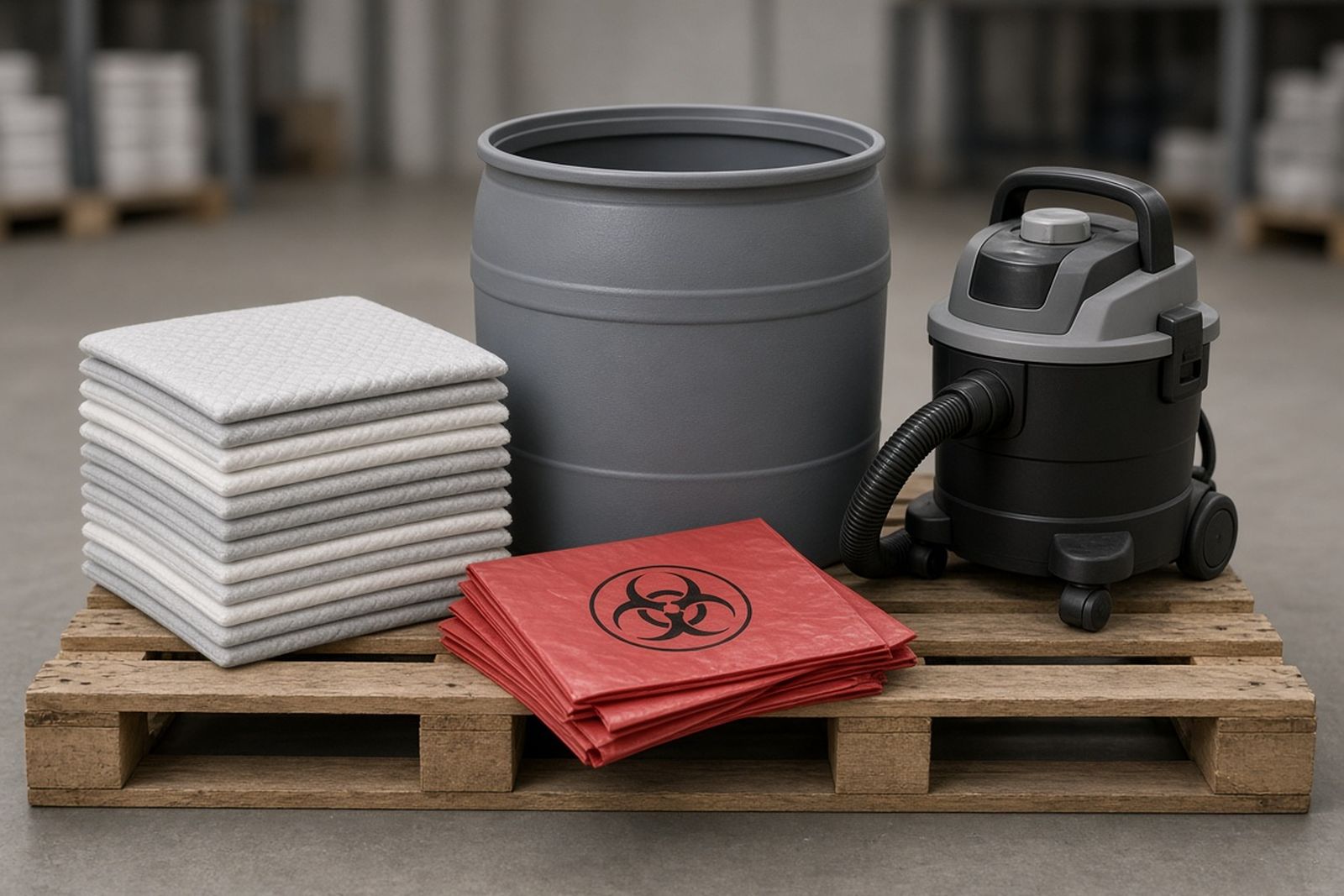
Costs explained
What drives the price, published cost ranges, and how to read a written quote line by line.
Insurance and payment
Which policies may respond, how to document a claim, and what to do if coverage is denied.
Community polls
Compare your instincts with other operations and safety leaders on scene holds, restart pressure, choosing a contractor, and supporting affected workers.
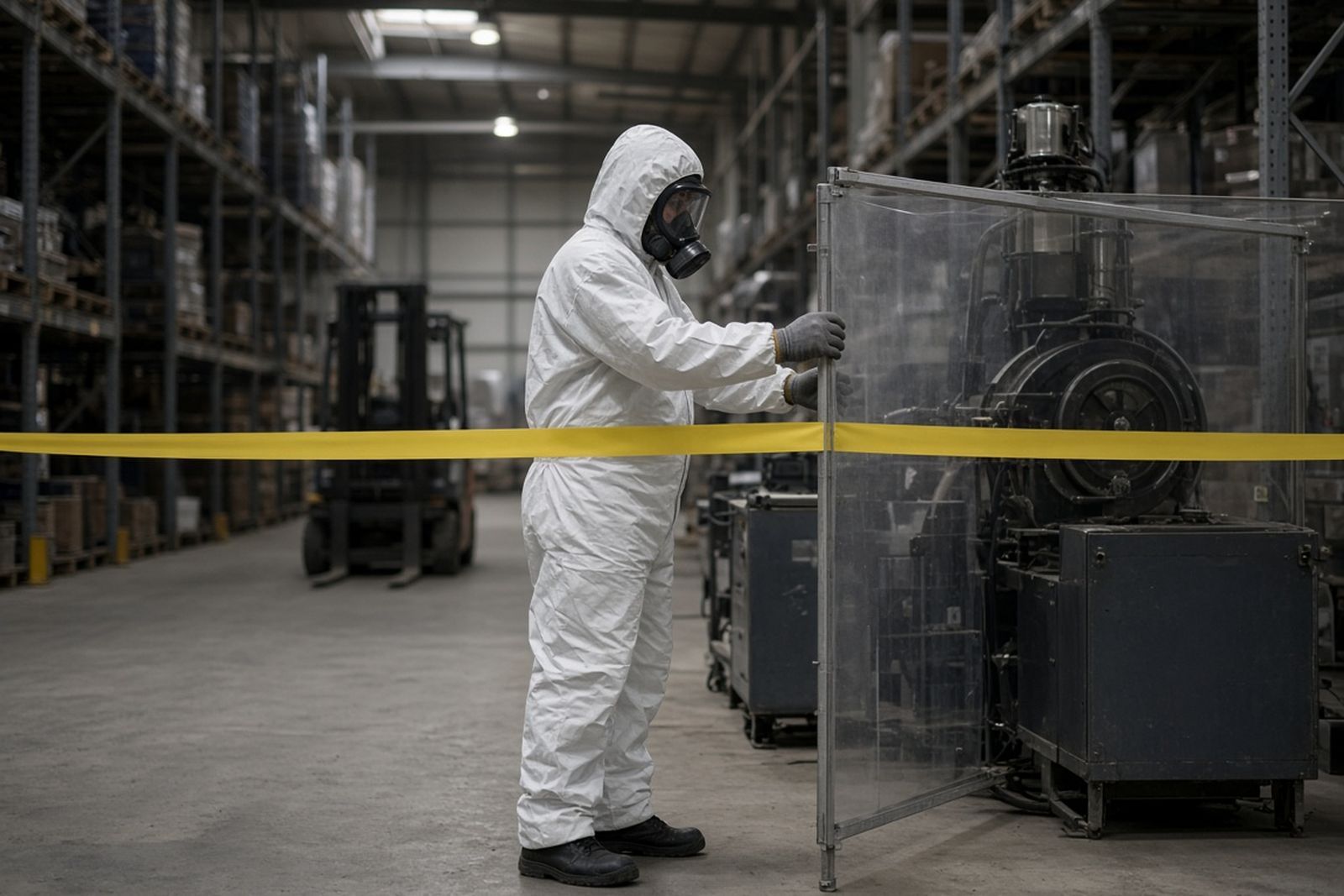
Knowledge quiz
Test what you know about spotting hazards, scene control, sealing off areas, disinfecting, waste paths, and records before an accident puts it to use.
Articles and resources
Practical articles on OSHA report deadlines and working with investigators. Others cover sites shared by several employers, planning the restart, and hard lessons other plants learned.