Industrial Accident Cleanup: Safety
Hazard-assessment articles for industrial accident cleanup, including when bloodborne, chemical, respiratory, sharps, structural, or waste controls may apply. PPE and containment must follow the actual exposure—not a universal checklist.
Articles in the safety category look at the hazards that make industrial accident cleanup different from routine janitorial work. You will read about the risk of germs carried in blood on a production floor and about which chemicals can safely be used together. Other topics include energy stored in machinery, slippery fluids on smooth concrete, and the strict steps confined spaces require. The articles compare what trained cleanup workers do with what well-meaning coworkers sometimes try. They explain how a hazard review should guide every choice of protective gear. The goal is to help you spot the risk before anyone reaches for a mop or a pressure washer.
Get an email reply about industrial accident cleanup
Send a short message to the follow-up inbox. A coordinator can reply by email. This form does not send emergency help; call 911 first if anyone is in danger.
Safety knowledge matters for your choices because the people most likely to get hurt after an accident are the ones who try to fix it fast. Employees may feel they should help a coworker's area recover. Supervisors may want the line cleared before the next shift. These articles give you words to slow that urge without brushing it off. They also help you judge whether a provider's safety plan fits your site's real conditions. That includes air flow, locking out energy sources, and entry permits. When you understand the risks yourself, you are better able to protect your workers. You can also spot a contractor who is cutting corners.
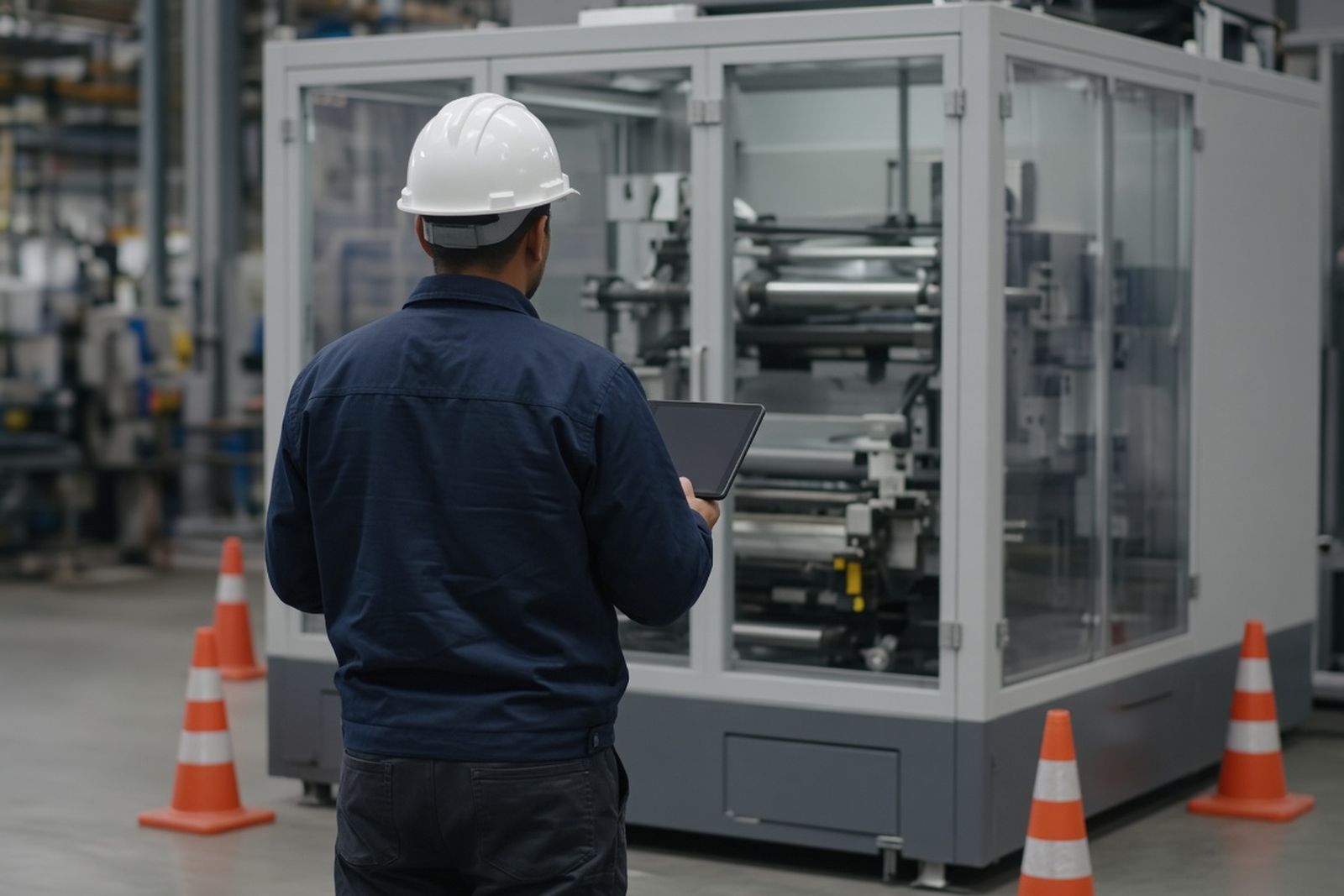
DIY vs Professional Industrial Accident Cleanup: The Critical Differences
Should your maintenance or janitorial team clean up after a workplace injury, or should you call a specialist? Compare training, exposure, and liability.
In-house staff can handle minor workplace blood spills on hard floors if they are trained under a bloodborne pathogens program, properly equipped, and following a written procedure. A professional provider is the better choice when fluids reach machinery, porous concrete, drains, or chemical areas, after a serious injury or death, or when coworkers who witnessed the event would otherwise be asked to clean.
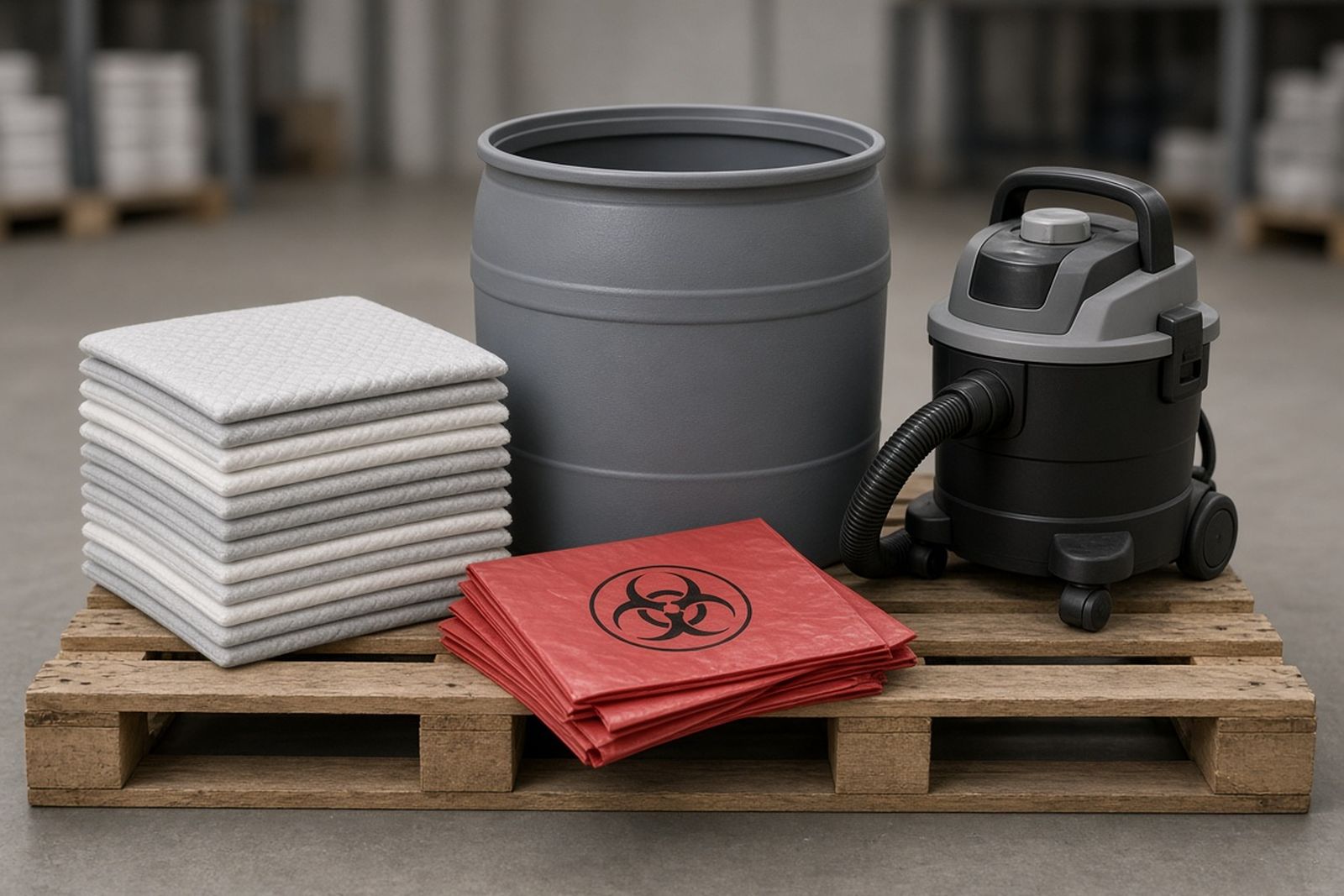
10 Industrial Accident Cleanup Safety Risks to Assess Before Work Begins
Stored energy, oily floors, sharp metal, process chemicals, and confined spaces can injure cleanup crews after a workplace accident. Ten risks to check first.
Before industrial accident cleanup begins, assess ten risks: unexpected machine startup from stored energy, bloodborne pathogen exposure, sharp edges and metal fines, reactions with process chemicals, confined space atmospheres, slippery floors, electrical hazards, ignition sources in flammable areas, damaged structures or suspended loads, and emotional strain on coworkers. A joint check with site safety and maintenance staff prevents most secondary injuries.
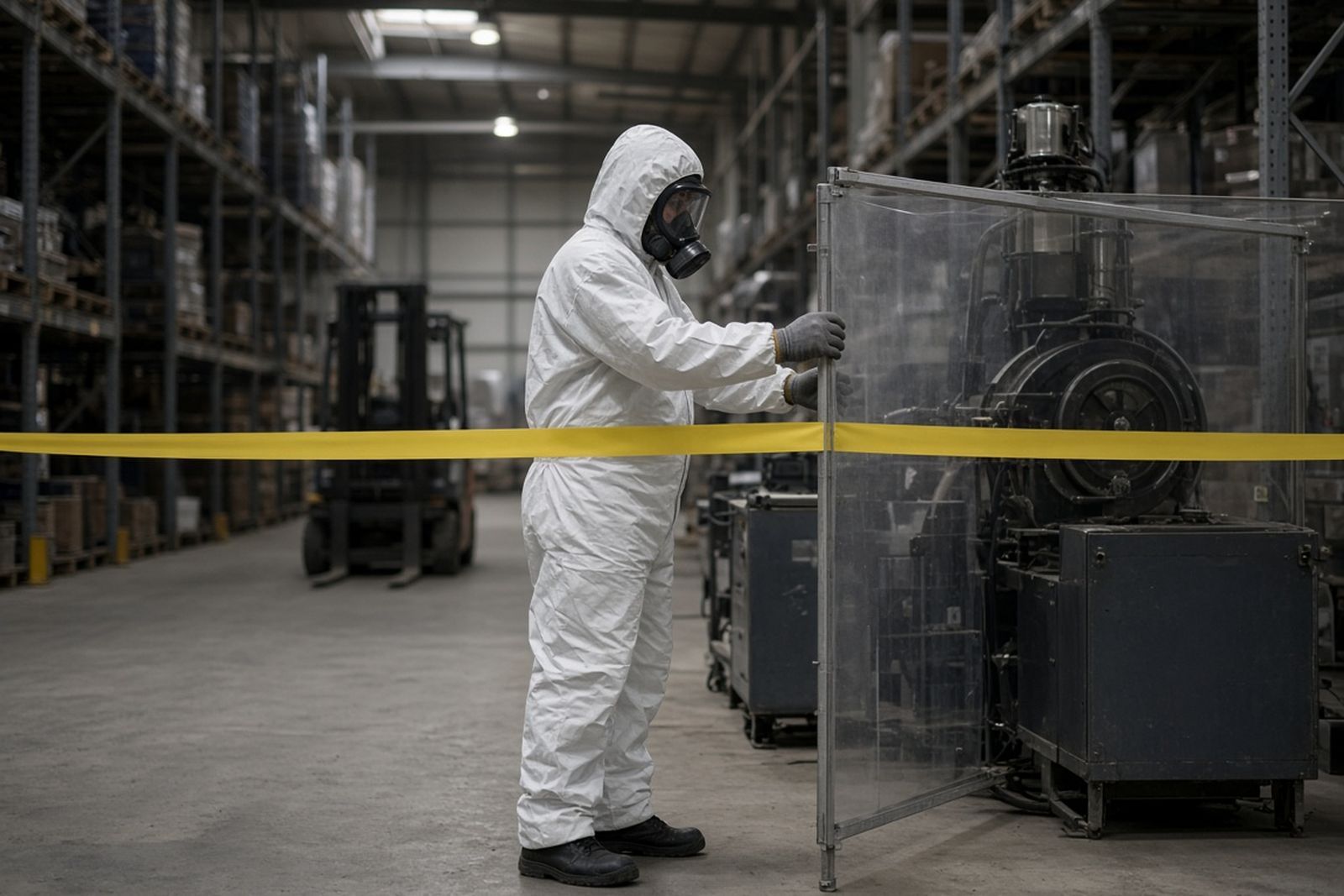
PPE Planning for Industrial Accident Cleanup: Start With the Hazard Assessment
Blood on a press or conveyor is rarely the only hazard. Build PPE for industrial accident cleanup around oils, sharp metal, stored energy, and the plant itself.
PPE for industrial accident cleanup should come from a written assessment of the specific scene, not a generic biohazard kit. Blood and body fluids call for fluid-resistant gloves, coveralls, and eye protection, but plants also add hydraulic oil, coolant, sharp metal, hot surfaces, and heavy equipment. That usually means chemical-rated gloves over cut-resistant liners, safety footwear, hard hats under overhead hazards, and hearing or respiratory protection where required.
Sourced figures on safety
- 224,450
Exposure to harmful substances or environments produced an annualized 224,450 days-away, restricted or transfer (DART) cases in private industry in 2023-24.
Read with care: Two-year annualized estimate; includes heat, chemical and other exposures.
Source: BLS (2024)United States private industry, 2023-2024 annualized
- 355,800
Manufacturing reported 355,800 nonfatal injuries and illnesses in 2023, an incidence rate of 2.8 cases per 100 full-time workers.
Read with care: Total recordable cases; only a portion involve bleeding injuries.
Source: BLS (2023)United States private manufacturing, 2023
- 391
Manufacturing recorded 391 fatal occupational injuries in the United States in 2023.
Read with care: Sector total across all event types; not all deaths leave biohazard contamination.
Source: BLS (2023)United States, 2023, manufacturing sector (NAICS 31-33)
These figures are public research and agency data, not this network's own job records. Keep each number with its population, year and limits; none of them predicts cost, timing or outcome at a specific property.
What research has found
Findings from published studies of people and properties in situations like this one. They describe what researchers observed in a specific group; they are not predictions for your case.
People were more willing to shelter in place when imagining themselves already at home.
Flushing lowered measured contaminant levels in some homes, but not all.
Safety: common questions
Should our own maintenance team handle a small blood cleanup on a machine?
That depends on three things. Are those employees trained under your program for protecting workers from germs carried in blood? Do they have the right protective gear? Do they understand your exposure control plan? Even a small amount of blood on a guard or control panel can reach cracks that need careful attention. If your team lacks that training, or the contamination reaches parts that must be taken apart, a trained provider is the safer choice.
How is lockout handled when a remediation crew works on equipment?
Your facility's energy control program still governs the machine. Cleanup workers should understand lockout steps. They should work only on equipment your authorized staff has shut off, locked, and checked. They should never remove or get around locks. Clear talk about which energy sources are controlled, and who holds the keys, keeps cleaning from causing a second accident on the same equipment.
What makes confined-space cleanup different from regular floor cleanup?
Pits, tanks, vaults, and similar spaces can have bad air. They can trap fumes from cleaning products and make rescue hard. Entry usually requires air testing, a permit system, a standby attendant, and a rescue plan under your facility's program. A provider should never make up its own way into such a space. Before agreeing to any work below ground or inside closed equipment, ask how they will work with your permit process.
Should cleanup crews wear the same PPE as our production staff?
Usually they need more. Production gear is chosen for normal work. Cleanup adds blood, disinfectants, and sometimes damaged equipment. The contractor should choose protective gear based on a hazard review of this specific scene. It should also meet your site rules, such as hard hats or hearing protection. Compare the two lists during planning, so nothing is missed.
How do we keep other workers safe while cleanup is underway nearby?
Keep physical barriers in place. Route foot traffic away and post signs. Make sure air flow does not carry odors or mist into areas where people are working. Tell nearby workers what is happening and whom to contact with concerns. Check the boundaries at every shift change, since barriers sometimes get moved for convenience.
What should happen if someone is accidentally exposed during cleanup?
The person should stop, wash the affected area, and report it right away. Follow your exposure steps, or the contractor's if it is their worker. This includes a prompt medical check. Write down what happened. Before work starts again, review whether safety controls need to change. Offer support, since exposures can be frightening. Keep the details private.
Can production run on nearby lines if the cleanup involves chemicals?
It may be possible. But think about fumes, overspray, noise, and shared air systems. Review each product's safety data sheet with your EHS team and the contractor. If there is any doubt about air quality or chemical exposure for nearby workers, pause the nearby line. Or schedule the chemical steps for a time when fewer people are there.
Related community polls
Every count is a real visitor vote; nothing is seeded or padded. One vote per poll per device, and you can change your answer.
After a serious injury on the floor, what was your hardest early decision?
How did your facility handle cleanup after a serious blood incident?
More on industrial accident cleanup
Industrial Accident Cleanup services
See how workplace injury cleanup, chemical spill response, equipment cleaning, and confined space work are planned and ordered for plants and job sites.
Costs explained
What drives the price, published cost ranges, and how to read a written quote line by line.
Insurance and payment
Which policies may respond, how to document a claim, and what to do if coverage is denied.
Planning tools
Planners and checklists built for facility managers. They cover cost ranges, contractor checks, insurance steps, first-day actions, waste sorting, and in-house risk.
Community polls
Compare your instincts with other operations and safety leaders on scene holds, restart pressure, choosing a contractor, and supporting affected workers.
Knowledge quiz
Test what you know about spotting hazards, scene control, sealing off areas, disinfecting, waste paths, and records before an accident puts it to use.