Short answer
In-house staff can handle minor workplace blood spills on hard floors if they are trained under a bloodborne pathogens program, properly equipped, and following a written procedure. A professional provider is the better choice when fluids reach machinery, porous concrete, drains, or chemical areas, after a serious injury or death, or when coworkers who witnessed the event would otherwise be asked to clean.
What DIY means on a plant floor
In an industrial setting, DIY cleanup usually means your own employees handle the work: maintenance technicians, janitorial staff, sanitation crews, or production workers who happen to be nearby. That is common for small incidents, such as a minor cut at a workbench or a nosebleed on the shop floor.
For more serious injuries, the calculation changes. The volume of fluid is larger, it may have reached equipment or porous floors, and the people nearby may be shaken by what they saw. Deciding in advance where in-house work ends and professional help begins protects both your employees and your operation.
A written threshold also removes pressure from supervisors. Nobody should have to decide, in the minutes after a serious injury, whether it is fair to ask a coworker to clean up.
The same logic applies to contractors and temporary workers on site. They may not be covered by your training programs, and asking them to handle body fluids can create gaps in both safety and liability.
The legal baseline before employees touch blood
If you expect any employees to clean up blood or other potentially infectious materials, federal rules set a baseline. OSHA's Bloodborne Pathogens standard, adopted in 1991, requires employers with exposed workers to keep a written exposure control plan reviewed annually, offer hepatitis B vaccination within ten working days, and train workers at least annually.
That means you cannot simply hand a janitor a mop after an injury. The employees assigned to cleanup need to be identified in your plan, trained, offered vaccination, and supplied with appropriate protective equipment. You also need procedures for handling and disposing of contaminated materials and for reporting exposures.
Some state plans add their own requirements. Review your exposure control plan with your safety team to confirm who is covered.
If your plan does not include cleanup duties, the safest choice is to call a professional provider rather than improvise.
When in-house staff can handle it, and when to call a provider
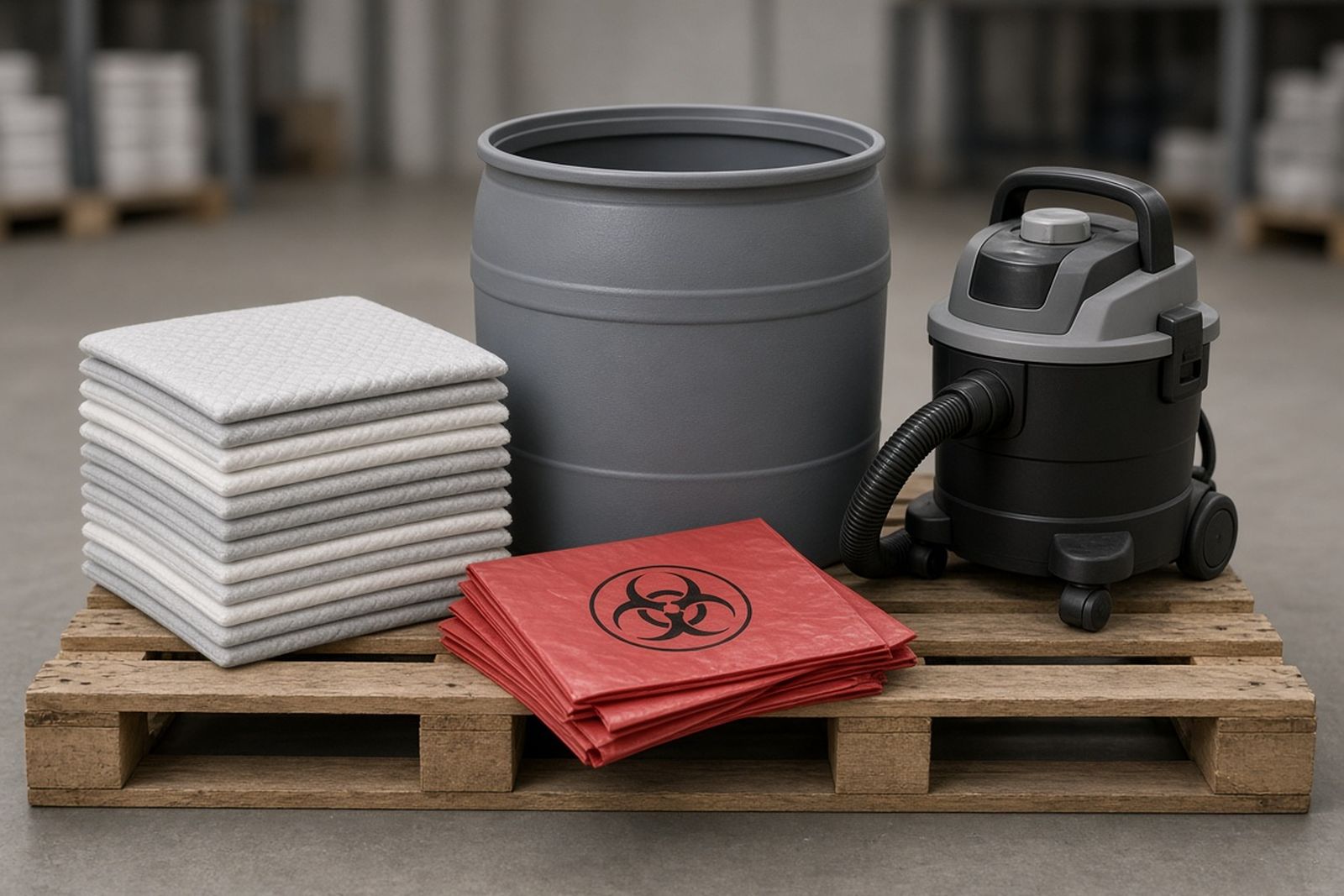
In-house cleanup can be appropriate when the incident is small and contained, the surfaces are nonporous, no machinery is involved, and trained employees are available. A few drops of blood on a sealed floor or a workbench, for example, can often be handled with a spill kit, a registered disinfectant, and proper protective equipment.
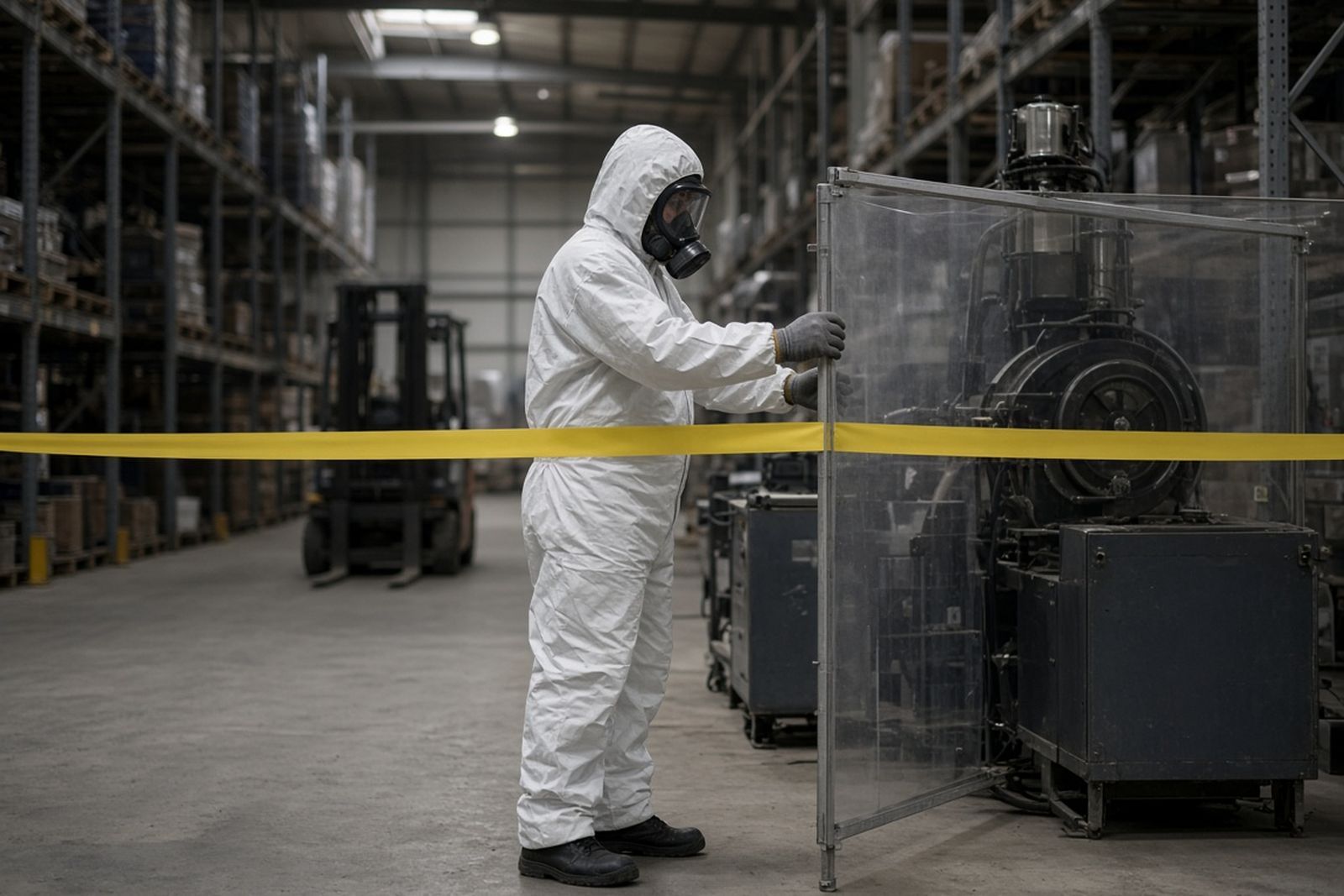
Your procedure should specify the steps: secure the area, put on protective equipment, absorb and remove visible material, clean with detergent, apply disinfectant for its full contact time, bag waste according to your plan, remove protective equipment carefully, and wash hands.
Stock spill kits in areas where injuries are more likely, and check them regularly. A kit missing gloves or disinfectant is worse than no kit at all, because it encourages people to improvise.
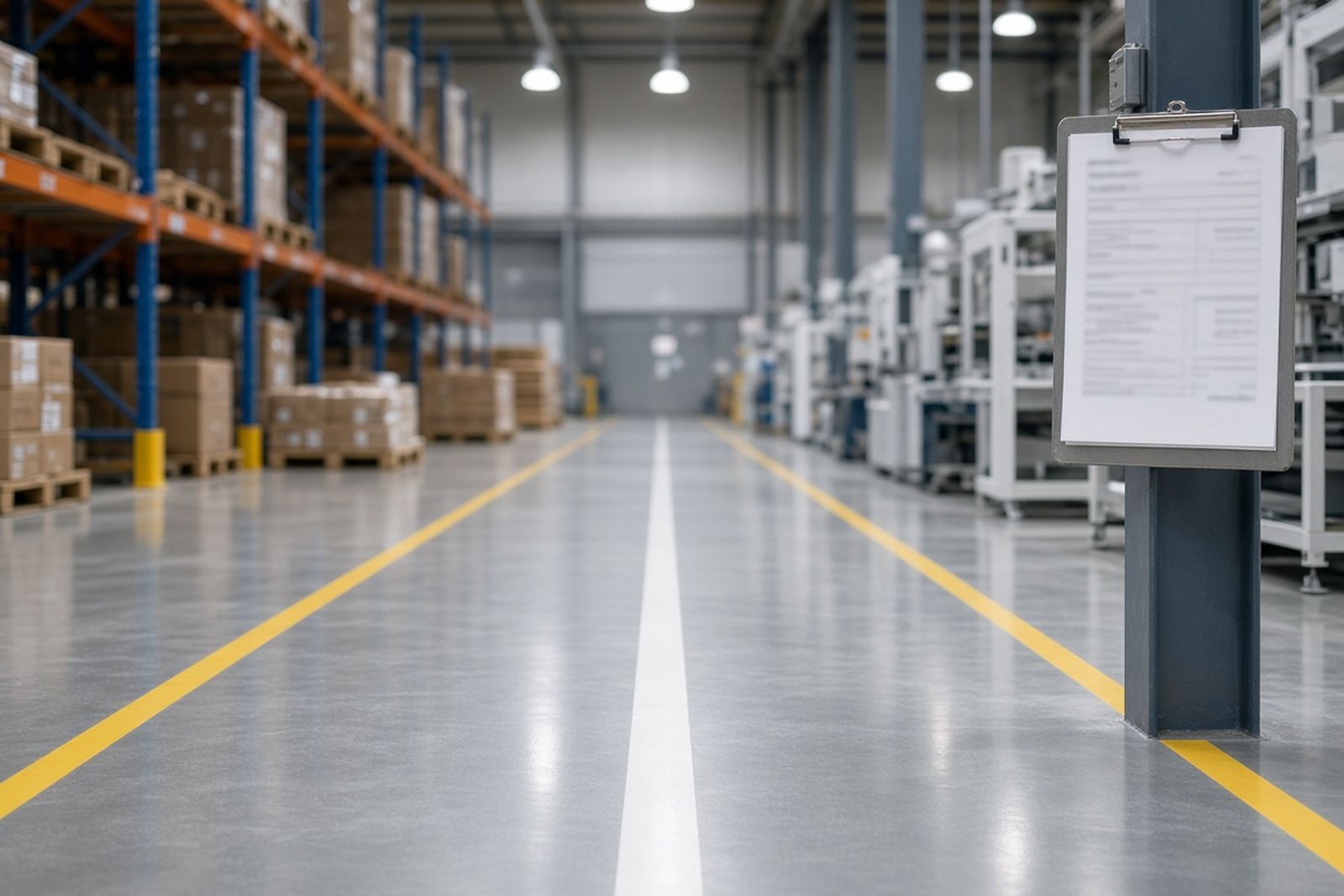
Record each cleanup, even small ones. That habit helps you spot patterns and keeps your exposure control plan honest.
Think about timing as well. An incident in the middle of a weekend night shift may find only one trained employee on site. If that person was also the first responder to the injured worker, your plan should allow them to step aside and let someone else, or an outside provider, take over.
Several situations point clearly toward professional help.
- Serious injuries or fatalities with significant blood or tissue
- Contamination inside machinery, guards, conveyors, or control housings
- Fluids on unsealed or damaged concrete, in floor joints, pits, or drains
- Mixing of body fluids with oils, coolants, or process chemicals
- Incidents in confined spaces or classified hazardous locations
- Food, beverage, or pharmaceutical lines that must meet sanitation standards
- Situations where coworkers who witnessed the event would otherwise be assigned to clean
- Any case where your exposure control plan does not cover the task
Exposure risk: your staff vs. a trained crew
Industrial workers already face significant exposure risks in their normal jobs. Exposure to harmful substances or environments produced an annualized 224,450 days-away, restricted or transfer cases in private industry in 2023-24, according to the Bureau of Labor Statistics. Adding biohazard cleanup to a worker's duties increases that exposure.
Professional crews are not immune to risk, but they are trained specifically for biohazard work, equipped with protective gear suited to it, and experienced in handling mixed contamination. They also are not the people who were standing beside the injured worker minutes earlier.
In-house staff may lack the right respirators, cut-resistant gloves, or chemical-resistant suits for a complex scene. They may not know how to separate biohazard waste from chemical waste or how to clean inside machinery without creating new hazards.
Those gaps are not a criticism of your team. They reflect the difference between routine maintenance and specialized remediation.
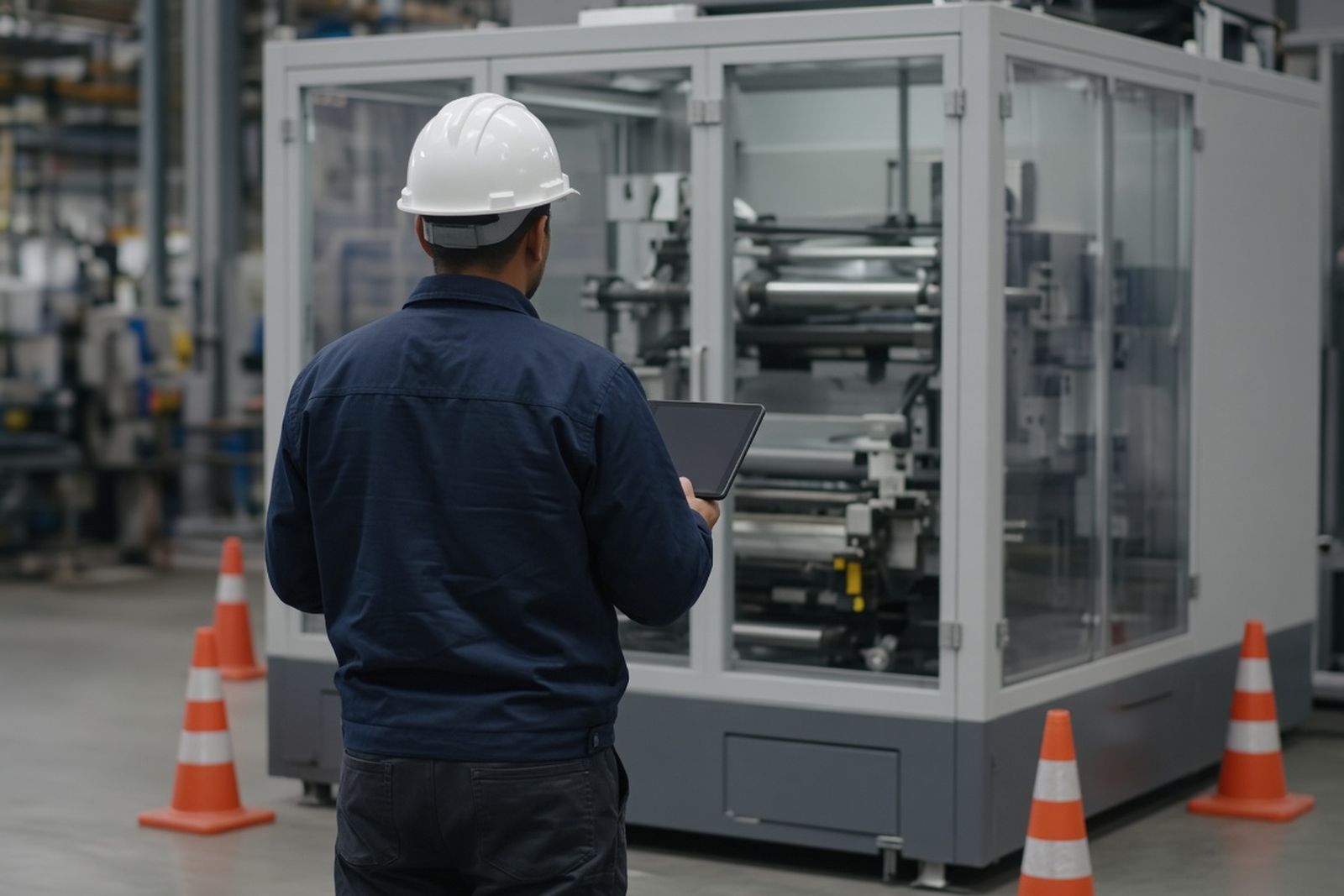
Consider the equipment involved, too. Cleaning a forklift, a press, or a conveyor after an injury often means working near pinch points and stored energy. In-house maintenance staff know the equipment well, which is valuable, but they may not have experience combining that knowledge with biohazard procedures. Pairing your maintenance lead with a professional crew often gives the best result.
Why does the human side matter so much?
Serious workplace accidents affect everyone nearby. Coworkers may have given first aid, called for help, or witnessed the injury. Asking them to clean the scene afterward can deepen the emotional impact and make it harder for them to return to that work area.
Bringing in an outside provider gives employees space to process what happened. It also signals that the company takes their well-being seriously.
Offer access to your employee assistance program or other support resources after serious incidents. If an incident involved a death by suicide, keep information about the 988 Suicide and Crisis Lifeline available for employees who may be struggling; they can call or text 988.
Supervisors benefit from support too. They often carry the weight of decisions made during and after the event.
An illustrative case: forklift injury at a loading dock
The case below is composite and illustrative. At a warehouse, a worker's leg is seriously injured by a forklift in a loading dock area. Paramedics stabilize the worker and take them to the hospital. Blood is on the dock floor, the forklift's frame, a pallet of packaged goods, and the edge of a floor drain.
The shift supervisor's first instinct is to have the janitorial team clean the area so the dock can reopen. The safety manager checks the written procedure, which states that incidents involving equipment or drains go to the contracted provider. The dock is closed, the forklift is tagged out, and the provider is called.
The provider cleans and disinfects the forklift, the floor, and the drain grate, and works with the quality manager to decide which pallet goods must be discarded. The janitorial team, who knew the injured worker, is spared the task. The safety manager files the cleanup report with the incident record and schedules a review of the dock traffic plan.
The injured worker's crew is offered time off the dock for the rest of the shift and information about the employee assistance program.
How do in-house and professional cleanup compare on cost, scope, and records?
In-house cleanup is faster to start and less expensive for minor incidents. It works when employees are trained under your bloodborne pathogens program, equipped properly, and following a clear procedure. It rarely includes formal verification or detailed documentation beyond your own records.
Professional cleanup brings specialized protective equipment, experience with machinery and mixed contamination, products chosen for industrial surfaces, waste handling across multiple categories, and a written report. It costs more, but it reduces exposure for your employees and helps restore the area with confidence.
For many plants, the best approach is a combination: in-house staff for small, contained spills, and a pre-arranged provider for everything else.
Whichever route you choose, document the decision and the work. Insurers, auditors, and regulators may ask later how the scene was handled, and a clear record protects everyone involved.
Preparing now
Review your exposure control plan and confirm which employees are covered for cleanup duties. Train them, offer vaccination, and supply spill kits. Write a clear threshold for when professional help is required. Identify and vet a provider in advance, and share your site's safety rules, chemical lists, and sanitation requirements with them.
Include your procurement team in that preparation. Having a contract or purchase order framework in place before an incident means the provider can be dispatched without waiting for approvals, which matters when production is stopped and employees are waiting to learn what happens next.
Practice the process during safety drills so supervisors know what to do.
Your OSHA area office or state plan office can tell you whether your state operates its own occupational safety plan with additional requirements.