Short answer
Several OSHA rules come together after an industrial accident. You must report qualifying injuries under 29 CFR 1904. You must leave the area as it is if investigators ask. And you must lock out equipment, meaning shut off and lock its power, before anyone cleans it. Workers assigned to clean blood fall under the Bloodborne Pathogens standard. Chemical spills may bring duties under chemical safety rules or HAZWOPER. Many plants use trained outside cleanup companies so that production staff are not exposed.
The first hours: reporting, and whether you may clean
The first duty is always care for the hurt person. Once emergency crews have taken over, the clock on your legal duties starts. It runs faster than many supervisors expect.
OSHA's recordkeeping and reporting rule is 29 CFR 1904.39. Under it, employers must report job-related deaths, hospital stays, amputations and loss of an eye to OSHA. The deadlines are short and fixed. Check the current text of the rule or call your area office so you know the deadline for your event. States with their own plans may have their own reporting steps.
Reporting is not the same as recording. Even if an accident does not call for a phone call to OSHA, it may need to go on your injury and illness log. Your environmental, health and safety (EHS) lead or safety consultant should make that call. It should not be left to a production supervisor under pressure.
Not without checking first. When you report, ask plainly whether the agency wants the scene left as it is, and for how long. Write down the answer, the time and the name of the person you spoke with.
If someone died, police or a medical examiner may also be in charge of the scene. Their instructions come first. Do not move equipment, guards or materials until they release the area.
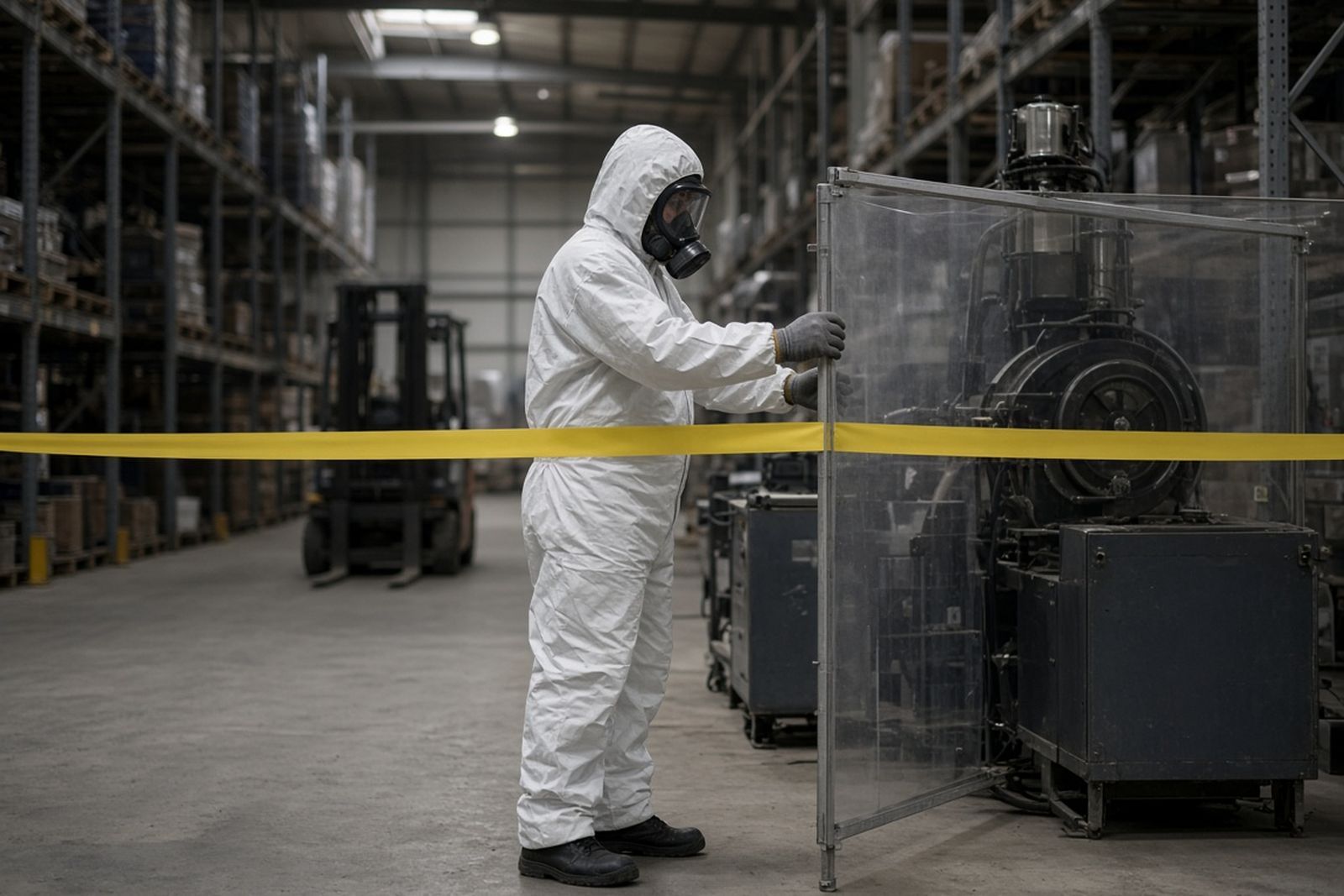
What you can usually do right away is secure the area. Block off the space and stop foot traffic through it. Keep machines powered down, and have someone log who enters. If blood or fluids are near a walkway or drain, covering or containing them without disturbing evidence is often fair. But ask before you do more.
Photos taken from the edge of the area help everyone later. They show conditions before any cleaning begins. They also support your own review of what caused the accident.
Lockout/tagout applies to cleanup, not just maintenance
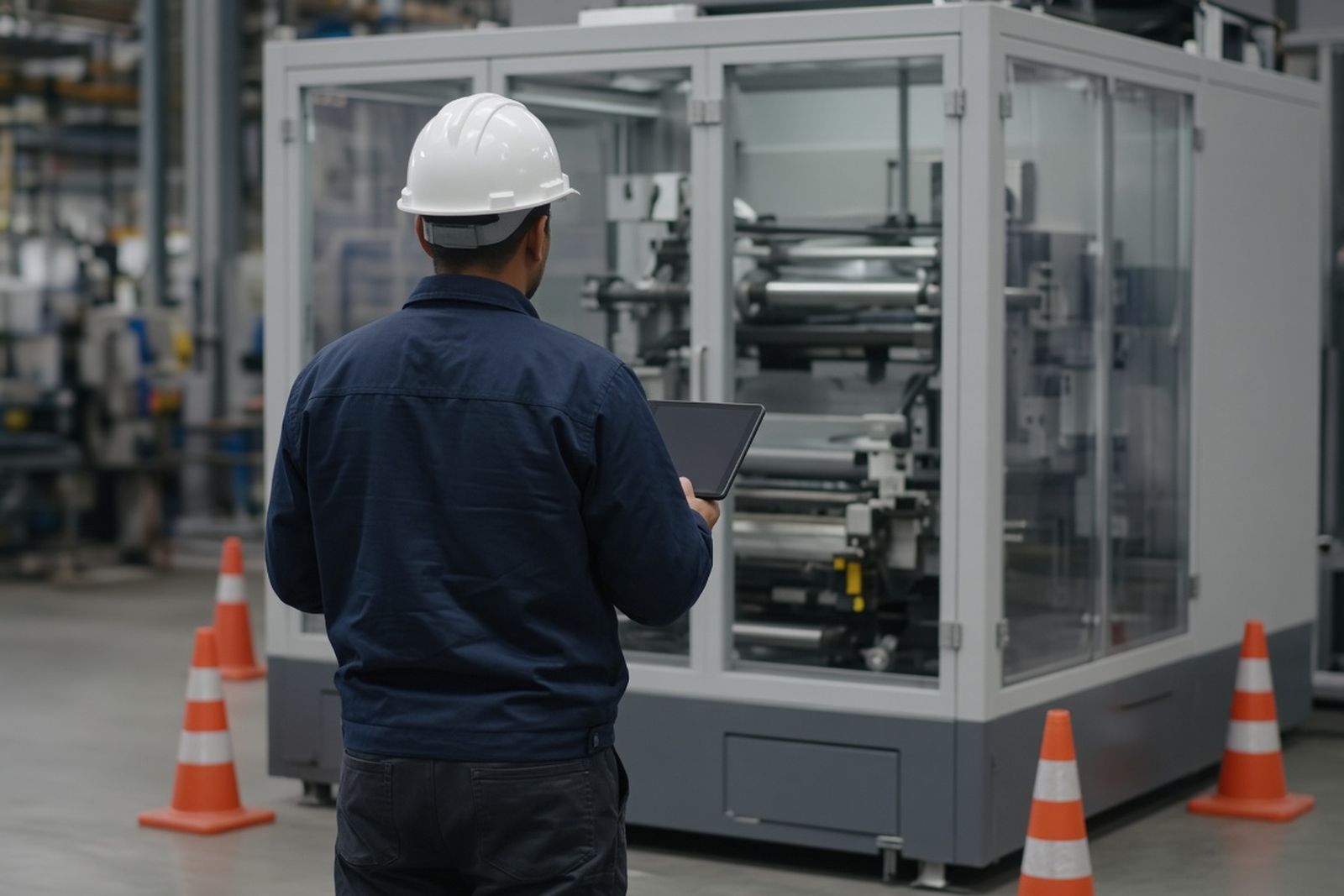
Many serious industrial injuries involve machines, and the cleanup often involves the same machine. Reaching into a press, conveyor, mixer or saw to clean it exposes the cleaner to the same power that caused the first injury.
The Control of Hazardous Energy standard, 29 CFR 1910.147, applies to servicing and maintenance work. Cleaning a machine that could hurt someone if it started up by surprise usually falls under it. Every power source must be cut off and checked before hands go in. That includes electrical, hydraulic, air-powered, gravity and stored mechanical energy.
This is not just a what-if worry. According to Safety+Health's report on OSHA data, OSHA cited Lockout/Tagout 2,443 times in fiscal 2024, ranking fifth among the rules cited most. An outside cleanup crew working on your equipment should be part of your lockout program. Your approved workers should put on the locks, or a written group lockout process should be in place.
Who is covered by the Bloodborne Pathogens standard during industrial cleanup?
The Bloodborne Pathogens standard, 29 CFR 1910.1030, applies to workers who can reasonably be expected to touch blood and other body fluids that can carry disease as part of their job. In a factory or warehouse, that often includes named first aid responders. It also includes anyone assigned to clean up after an injury.
Your plan may be to have your own janitors or maintenance staff clean up blood. If so, they must be part of your written exposure plan. They must be trained, offered the hepatitis B shot and given the right protective gear. If you would rather not take on that duty, many sites hire a cleanup company. Its workers are already covered by their employer's program.
Either way, do not ask coworkers who happen to be nearby to help. Beyond the legal issue, cleaning up after a coworker's injury can be deeply upsetting.
Think, too, about the workers who responded first. A supervisor who pressed on a wound or a coworker who helped free the hurt person may have touched blood. Your after-exposure steps should reach them quickly. Offer a private medical exam as soon as possible, even if they say they are fine.
When chemicals, oils, or process materials were released too
Industrial accidents rarely involve only blood. Hydraulic fluid from a burst line, coolant, solvents or product from a punctured container may be mixed into the scene. That adds chemical dangers to the germ dangers.
The Hazard Communication standard, 29 CFR 1910.1200, says workers must have safety data sheets and training for dangerous chemicals they may be exposed to. That includes the disinfectants used during cleanup. Safety+Health reported that OSHA issued 2,888 Hazard Communication citations in fiscal 2024. That made it the second most-cited rule for the third year in a row.
Larger or uncontrolled chemical spills can bring the HAZWOPER standard, 29 CFR 1910.120, into play. It has its own training and response rules. Your EHS team should decide whether a spill is small enough for trained local staff to handle. If not, it needs an emergency response.
- Name every substance involved and pull its safety data sheet
- Check whether cleanup chemicals are safe to use with what is left from the process
- Confirm that the written review of protective gear covers both germ and chemical exposure
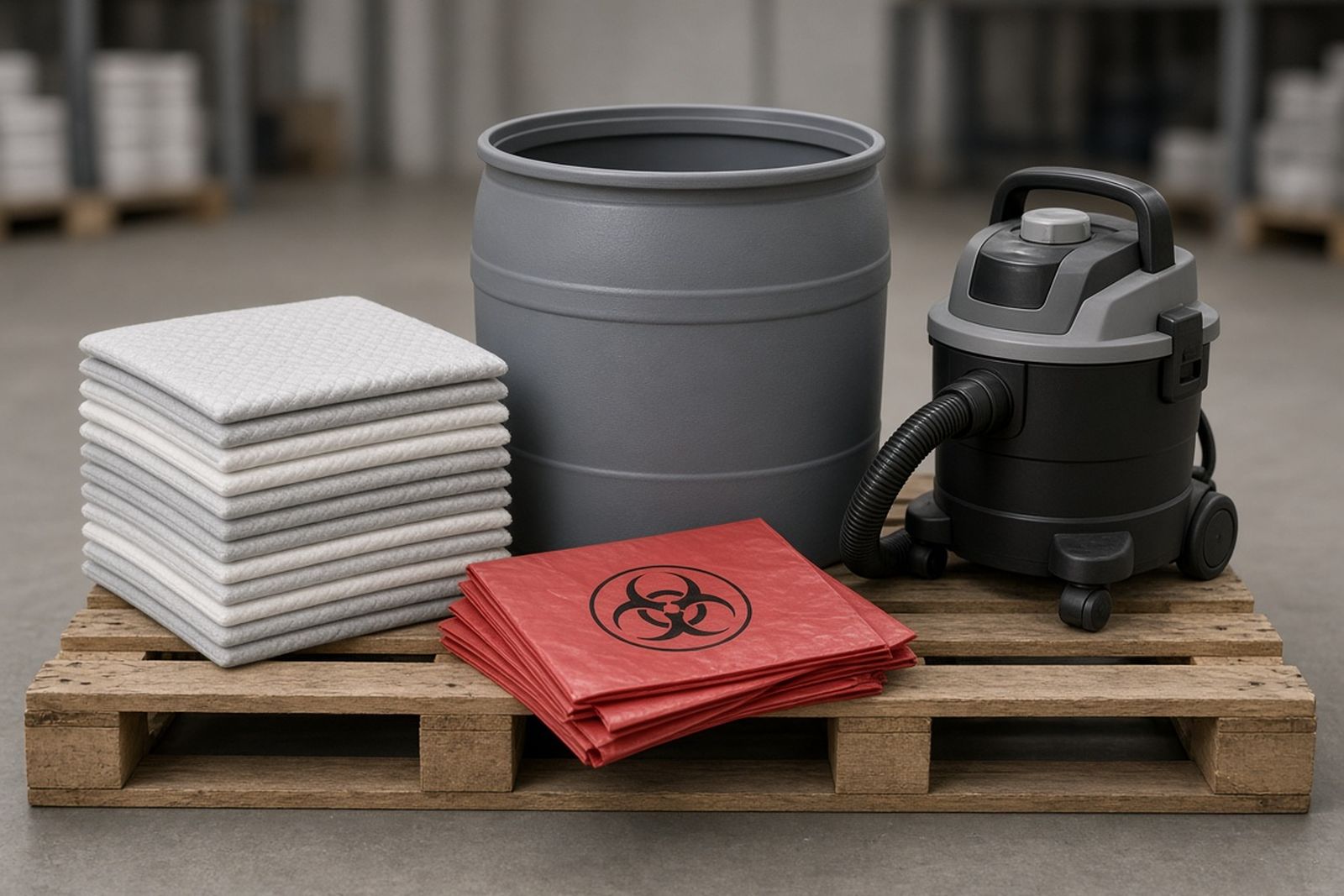
- Keep soiled absorbents and debris separated by waste type
- Decide whether any spill must be reported to environmental agencies
What to expect from an outside remediation contractor
Bringing in a cleanup company does not remove your duties as the host employer. When workers from more than one employer share a site, OSHA can look at both companies. It can look at the one that controls the site and the one whose workers are exposed. That makes it worth a short talk before the crew starts.
Share the dangers of your site. Tell them about power sources on the affected equipment, chemicals in the area, tight enclosed spaces nearby and any forklift or vehicle traffic. In return, ask the company to explain how its own program covers its workers. Confirm who will supervise its crew while it is on your floor.
Agree on who does what, too. The cleanup company cleans and disinfects. Your maintenance team handles guards, electrical panels and anything that needs to be put back together. Mixing those roles on the fly is how gaps in lockout happen.
- Proof that workers are covered by a written plan for bloodborne germ exposure
- Their written review of gear needs and their respirator program for this kind of work
- How they will take part in your lockout steps
- The disinfectants they plan to use, with safety data sheets
- How they will pack, label and remove soiled waste
- The name of the person in charge of their crew on site
Seven records to keep after the scene is released
Paperwork tends to be the last thing on anyone's mind after a serious injury. But it becomes important quickly. OSHA inspectors, insurers and your own leaders will want to see what happened and how it was handled.
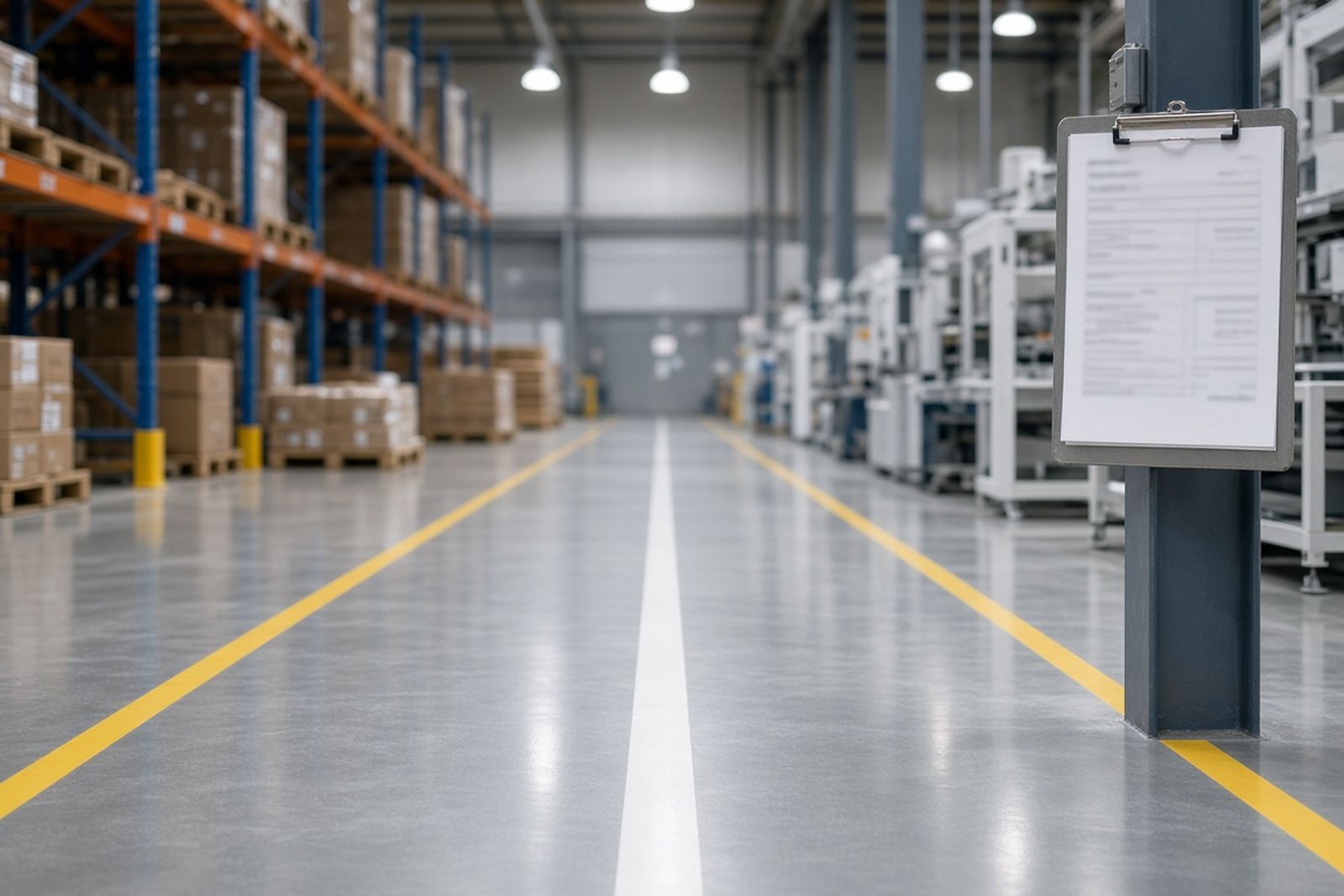
Keep the records in one place, whether that is a shared folder or a binder. Limit who can see them so workers' medical details stay private. Store the cleanup record with the investigation file. That way, anyone reviewing the event later sees the cleanup and the work on its cause together.
- OSHA report confirmation and notes on any instructions to hold the scene
- Injury and illness log entries and accident reports
- Lockout records for the equipment that was cleaned
- Training and vaccine records for workers who handled blood
- The cleanup company's scope, product list and waste shipping records or disposal receipts
- Photos before and after cleaning
- Findings on the cause and the fixes you made
State plans and other agencies
Many states run their own OSHA-approved plans. These can have different reporting steps and extra rules. If your plant is in a state with a state plan, your contacts and forms will differ from federal OSHA. Sometimes your deadlines will too.
Other agencies may also be involved, based on your industry. Food plants have food safety regulators. Chemical plants may have environmental duties. Mines and shipping sites fall under separate federal agencies. Your EHS team should map these ahead of time so no one is guessing during an emergency.
Rules vary by state and county; verify with the local authority. Build a one-page contact list now. Include your OSHA area or state plan office, the local police non-emergency line and the medical examiner. Add the environmental agency, your insurer and your cleanup company. Post it where supervisors can find it.