Short answer
Before you hire a company to clean up after an industrial accident, ask ten things. Ask about its work with machines and lockout, which means shutting off and locking a machine's power. Ask about its programs for bloodborne germs and chemical safety. Ask how it handles spots where chemicals and blood are mixed, and which products and wet times it uses. Ask how it records and disposes of waste, and how it works with investigators and your safety team. Ask how it hands the area back. Clear, specific answers point to a company that fits an industrial site.
Why an industrial floor calls for a different contractor
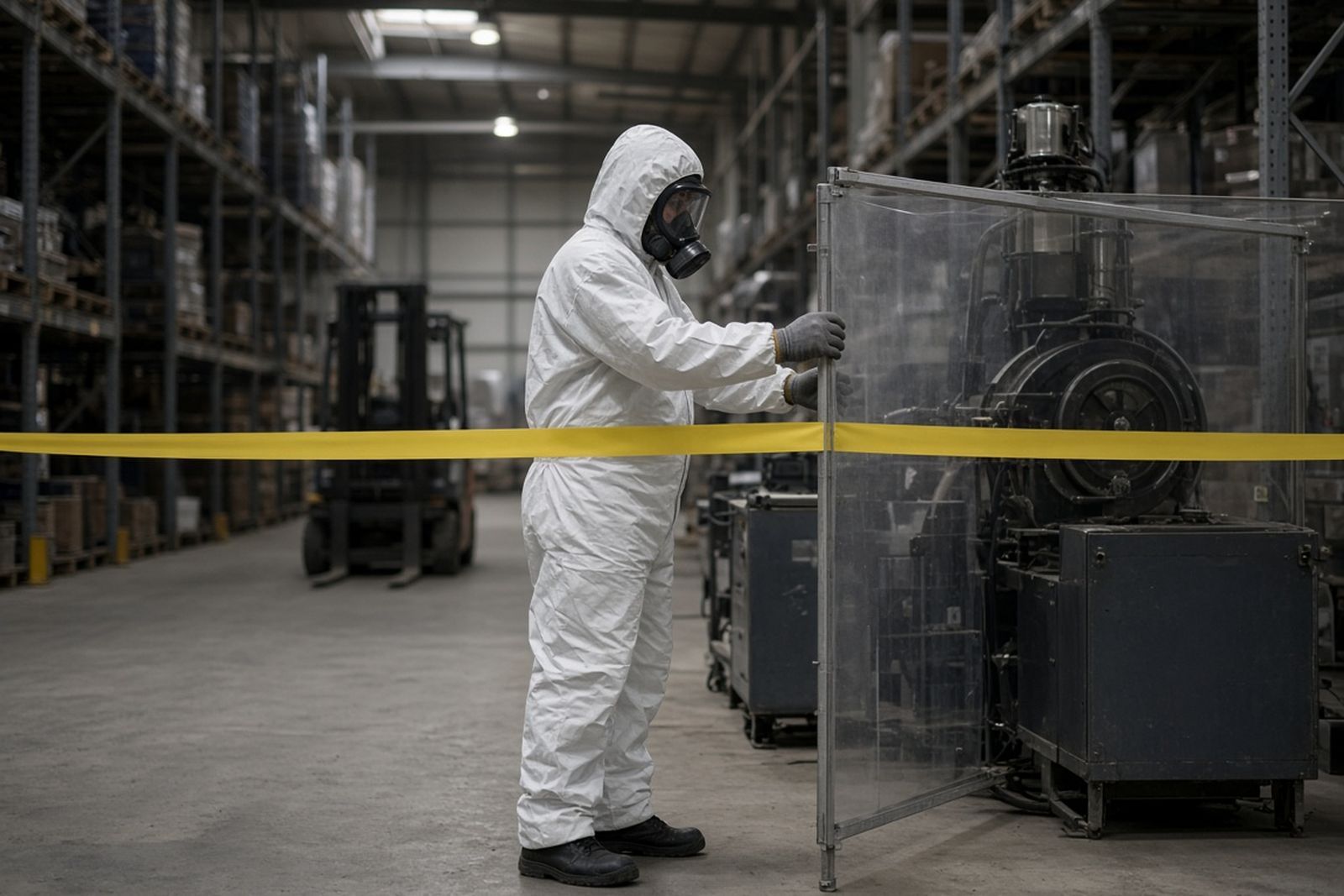
Many companies that clean up after injuries in homes, offices or vehicles do excellent work. An industrial floor adds conditions they may not see often. These include machines that still have power, guards and housings that hide blood, oils and process chemicals, and tight enclosed spaces. They also include food-contact surfaces with their own rules and a site safety program the crew must follow.
You also have more people watching. Your company safety team, your insurer, OSHA and possibly an equipment maker may all review what the company did. A company that is at ease in homes but new to plant procedures can cause delays. Worse, it can create safety risks.
The ten questions below are meant to bring out those differences quickly. Ask them by phone before the walk-through. Then ask the company to confirm the key answers in writing.
It is also worth asking these questions before you ever need them. Many sites approve a cleanup company ahead of time, the same way they approve electrical or rigging vendors. That way the paperwork, orientation and insurance certificates are already on file when an accident happens.
Questions 1 and 2: machinery experience and lockout
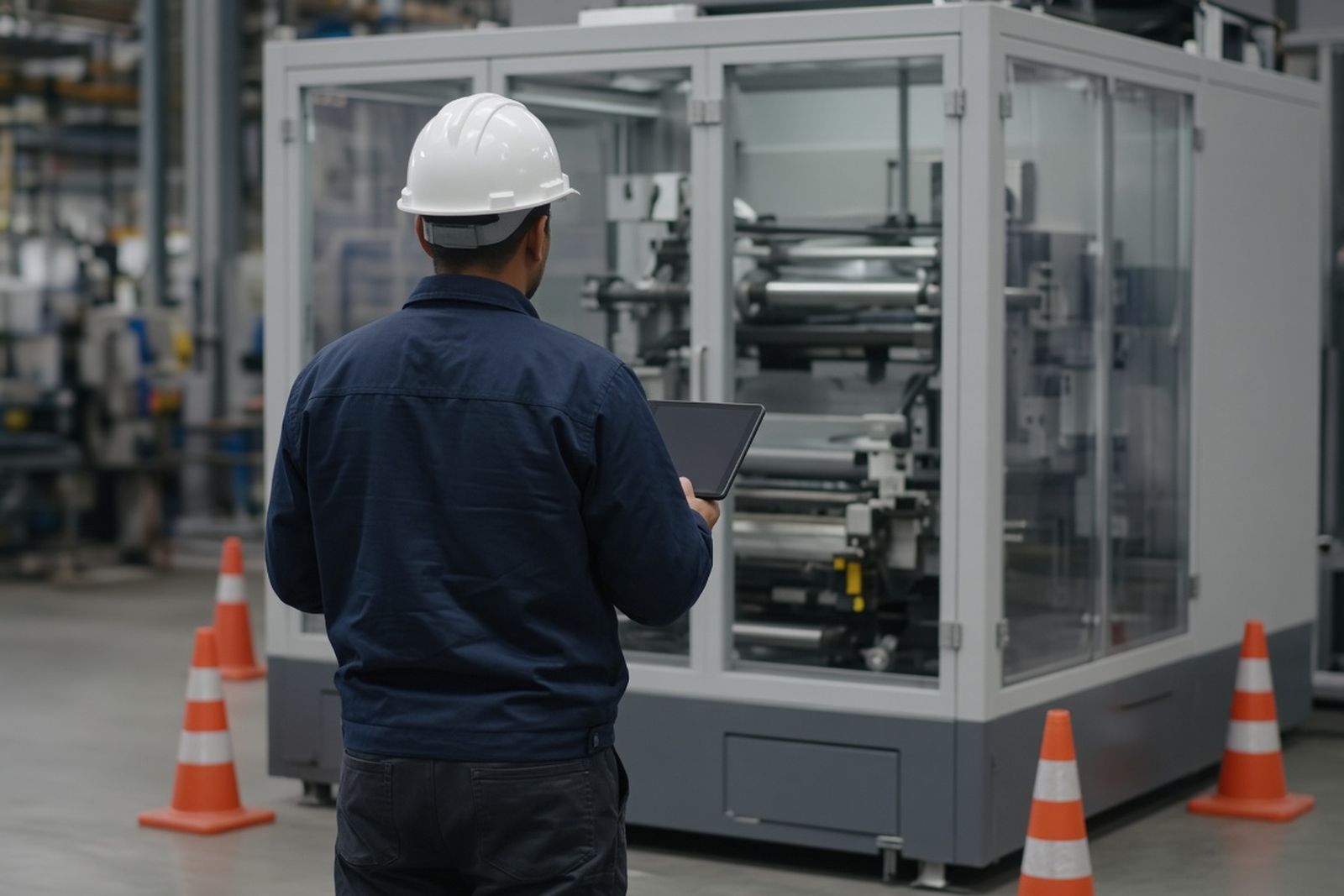
Question 1: Tell us about a recent job with equipment like ours. Listen for details, such as presses, conveyors, mixers, packaging lines or forklifts. Listen for how the crew reached blood inside guards or housings. General claims about industrial experience are not enough.
Question 2: How do you work under our lockout steps? A strong answer explains that the crew will not touch equipment until power sources are cut off and checked. Workers put their own locks on next to yours. Who puts on, checks and removes each lock is agreed in writing before work starts.
If a company seems not to know lockout, or suggests it can work around running equipment, end the talk. That answer alone tells you it is not the right fit for your site.
Questions 3 and 4: technician safety and hazard communication
Question 3: Do you keep a written program for bloodborne germs, including training, protective gear and the hepatitis B shot for workers? Industrial accident scenes involve blood and body fluids. The company's workers need the same protections your own workers would. Ask how training is recorded and whether you can see a summary.
Question 4: How do you handle chemical safety paperwork and labels for the products you bring onto our site? Gaps in this area are common across industry. And a company's products add new chemicals to your site. The company should send safety data sheets for every product ahead of time and label containers properly.
These answers matter for your own rule-following too. While the job lasts, workers on your site become part of your safety picture.
Questions 5 and 6: mixed contamination and product choice
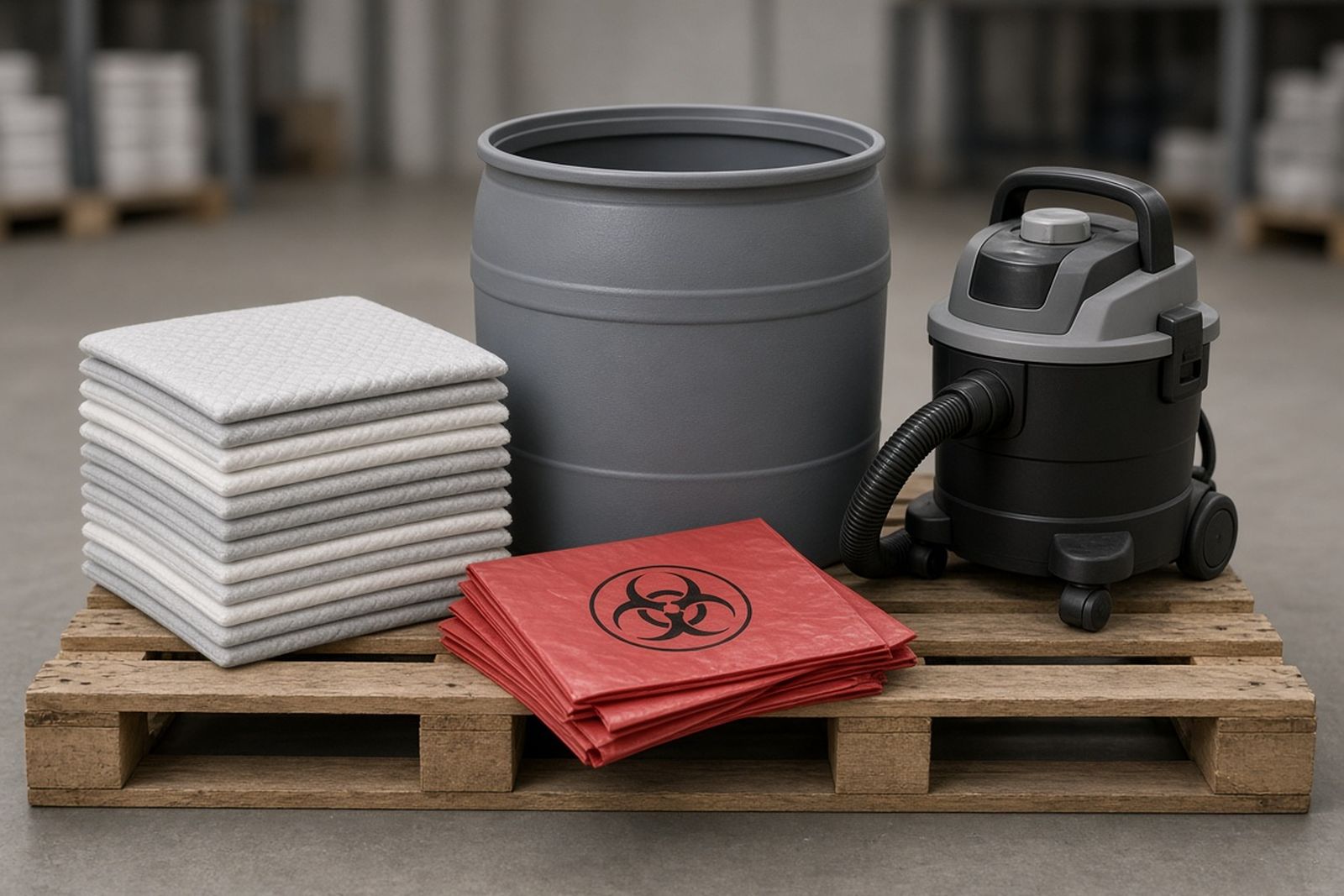
Question 5: How do you handle spots where blood is mixed with oils, coolants or process chemicals? Look for an answer that covers removing grease before disinfecting. It should mention checking which chemicals are safe together using your safety data sheets. It should also mention keeping waste apart when both germ and chemical dangers are present.
Question 6: Which cleaning and disinfecting products will you use, and what are their EPA registration numbers? How long do their labels say surfaces must stay wet? If food-contact or drug-making surfaces are involved, ask how the company will meet any rinse rules. Ask whether the products are right for those surfaces.
Chemical questions deserve careful answers on a plant floor. There, process materials and cleaning products can meet in ways a home job never tests. A company that treats them lightly is a risk you do not need.
Questions 7 and 8: How will you work with investigators, and what will you document?
Question 7: How do you work with OSHA, police, the medical examiner and our own investigation team? The company should understand that the scene may need to be left as it is. It should not start until you confirm the scene is released. It should photograph conditions before and during work in case investigators have more questions.
Question 8: What will your final report include? At a minimum, ask for photos, a list of areas and equipment cleaned, products and wet times, and items thrown out. Also ask for waste disposal records, lockout notes and a signed statement that the work is done. Ask for a sample report from an earlier industrial job with names and details removed.
Good records serve your review of what caused the accident, your insurer and your company safety team all at once. You should not have to rebuild them afterward.
Questions 9 and 10: How are changes approved, and how do you hand the area back?
Question 9: If you find more blood once guards are off, how will you tell us, and how is the change approved? Hidden blood inside equipment is common. The only acceptable process is to stop and show your named contact. The crew should record the conditions and get written approval before going on.
Question 10: What happens when you hand the area back? The company should describe a joint check with your safety and maintenance leads. It should confirm that guards and covers are ready to go back on. It should remove its locks under your steps and deliver the final report. The equipment is not back in your control until that process is done.
Before you sign, ask the company which state environmental agency and waste hauler it uses for industrial biohazard waste where you operate. Confirm that answer with your own environmental lead.
Answers that should send you elsewhere
Most companies will answer at least some questions well. What matters is whether any answer shows a gap that would put your people, your equipment or your records at risk. A few answers are serious enough on their own to rule a company out. That holds no matter how fast it can arrive or how low its price is.
Pay attention to tone as well as content. Say a company gets defensive when you ask about lockout or safety data sheets. That tells you how it is likely to react when your safety manager raises a concern mid-job. Companies that are at ease on industrial sites expect these questions and usually welcome them.
If you have no time to call another company, bring your concerns to your company safety team or broker. They may already have a checked vendor on file.
- Willing to start before investigators or your team have released the scene
- Any hint of working on equipment that has not been locked out and checked
- No safety data sheets on hand, or not knowing what they are
- Cannot name products or registration numbers
- No plan for waste that has both chemical and germ hazards
- Unwilling to put the scope, assumptions and change process in writing
- Offers to have your own workers help with cleanup to lower the price
A worked comparison at a food plant (illustrative)
The case below is a made-up blend, not a real job. A cleaning worker at a bakery plant is hurt on a mixer during an overnight cleaning shift. After the scene is released, the safety manager calls two cleanup companies.
The first company has strong experience in homes and answers questions about bloodborne germs well. But it hesitates on lockout and cannot say which of its products are right for food-contact surfaces. The second company describes a recent job on a similar mixer. It explains how it works under a site's lockout steps. It names products that suit food-contact surfaces, along with rinse steps, and sends a sample industrial report.
The manager picks the second company. She shares its written answers with the plant's food safety lead, who approves the product choices before work starts. The mixer goes back into service with records the food safety team can file next to its own cleaning records.
What else should you confirm before the crew arrives?
Beyond the ten questions, a few practical checks will help the job start smoothly. Most are standard for any contractor on an industrial site. But they are easy to miss in the rush after an accident.
Once these are confirmed, name one person from your team as the company's single contact for the whole job.
- Insurance certificates that meet your company's rules for contractors
- Your site safety orientation finished by every worker
- Safety data sheets for all products the crew will bring
- A written scope with assumptions, what is left out and what triggers a change order
- Agreed lockout roles and the name of the maintenance contact
- Plans for hauling and disposing of waste
- The on-site supervisor's name and phone number