Short answer
A local company can often reach your plant faster. It knows your area's regulators and haulers, and the owner may be on site. A national company can cover many plants under one agreement. It brings heavy equipment, deeper chemical response and standard reports, though it may use subcontractors. Judge both on the crew that will really show up, what they can do with blood and chemicals, their safety record, and how they fit your contractor program.
Why a plant changes the choice
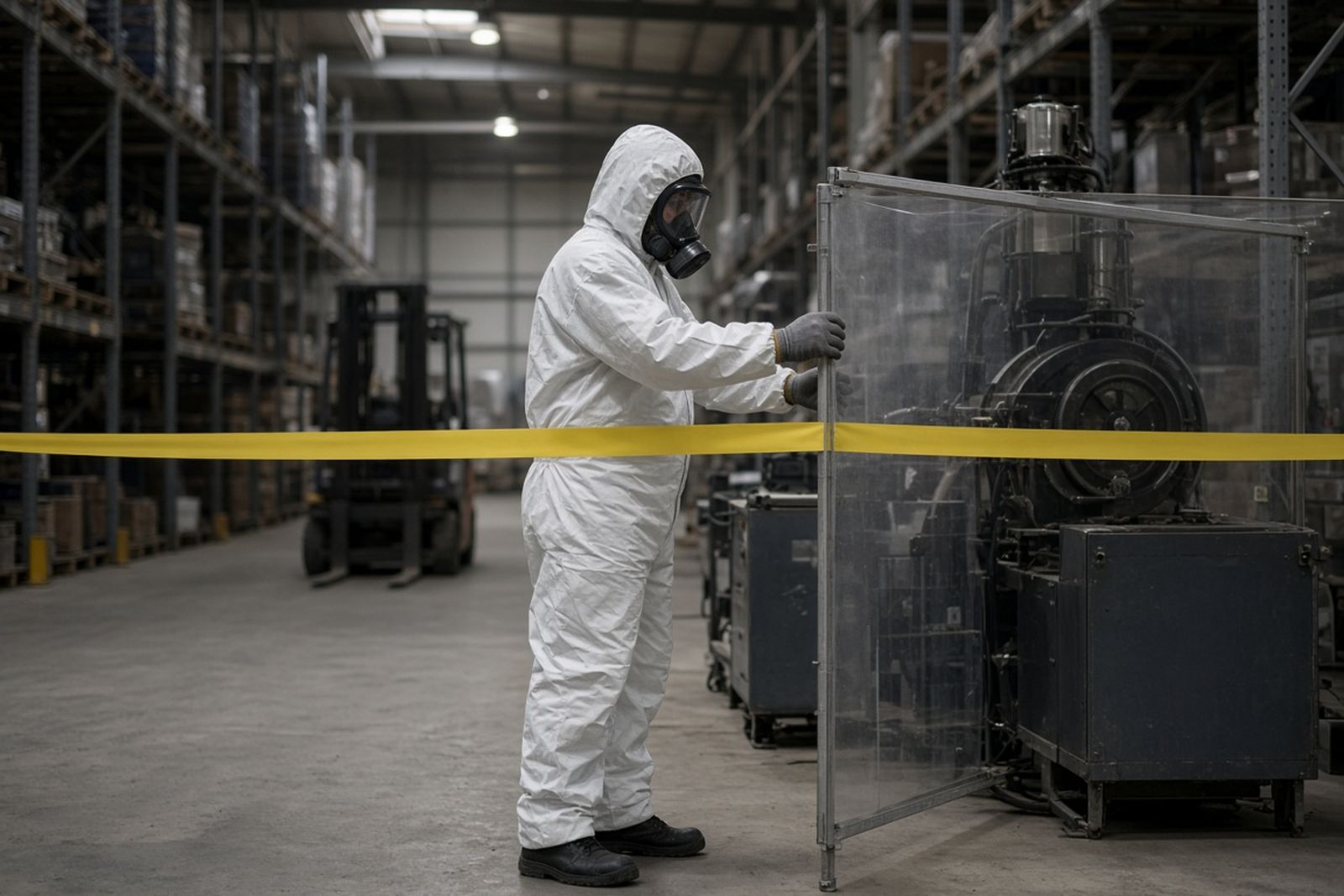
Cleaning up after a plant accident usually means more than getting blood off a floor. The crew may need to work inside locked-out machines. It may handle hydraulic fluid or process chemicals and pull dirty water out of drains. It must follow your site rules for hot work, confined spaces and forklift traffic. Your cleanup company has to be able to do all of that, not only biohazard cleaning.
Plants also have formal rules for managing contractors. Yours may require insurance certificates, safety program papers and a site orientation. It may require approval through an outside vetting service before a contractor can set foot on the floor. Getting a company through all that in the middle of an emergency is hard. That is why it is best to choose ahead of time.
Both local and national companies can meet these needs. They tend to do it in different ways.
What a local company does well
A regional cleanup company is often closer to your plant. That can matter when a line is down and your production managers are counting hours. You may be able to reach its leaders yourself. The same crew lead might handle every job at your site and learn your equipment and people over time.
A local company usually knows the regional wastewater utility and the local office of the state environmental agency. It knows the haulers in your area that take regulated medical waste and oily waste. That speeds up the parts of the job that come after the cleaning.
It can also bend to fit you. A smaller company may adjust its methods to your lockout program, your food safety rules or your union agreements. It does not have to send each request through a corporate office.
- Shorter travel time to your plant.
- The same crew leads, who get to know your site.
- Knowledge of local regulators, utilities and haulers.
- Direct access to the owners for decisions.
- Room to adapt to your site rules.
What a national company does well
A company that works across many regions can offer one master service agreement for all of your plants. If you make products in several states, that makes contracts, vendor approval, invoices and reports simpler.
National industrial service companies often have more depth in chemical and hazardous materials response. They may have crews trained for larger spills, vacuum trucks, confined space rescue teams and environmental specialists. When an accident combines a serious injury with a large spill, that range can be worth a lot to you.
They may also have formal quality and safety systems and their own training staff. Their closing reports may follow one standard form, so your corporate safety team can compare them across sites.
Common weak spots on both sides
A local company may have a small staff. If two of your plants have accidents on the same day, you may wait. You may also wait if the company is already tied up on a large job. Some smaller companies are strong in biohazard work but have less experience with chemical spills or heavy machines. For others it is the reverse.
A national company may rely on subcontractors or partner firms to reach smaller markets. The crew that arrives at a rural plant might be a local partner working under the national name. Its training and supervision may differ from the company's best locations. The response can also pass through more layers, from a call center to a regional manager to a crew lead.
Neither weak spot has to rule a company out. Both are reasons to ask pointed questions and not go by name or size alone.
Distance cuts both ways too. A local company based forty minutes away may still be faster than a national company whose nearest branch is three hours out. But a national company with a branch in your industrial park may beat a local company based across the state. Ask each one where its crews and equipment are really kept, not where its offices are listed.
The safety record, and the crew that really shows up
A contractor working in your plant affects your safety results. As the host employer, you may also face more attention from regulators. So the contractor's own safety culture matters to you.
Cleanup work is not a low-risk job. The BLS reported that waste management and remediation services had a total recordable injury rate of 3.1 cases per 100 full-time workers in 2023. Ask each company for its own injury and illness numbers and its safety program papers. Ask how it looks into accidents that involve its crews.
Look for proof that the company takes lockout, breathing protection and bloodborne germs training seriously. Ask how it introduces crews to a new site. Ask who is responsible for making sure your rules are followed while they work. A company that treats your site orientation as a box to tick is a poor fit for a plant.
The most important question is who will walk through your door. Sales talks often feature the company's best people and tools. The crew on a Saturday night may be different.
Ask for the names and training records of the crew leads likely to serve your plant. Ask whether you can require that only people you approved ahead of time work on your site. Many plants do this, and it is a fair thing to ask of any company.
- Are the workers your own employees, or subcontractors or partner firms?
- What training do crew members have for bloodborne germs, hazardous chemicals, lockout and confined spaces?
- Who supervises the crew on site, and what authority does that person have?
- Can the same crew lead be assigned to our plant for repeat work?
- How do you handle work with both blood and chemicals?
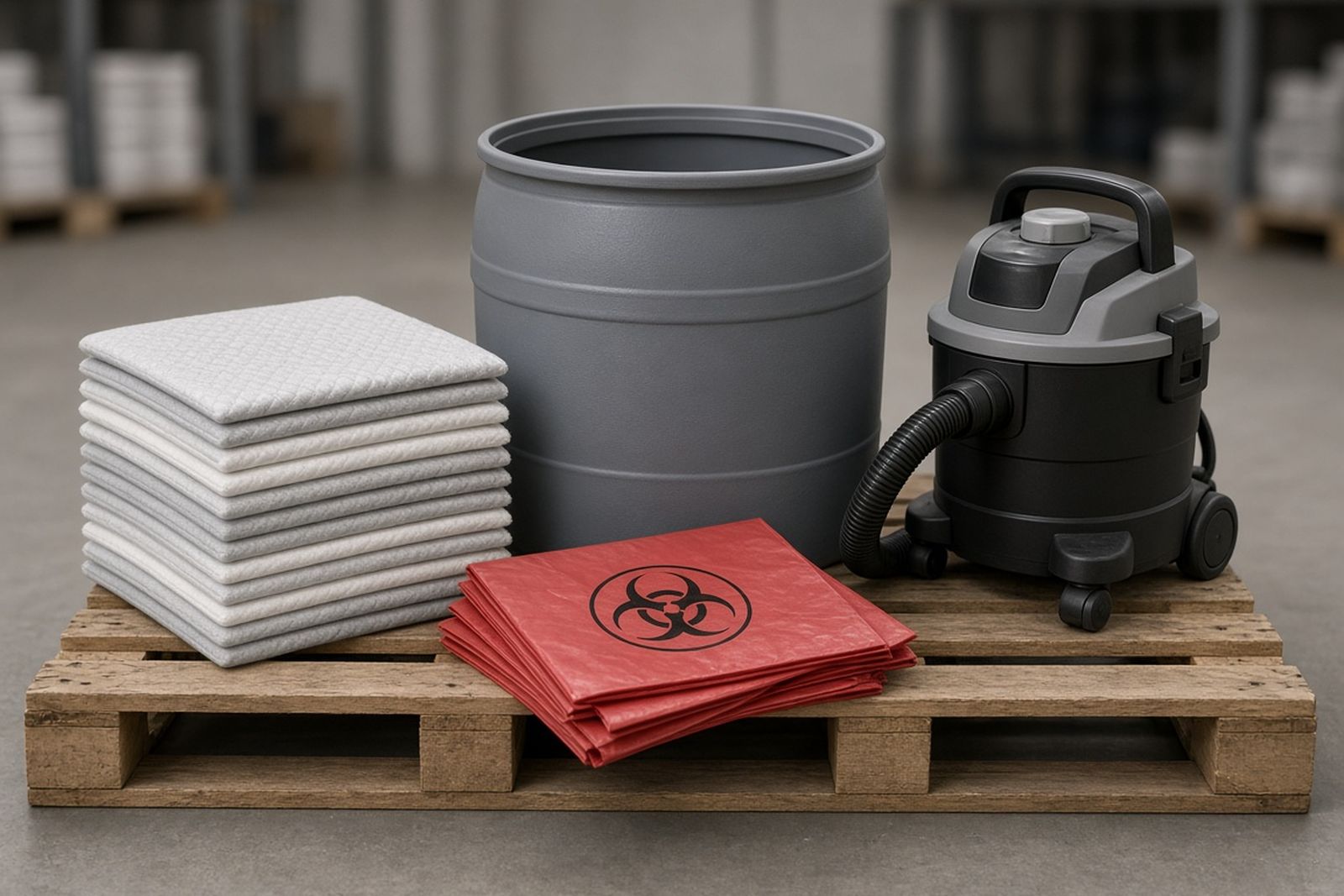
- What equipment will the crew bring, and what will they expect us to provide?
Comparing the paperwork and the work plan
A clear written work plan and a complete closing packet protect you with regulators, insurers and your own leaders. Ask each company for a sample work plan and a sample closing report from a similar plant job, with names and details removed.
A strong work plan names the work zones and who handles lockout. It lists the products with their safety data sheets, the kinds of waste and the final checks. A strong closing report has photos and records of the products used and how long they stayed wet. It has waste papers for each kind of waste and signatures from both sides.
Notice how the company handles mixed waste, such as absorbent with both blood and hydraulic fluid. A careful answer shows experience with plant scenes. Rules vary by state and county; verify with the local authority on waste classification and transport.
Read the business terms with the same care. Rate sheets from different companies are rarely laid out the same way. One may fold travel and setup, protective gear and waste disposal into its rates. Another lists each one apart. Emergency, overnight and weekend terms differ too. Ask each company to price the same sample job so you can compare them fairly. Have your purchasing and legal teams read the liability and insurance clauses before an accident, not during one.
How one company with several plants might decide (an example)
This example uses a made-up company. A food ingredients maker has five plants in three states. An accident at one plant showed that no cleanup company had been approved there ahead of time. Now its corporate safety director wants one steady way to handle cleanup after accidents.
The director sends the same list of questions to two national industrial service companies and to local cleanup companies near each plant. The questions cover crew training, subcontracting, chemical skills and food safety experience. They also cover records and safety results.
One national company can serve all five plants but uses partner firms at the two most rural sites. A local company near those rural plants has strong biohazard experience and food plant references. But it can do little chemical response.
The director signs a master agreement with the national company for all sites. The director also approves the local company at the two rural plants. It is the first call there for injury cleanups with no large chemical spill. Both companies attend site orientations and get the plants' lockout and sanitation steps. Both agree to the same closing report form. The setup is reviewed annually.
Before you ever need a cleanup company
The worst time to choose a cleanup company is the afternoon of an injury. Approve at least one company for each of your plants ahead of time, and ideally a backup.
Finish the insurance and safety program reviews, the site orientation and any required vendor sign-ups ahead of time. Share your drain maps, the lockout steps for major equipment and your chemical lists. Share any food safety or product-contact rules. Agree on a work plan template and a closing report form.
Keep the contact details for your chosen companies with your emergency response plan, and test them now and then. A quick call to confirm the after-hours number still works can save you hours when it counts.
Think about bringing your cleanup company into a tabletop drill. Walk through a mock injury with your safety team, maintenance lead, production manager and the company's crew lead. It shows gaps that paperwork hides. You may find a lockout point nobody mentioned or a drain that goes somewhere you did not expect. You may find a waste container that will not fit through the only door. An hour spent this way costs far less than finding the same problems during a real accident.