Short answer
Industrial-type accidents happen in plants and on job sites, but also in home workshops, on farms, and when a contractor is hurt renovating a house. In commercial settings, an employer's safety program, lockout rules, and waste contracts usually guide cleanup. At a residence, the homeowner may have none of that, responsibility can be shared with a contractor's employer, and household waste and plumbing were never designed for the job.
Industrial hazards at a private home
Industrial accident cleanup brings to mind factories, warehouses, and construction sites. Yet the same machines and hazards show up at homes every day. A table saw in a garage workshop, a log splitter in a rural backyard, a tree crew's chipper at the curb, a roofing crew on a ladder, or an electrician working in a crawl space can all be involved in serious injuries.
When those injuries happen at a house, the cleanup has much in common with a plant floor. There may be blood on equipment, fuel or hydraulic oil on concrete, and debris scattered across a work area. What is different is the context around the cleanup: who is responsible, who pays, and what systems exist to help.
This article compares the two settings so you know what to expect whichever one you are dealing with.
The usual sequence at a plant or commercial site
At a plant, warehouse, or commercial job site, there is almost always an employer with safety responsibilities. That employer typically has, or should have, procedures for reporting serious injuries, securing the scene, controlling hazardous energy, and handling blood and chemicals.
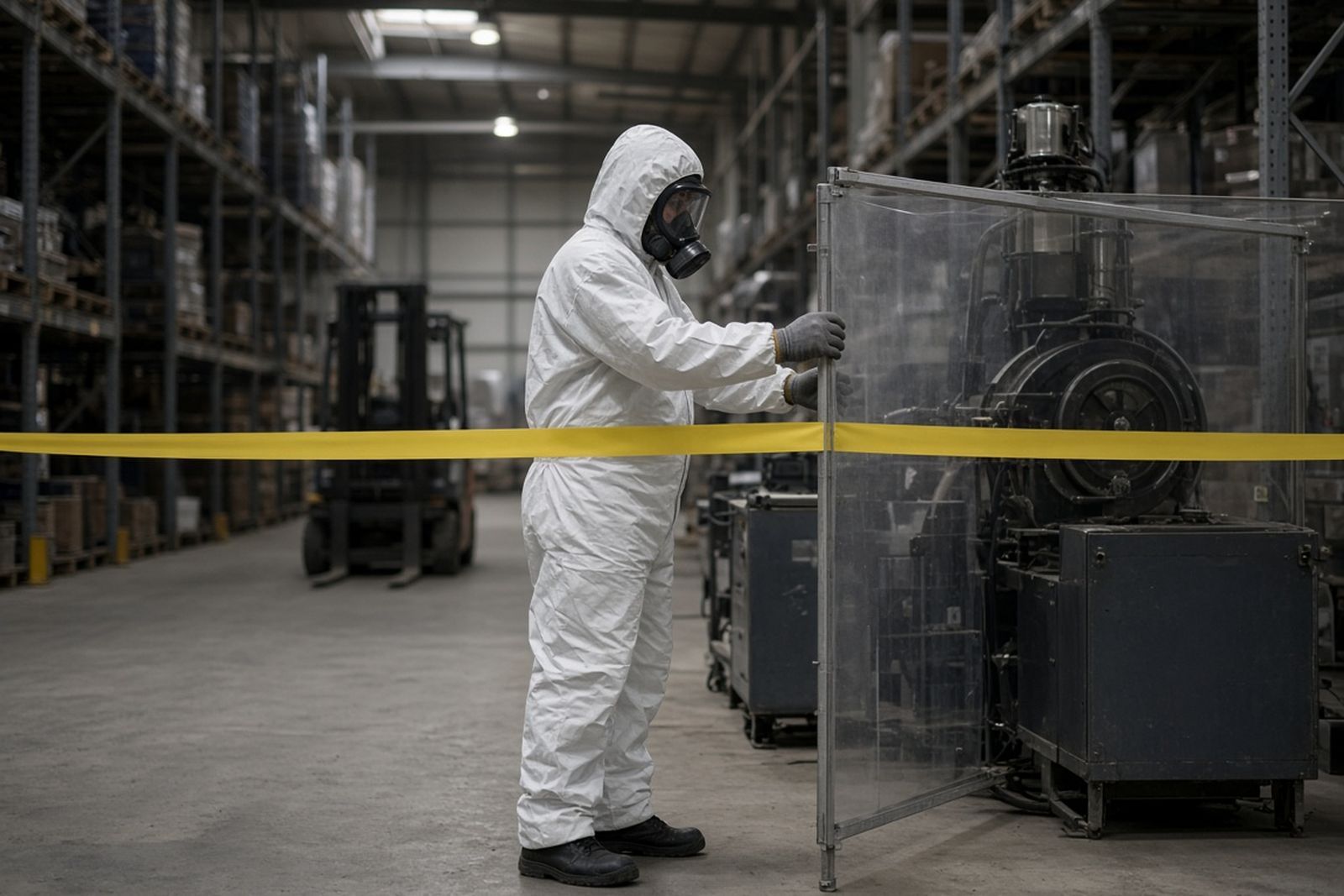
Cleanup at these sites tends to follow a recognizable sequence: the area is secured and, if required, held for investigators; equipment is locked out; trained employees or a contracted remediation company clean and disinfect; waste is sorted into the site's existing streams; and production restarts only after sign-off.
The scale of the problem is significant. The BLS reported that private industry employers reported 2.6 million nonfatal workplace injuries and illnesses in 2023, or 2.4 cases per 100 full-time workers. Many of those events required some form of cleanup, and most employers learn to plan for it.
Why is a residential accident often harder to clean up correctly?
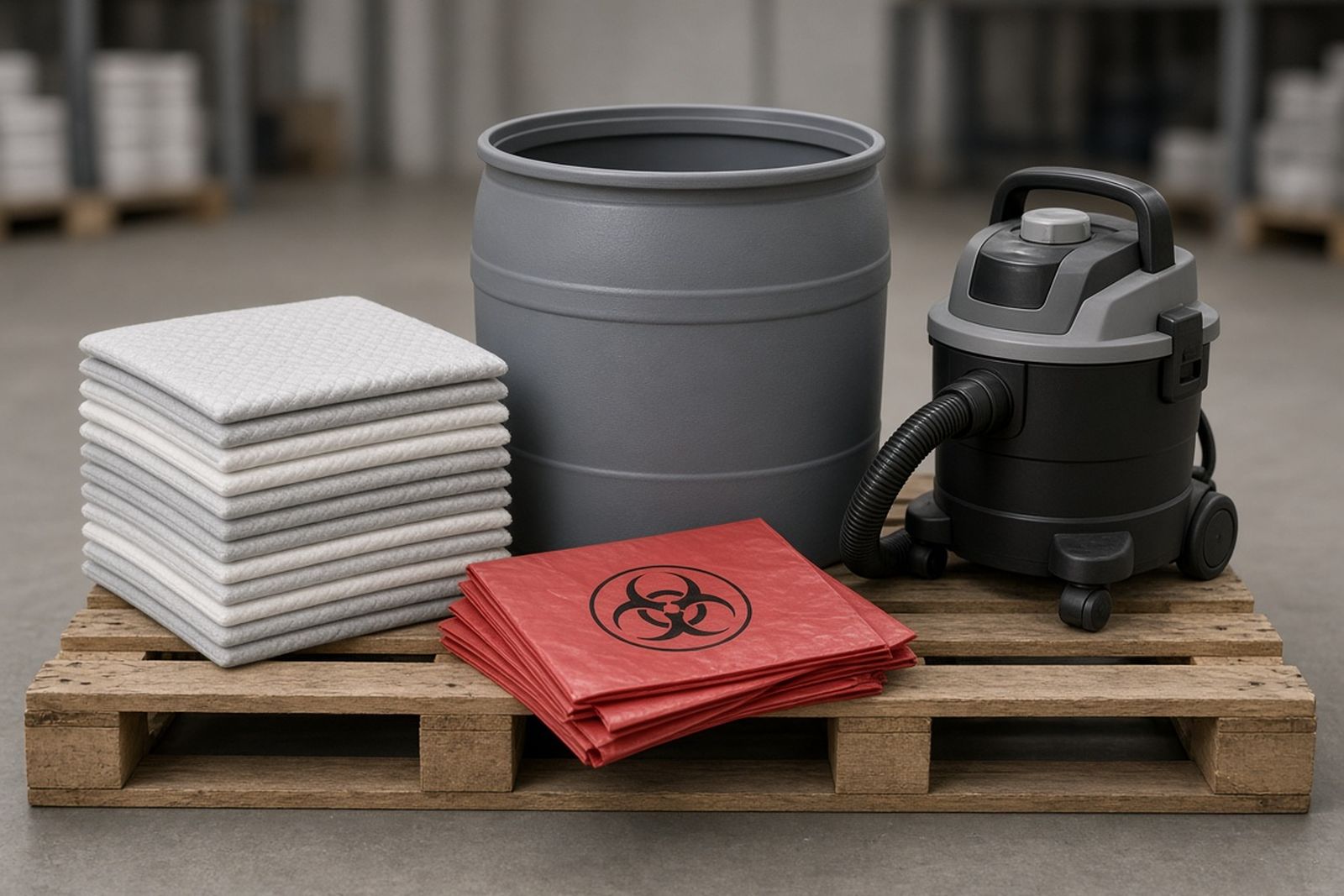
Homeowners rarely have spill kits, bloodborne pathogen training, or a list of approved disinfectants. They may not have PPE beyond dish gloves. The natural impulse is to grab a mop and a bucket, which can spread contamination and put the person cleaning at risk.
Residential spaces also include materials that are hard to decontaminate. Unsealed garage floors, wooden workbenches, lawn and gravel, carpeted stairs leading to the injured person's path out, and upholstered car seats used to rush someone to the hospital all absorb fluids.
Waste is another gap. A factory has a regulated waste hauler. A house has a trash can and a curbside pickup day. Contaminated rags, absorbent, and damaged materials may need a different disposal path, and your county solid waste office can tell you what your hauler will accept.
Then there is the emotional weight. When the injured person is a spouse, parent, or neighbor, the people left to clean are often the same people who witnessed the event. That alone is a reason to consider professional help.
Who is responsible when a contractor is hurt at your home?
This is the scenario that most often blurs the line between commercial and residential. When a roofer, tree trimmer, or remodeling worker is injured on your property, you are the property owner, but you are usually not their employer.
In many cases, the contractor's employer carries workplace safety obligations, may have reporting duties, and may have insurance that responds to the injury. Your own homeowners policy may also be relevant depending on the circumstances. How these interact is a question for the insurers and, if needed, an attorney; no general article can answer it for your situation.
Practically, you can help by securing the area, keeping family members and pets away, photographing conditions, and writing down names and phone numbers of the contractor's supervisor. Do not start cleaning equipment that belongs to the contractor, and do not move machinery that might be part of an investigation.
Ask the contractor's company who will handle the cleanup of your property and who will pay for it. Get the answer in writing, even an email, before anyone begins.
Side by side: six differences
The biology and chemistry of the cleanup do not change based on the address. What changes is almost everything around it.
Seeing these differences in advance helps you decide when to handle something yourself and when to call for help.
- Reporting: commercial employers may have regulatory reporting duties; homeowners usually do not, unless the injured person is someone else's employee
- Energy control: plants have lockout programs; at home, unplugging a saw or removing a splitter's key is often the only control
- Trained staff: commercial sites may have designated responders; homes rely on family and neighbors
- Waste: commercial sites have contracts for regulated and oily waste; homes depend on local household rules
- Surfaces: industrial floors are often sealed or coated; residential garages, lawns, and driveways are porous
- Insurance: commercial events usually involve workers' compensation and business policies; residential events may involve homeowners coverage, a contractor's policies, or both
The first hour after an injury at home
Once the injured person is in the hands of emergency responders, the next hour sets the tone for everything that follows. A few calm steps can prevent a second injury and make the cleanup far easier.
Make the equipment safe without disturbing it more than necessary. Unplug electric tools at the outlet, turn off engines, and remove keys. Do not try to clear a jammed blade or reposition a machine to get at the contamination underneath.
Keep people out. Close the garage door, rope off part of the yard, or move children and pets to another room. If blood has been tracked through the house on the way to the car, block off that route too.
Stop fluids from spreading, but only if you can do it without direct contact. Laying a disposable tarp or absorbent pads beside a pool of oil on a driveway can keep it out of a storm drain. Avoid hosing anything down.
Take photographs from a short distance. They help insurers, the contractor's employer, and any cleanup company understand the scene without needing to walk through it repeatedly.
Then wash your hands thoroughly, change out of any clothing that may have been splashed, and give yourself a moment. The cleanup can wait until you have made a clear decision about who will do it.
Farms and home-based businesses
Farms and home businesses sit squarely between commercial and residential. A family farm with hired workers may have employer obligations, while the barn next to the house is also part of the family's daily life. A home-based welding shop or woodworking business might have a single employee, or none at all.
In these settings, it pays to think like a small plant. Keep a basic spill and blood cleanup kit near equipment, know which drains or ditches carry runoff where, and have a contractor's contact information ready before you need it. If you have employees, talk with your insurer or a safety consultant about which workplace rules apply to you.
Livestock and crops add their own concerns. Contaminated feed, bedding, or produce may need to be discarded, and your agricultural extension office can often point you toward the right guidance.
When should you call a professional instead of cleaning it yourself?
A small cut that leaves a few drops on a sealed surface is something many people can clean safely with gloves, paper towels, and a registered disinfectant. Anything beyond that deserves a second thought, particularly in a residential setting where training and equipment are limited.
Consider professional help if any of the following apply.
- There is more blood than you can clean with a few paper towels
- Fluids have soaked into porous materials like wood, carpet, soil, or unsealed concrete
- Fuel, oil, or chemicals are mixed with blood
- Machinery is involved and you are not sure it is safe to touch
- The injured person was a contractor or employee, so another company's procedures may apply
- You or your family witnessed the injury and would prefer not to do the cleaning