Industrial Accident Cleanup: Industry Insights
Operational analysis of industrial accident cleanup documentation, property-type differences, technology limits, environmental decisions, and provider business models—without invented case histories.
Industry insight articles step back from single accidents. They look at how industrial cleanup has changed and where it is heading. Some articles cover the move away from makeshift in-house cleanups. The field is moving toward documented cleanups with clear standards for when the job is done. Others cover growing care for the environment in waste handling and the differences between commercial and home work. A planning example shows how a facility might build a solid cleanup plan before anything happens. Another article speaks directly to property and facility managers who oversee leased industrial space. These views help you see your own situation in a bigger picture.
Get an email reply about industrial accident cleanup
Send a short message to the follow-up inbox. A coordinator can reply by email. This form does not send emergency help; call 911 first if anyone is in danger.
This bigger picture matters because cleanup standards keep rising. Regulators, insurers, and company safety teams all expect more over time. Knowing current practice helps you spot outdated habits. One example is judging cleanliness by smell. Another is treating mixed waste as ordinary trash. It also helps you plan ahead. You might approve a vendor early, update your emergency plan, or make your lease clear about who pays for accident cleanup. Reading these articles before you need them can speed up choices under pressure. You will be better able to set expectations with leaders and hold contractors to the standard your site deserves.
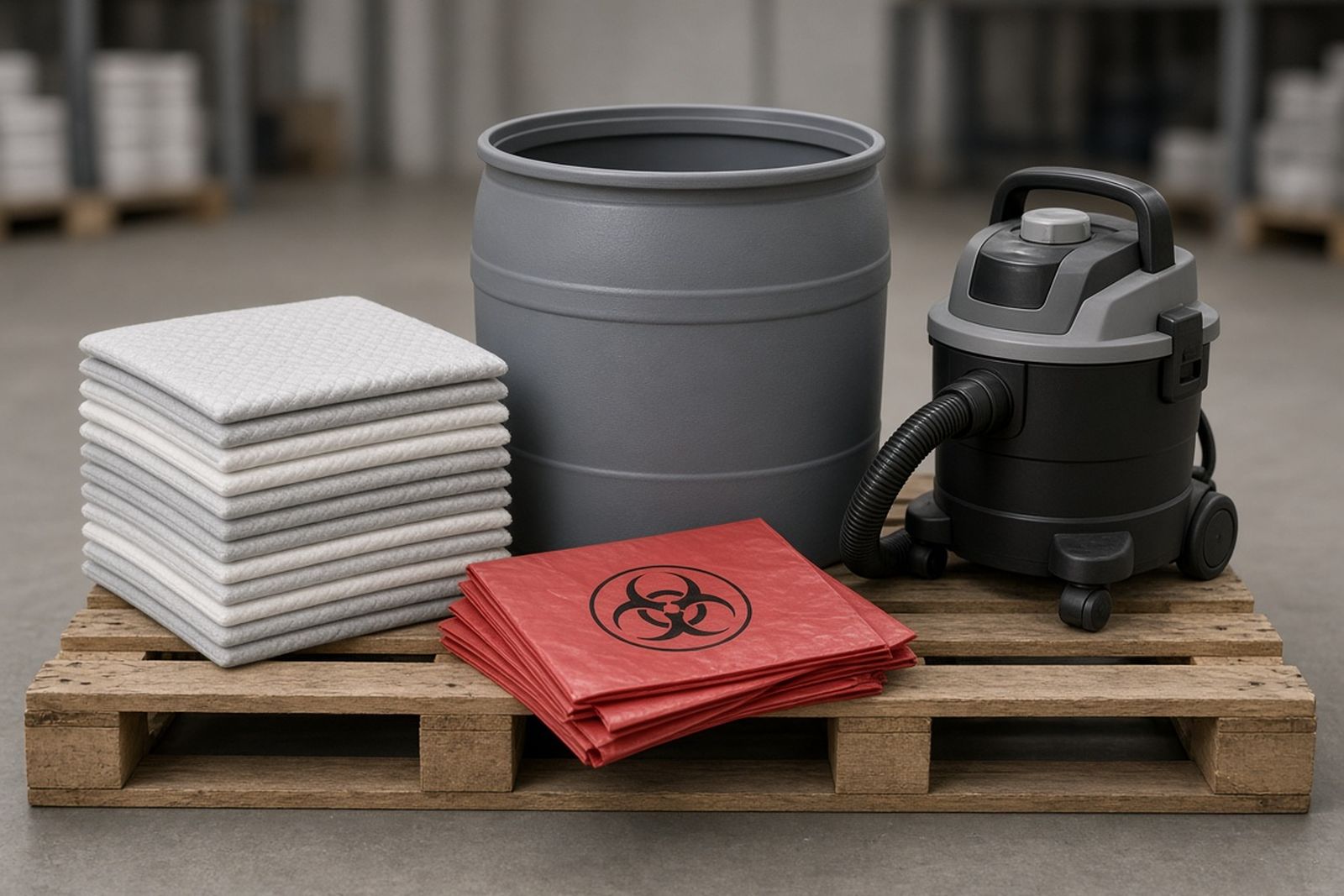
How Industrial Accident Cleanup Practice Has Changed
How cleanup after serious workplace injuries moved from in-house mop crews to trained companies that follow lockout, scene release and waste rules.
Industrial accident cleanup used to mean coworkers or janitors hosing down an area. Now trained cleanup companies do the work. They wait until the scene is released. They follow the site's rules for lockout, which means shutting off and locking a machine's power, and its permit rules. They treat spots where blood and chemicals are mixed and keep waste types apart. They write everything down for the accident file. Better reporting, better investigations and more care for workers' emotional health drove much of that change.
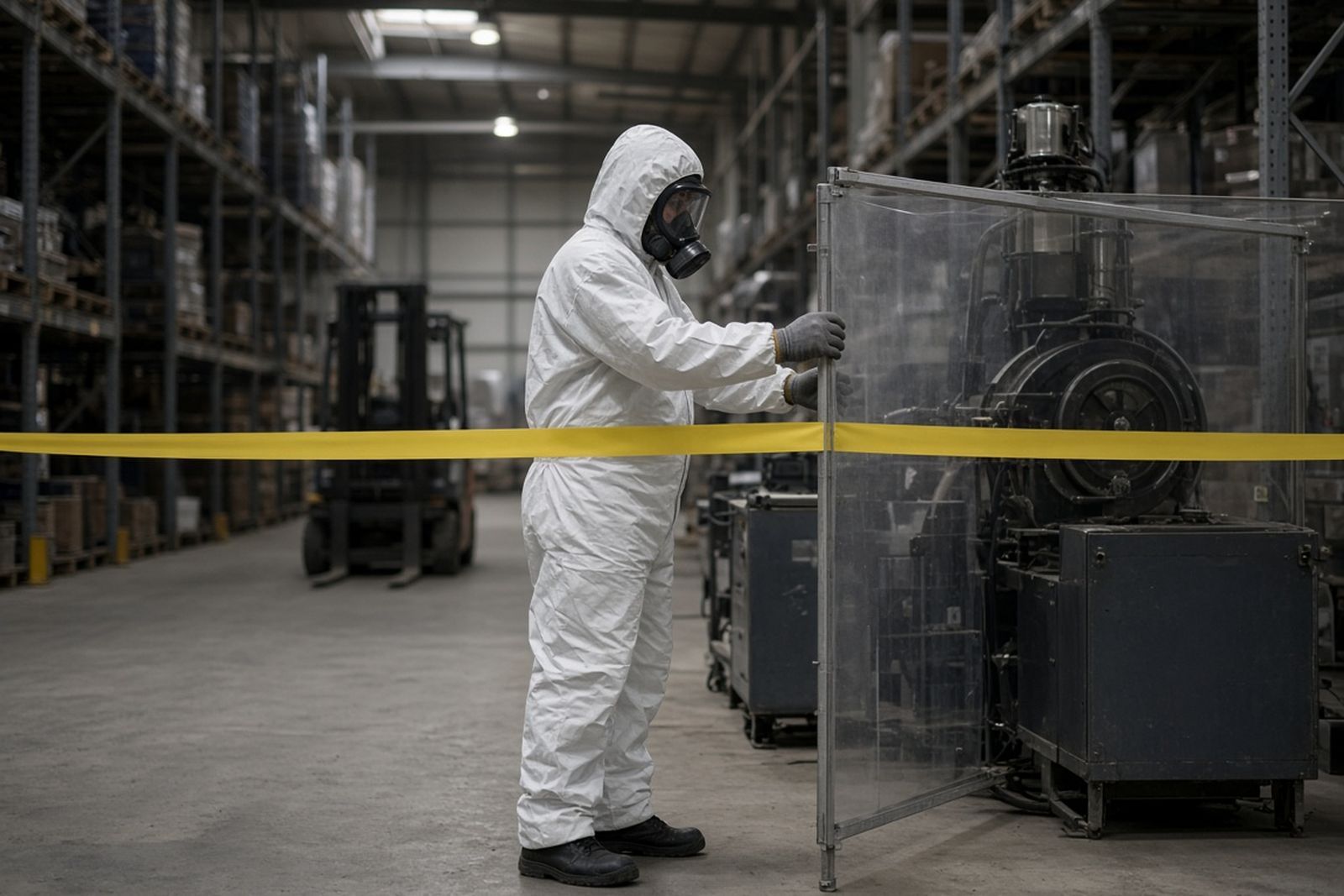
Industrial Accident Cleanup for Property Managers: What You Need to Know
When a tenant's worker is hurt in a warehouse or plant you manage, the cleanup can involve your dock equipment, drains, common areas, and lease duties.
As a property manager, you are usually not the injured worker's employer, but an industrial accident on your property still involves you. You may own the equipment involved, control shared areas the contamination reached, or maintain drains and ventilation affected by the cleanup. Coordinate with the tenant, respect any scene hold, protect building systems, and document what you owned, what you cleaned, and who paid.
Industrial Accident Cleanup Planning Example: Building a Defensible Scope
A hypothetical press injury with blood and hydraulic oil shows how a plant and contractor can build a cleanup scope that holds up to later review.
A defensible industrial accident cleanup scope starts with the facts of the event and any scene holds, then defines lockout responsibilities, work zones, mixed contaminants, products, waste streams, verification, and the handoff back to production. The hypothetical press injury below shows how an EHS manager and a remediation contractor might write that scope so that investigators, insurers, and employees can later see exactly what was done.
Commercial vs Residential Industrial Accident Cleanup
A saw injury in a factory and one in a homeowner's garage need the same care, but who pays, who cleans, and what rules apply differ in important ways.
Industrial-type accidents happen in plants and on job sites, but also in home workshops, on farms, and when a contractor is hurt renovating a house. In commercial settings, an employer's safety program, lockout rules, and waste contracts usually guide cleanup. At a residence, the homeowner may have none of that, responsibility can be shared with a contractor's employer, and household waste and plumbing were never designed for the job.
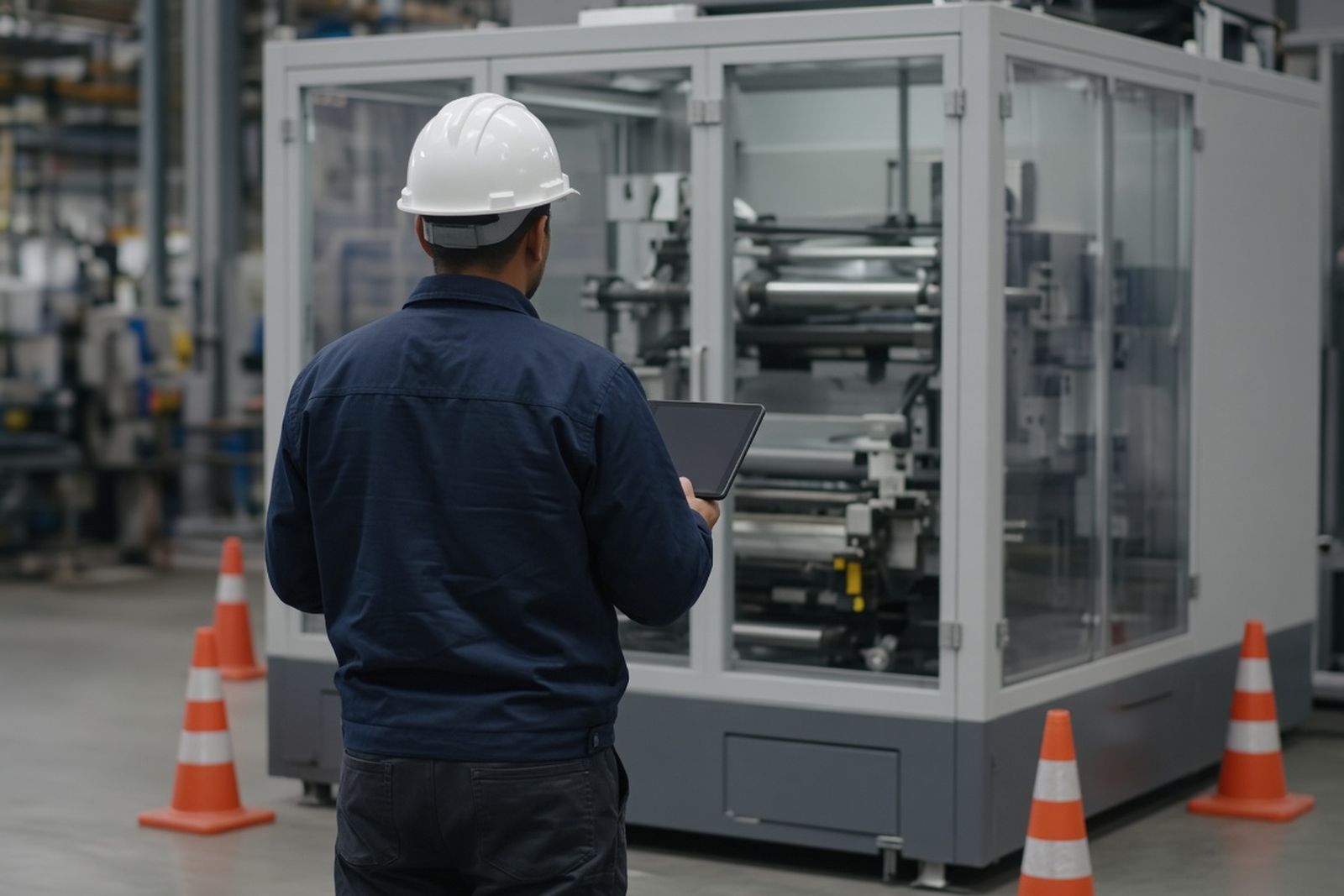
Environmental Responsibility in Industrial Accident Cleanup
After a plant injury or release, cleanup choices decide whether oil, chemicals, and wash water stay contained or reach soil, drains, and the neighborhood.
Environmental responsibility in industrial accident cleanup means containing released fluids before they reach drains or soil, choosing cleaning products that do not create new hazards, characterizing mixed waste correctly, keeping wash water out of storm systems, and telling neighbors and regulators what they need to know. It runs alongside worker protection, not against it, and it depends heavily on decisions made in the first hour.
Sourced figures on industry insights
- 860,050
Contact with objects and equipment caused an annualized 860,050 DART cases in private industry in 2023-24, a rate of 40.6 per 10,000 workers.
Read with care: DART counts cover serious cases only; many involve no bleeding.
Source: BLS (2024)United States private industry, 2023-2024 annualized
- 104
Fires and explosions caused 104 fatal work injuries in the United States in 2023 and 93 in 2024.
Read with care: Small category with year-to-year variability.
Source: BLS (2023)United States, 2023 and 2024, all industries
- 586
The Chemical Safety Board received 586 accidental release reports between March 2020 and December 2025; 54.8% involved serious injuries and 15.4% fatalities.
Read with care: Only releases causing death, serious injury or substantial damage are reportable; minor spills are excluded.
Source: U.S. Chemical Safety Board (via Safety+Health) (2025)United States, CSB-reportable releases, Mar 2020-Dec 2025
These figures are public research and agency data, not this network's own job records. Keep each number with its population, year and limits; none of them predicts cost, timing or outcome at a specific property.
What research has found
Findings from published studies of people and properties in situations like this one. They describe what researchers observed in a specific group; they are not predictions for your case.
Changing application type was associated with being awakened by coughing episodes.
Conferences and study days were a major source of biofilm knowledge.
Industry Insights: common questions
How has industrial accident cleanup practice changed in recent years?
The overall trend is toward written plans, agreed standards for when the job is done, and better waste records. Informal cleanups by whoever is on hand are less common. Facilities more and more expect contractors to work with EHS teams and follow site safety programs. There is also more attention to keeping residues out of drains and soil. Exact expectations still differ by industry, insurer, and region.
What should a tenant in leased industrial space know about incident cleanup?
Review your lease to see who is responsible for cleanup after an accident and who must be told. Landlords may want to approve contractors. They may also want to review the completion paperwork before the space counts as restored. Settling these points ahead of time avoids disputes later. Your property manager and legal advisor can explain how the lease wording applies to you.
How can we make industrial cleanup more environmentally responsible?
Start by keeping contamination out of storm drains and sewer drains. Choose cleaning products that fit your wastewater permits. Keep waste types apart, so only truly regulated material is handled that way. Reusable barrier tools can cut down on throwaway waste, as long as they are properly cleaned. Ask providers how they balance thorough cleaning with avoiding needless removal of equipment and materials that could be saved.
How are industrial facilities preparing differently for serious incidents?
Many facilities now line up cleanup contractors ahead of time. They train supervisors to hold the scene and plan waste handling before an accident happens. Care for worker wellbeing after accidents has also grown. These steps reduce confusion when something goes wrong and help recovery go more smoothly. Practice drills that include cleanup choices are also becoming more common, alongside medical response practice.
What role do contractor safety management platforms play in cleanup hiring?
Many facilities require contractors to pass a safety screening through an online platform before working on site. This keeps papers like insurance and safety records in one place. Finishing it before an accident avoids delays when a crew is needed fast. But these platforms do not replace your own judgment. You still need to confirm that the firm has experience with your equipment and hazards. Also check that the crew who shows up matches the records.
How do industrial cleanup needs differ across sectors like food, metals, and logistics?
Food and medicine plants focus heavily on surfaces that touch the product and on proving sanitation. Metalworking adds oils, coolants, and sharp debris. Warehouses and shipping sites often involve vehicles and large floor areas. Each type of business shapes the products, methods, and checks a cleanup needs. When checking out a contractor, ask about experience in your own type of business, not just industrial work in general.
What trends affect the availability of industrial cleanup contractors?
How many contractors are available varies by region. Demand can rise after major events. When companies merge, their service areas can change. Setting up an agreement ahead of time and knowing a backup provider helps make sure someone is there when you need them. Remote sites may face longer waits. So it is worth stocking barrier supplies and training chosen staff to respond. Review your plans whenever a provider changes owners or service area.
Related community polls
Every count is a real visitor vote; nothing is seeded or padded. One vote per poll per device, and you can change your answer.
After a serious injury on the floor, what was your hardest early decision?
How did your facility handle cleanup after a serious blood incident?
More on industrial accident cleanup
Industrial Accident Cleanup services
See how workplace injury cleanup, chemical spill response, equipment cleaning, and confined space work are planned and ordered for plants and job sites.
Costs explained
What drives the price, published cost ranges, and how to read a written quote line by line.
Insurance and payment
Which policies may respond, how to document a claim, and what to do if coverage is denied.
Planning tools
Planners and checklists built for facility managers. They cover cost ranges, contractor checks, insurance steps, first-day actions, waste sorting, and in-house risk.
Community polls
Compare your instincts with other operations and safety leaders on scene holds, restart pressure, choosing a contractor, and supporting affected workers.
Knowledge quiz
Test what you know about spotting hazards, scene control, sealing off areas, disinfecting, waste paths, and records before an accident puts it to use.