Short answer
Compare industrial accident cleanup bids by breaking each into tasks and responsibilities: containment, equipment disassembly and access, coordination with your lockout program, cleaning and disinfection of machinery and floors, handling of mixed waste streams, documentation, and schedule. A low bid often shifts work to your maintenance staff or skips waste segregation. Weigh the cost of downtime and rework, not just the invoice total.
Why do industrial cleanup bids for the same incident vary so widely?
After a serious injury on a production floor, you want the area cleaned properly and the line back up. When two or three contractors quote the job, the totals can differ enough to make you question whether they saw the same scene.
Usually they did, but they are proposing different work. One contractor may plan to clean only accessible surfaces and leave guard removal and reassembly to your maintenance team. Another may include disassembly, cleaning inside the machine frame, degreasing, separate packaging of oil-contaminated and blood-contaminated waste, and a written report for your investigation file.
The goal is not to find the cheapest number. It is to understand exactly what each contractor will do, what you will still have to do yourself, and what the true cost of each option is once downtime and internal labor are included.
The human cost of an incomplete cleanup
There is also a human dimension to this decision. Coworkers will return to the area where a colleague was hurt, and a visibly incomplete cleanup, with stains in the grating or an odor near the machine, can make that return much harder. The quality of the work affects morale and trust, not just compliance.
Typical cost figures, and their limits
There is no reliable single price, because incidents differ so much in size, complexity, and access. Published consumer-facing estimates offer only a loose reference. Fixr's 2025 cost guide puts hazmat cleanup projects at a national average of about $4,000, with a typical range of $3,000 to $5,000 and extremes of $1,500 to $25,000. The same guide lists Biosafety Level 3 remediation labor at roughly $50 to $150 per hour, versus $25 to $50 per hour for Level 1 work.
Treat those figures as background, not a benchmark for your plant. Large machinery, food-contact requirements, off-shift scheduling, or chemical involvement can push an industrial job well outside a general range.
What matters more is whether each bid explains how its price was built, so you can compare labor, materials, equipment, waste disposal, and extras on equal terms.
Getting bids you can actually compare
Give every contractor the same information and the same walk-through. Explain the equipment involved, any fluids or chemicals released, the area's access limits, food safety or cleanroom requirements, and your preferred schedule.
Ask for a line-item response. Then build a comparison table and mark each item as included, excluded, or billed separately. Items that one contractor includes and another assumes you will handle explain much of the difference.
Schedule the walk-throughs close together if you can, and have the same person from your team lead each one. That person can answer questions consistently and notice when one contractor asks about something the others overlooked, such as a trench drain under the equipment or a mezzanine above it.
- Containment and protection of adjacent lines or product
- Coordination with your lockout procedure, and who applies locks
- Removal and reinstallation of guards, panels, or covers
- Cleaning inside machine frames, under conveyors, and in floor grating or trenches
- Degreasing where blood is mixed with oils or coolant
- Disinfection with named products and contact times
- Cleaning of drains, sumps, or trench covers
- Segregation, packaging, and disposal of each waste type
- Written report with photographs and waste records
Why does equipment access change the price so much?
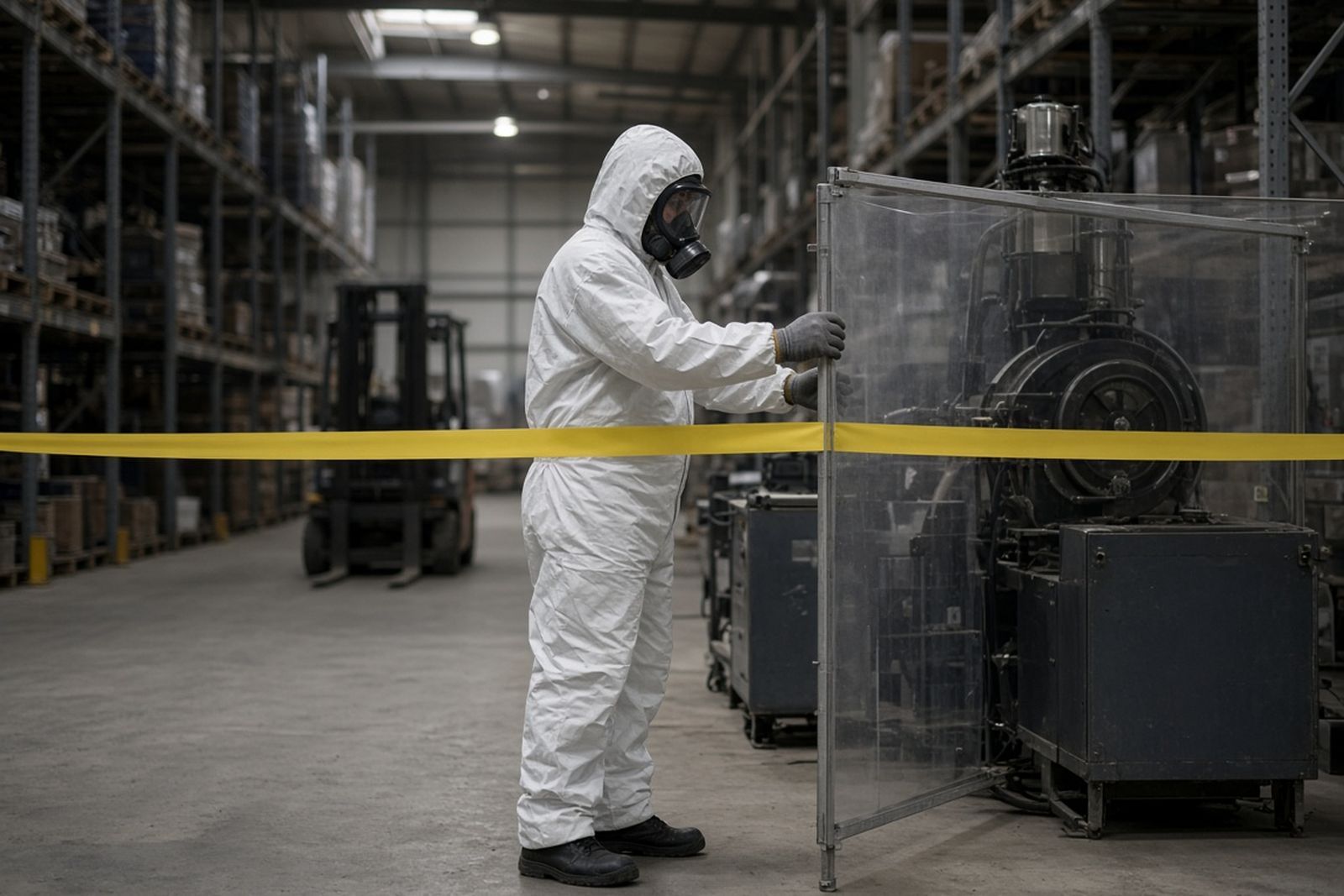
Contamination on a machine rarely stays on the outside. Fluids run into frames, under belts, behind guards, and into electrical enclosures. Reaching those areas takes time and, often, partial disassembly.
A lower bid may exclude disassembly, which means either the contamination stays inside the machine or your maintenance staff have to open it up and then wait while the contractor cleans. That internal labor is real, and it also pulls your maintenance team away from repairs and restart work.
Ask each contractor how they will access hidden areas and who will handle disassembly and reassembly. If your maintenance team will do it, factor their hours into your comparison. If the contractor will do it, confirm that they will follow your lockout procedure and that reassembly will be inspected before restart.
Comparing waste handling
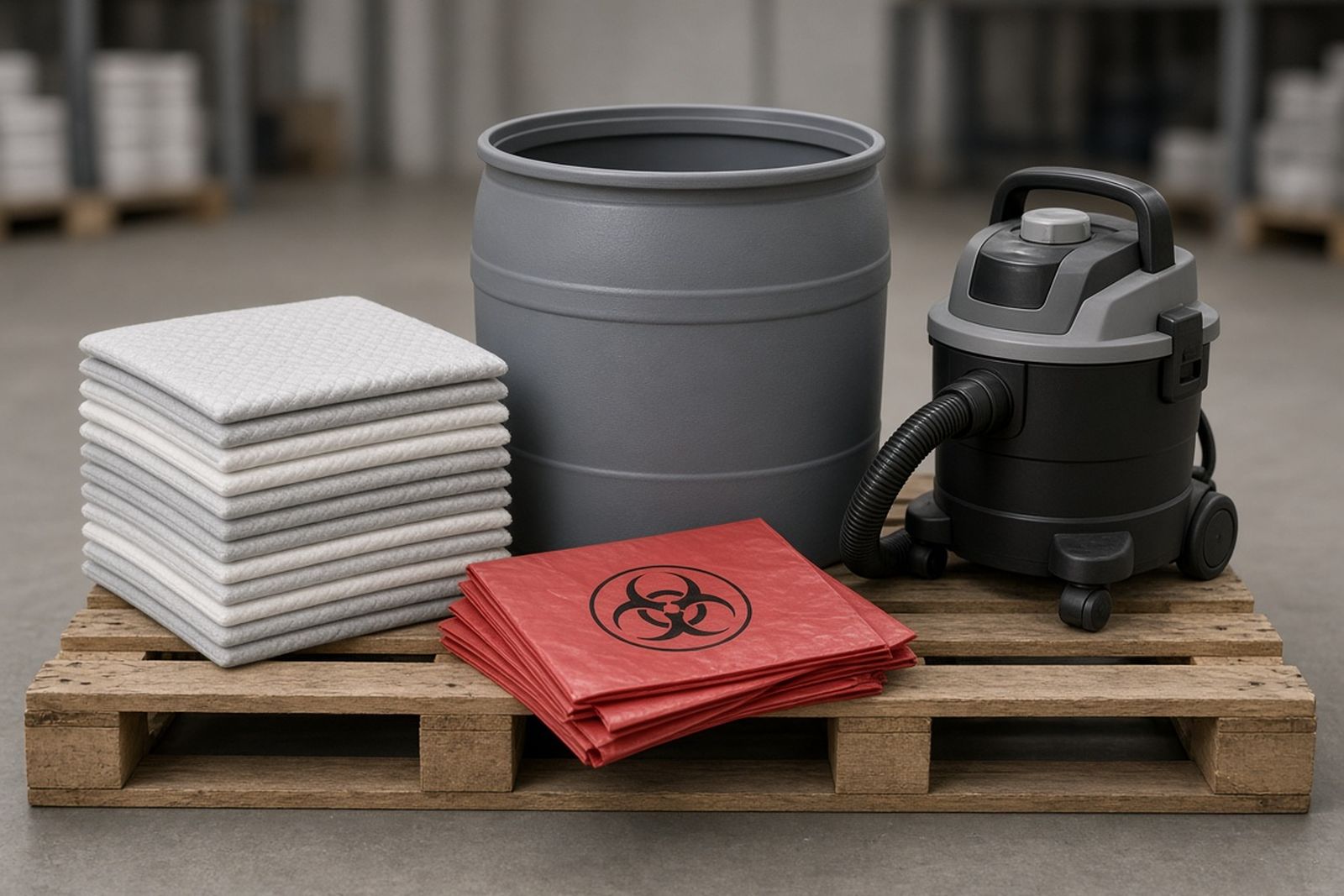
Industrial scenes often produce more than one type of waste. Blood-contaminated absorbents, wipes, and PPE may be regulated medical waste under your state's rules. Oil-soaked materials may need to be handled as used oil or evaluated as hazardous waste depending on what they contain. Damaged product or packaging may have its own disposal path.
A cheaper bid sometimes combines everything into a single waste stream or leaves disposal for you to arrange. Mixing waste types can create compliance problems and may cost more to correct later.
Ask each contractor how they will segregate waste, which haulers and facilities they use, and what documentation you will receive. Your environmental or EHS staff should review this part of the bid closely.
How should downtime factor into your decision?
For most plants, the largest cost of an incident is not the cleanup invoice. It is the time the area or line is down. A contractor who can start sooner, bring a larger crew, or work overnight may cost more on paper and still be the less expensive choice overall.
Ask each contractor for a realistic schedule, including when they can start, how many technicians they will send, and how long each phase is expected to take. Ask what could extend the timeline, such as hidden contamination or waiting on waste pickup.
Be skeptical of schedules that look unrealistically short. Cleaning around machinery, allowing disinfectant contact times, and segregating waste all take time, and a rushed job that has to be redone costs more downtime in the end.
Restart requirements belong in the schedule
Think about restart requirements as part of the schedule. Food plants may need sanitation verification before production resumes, some equipment needs inspection after guards are reinstalled, and your investigation team may want a final look before the area is reopened. A contractor who understands those steps can sequence the work so they do not become extra delays.
Two warehouse bids side by side: an illustrative comparison
This comparison is illustrative, built to show how bids differ. At a distribution warehouse, a pedestrian worker is seriously injured when a forklift strikes a rack upright. Blood reaches the floor, the lower rack beam, several pallets of packaged product, and the forklift's mast and forks. Hydraulic fluid has also leaked from the damaged forklift.
The operations manager receives two bids. The lower one covers cleaning and disinfecting the floor and rack beam and states that the forklift and product are the customer's responsibility. It does not mention the hydraulic fluid or waste segregation.
The higher bid includes cleaning and disinfecting the forklift mast, forks, and operator compartment after the fleet technician locks it out, separating hydraulic-fluid absorbents from blood-contaminated materials, inspecting and documenting the affected product so the company can decide what to discard, and a report with photographs for the investigation and insurance files.
When the manager adds the internal labor to clean the forklift, the cost of arranging separate waste disposal, and the risk of mishandling the mixed waste, the gap between the bids shrinks. The manager chooses the more complete bid and asks the contractor to coordinate directly with the fleet technician.
Seven signs a bid is low for the wrong reasons
A lower price can reflect genuine efficiency. It can also reflect missing scope, weak safety practices, or costs that will appear later as change orders.
If a bid shows several of the signs below, ask the contractor to walk you through exactly how they would handle the most difficult part of the scene.
- No mention of lockout coordination or equipment access
- All waste treated as a single stream
- No named disinfectants, degreasers, or contact times
- Exclusions that shift substantial work to your staff without saying so
- No documentation or report included
- Vague answers about technician training, respirator fit testing, and bloodborne pathogen coverage
- A schedule that seems too short for the work described
What goes into the contract
Put the agreed scope, exclusions, schedule, waste handling, documentation, and change-order process in writing. Include a requirement that the contractor follow your site safety rules and lockout procedure, and confirm insurance coverage before work starts.
Keep every bid and your comparison notes with the incident file. If questions arise later from leadership, an insurer, or an inspector, you can show how and why the decision was made.
Waste classification, transport, and disposal rules differ by state, and your state environmental agency can help confirm how each waste stream should be handled.
After the job, hold a short review with the contractor and your EHS lead. Compare the final invoice with the accepted bid, discuss any change orders, and note what went well. If the relationship worked, consider a standing agreement so the next incident does not start with another round of bidding under pressure.