Short answer
To evaluate equipment proposed for industrial accident cleanup, confirm that each tool suits your floors, machinery, and chemicals, that it will not spread contamination or damage equipment, and that it meets your site's safety rules, including hazardous-location and confined-space requirements. Ask for product registration numbers, safety data sheets, compatibility with your surfaces, and how results will be verified before production resumes.
Why equipment choice matters more in a plant
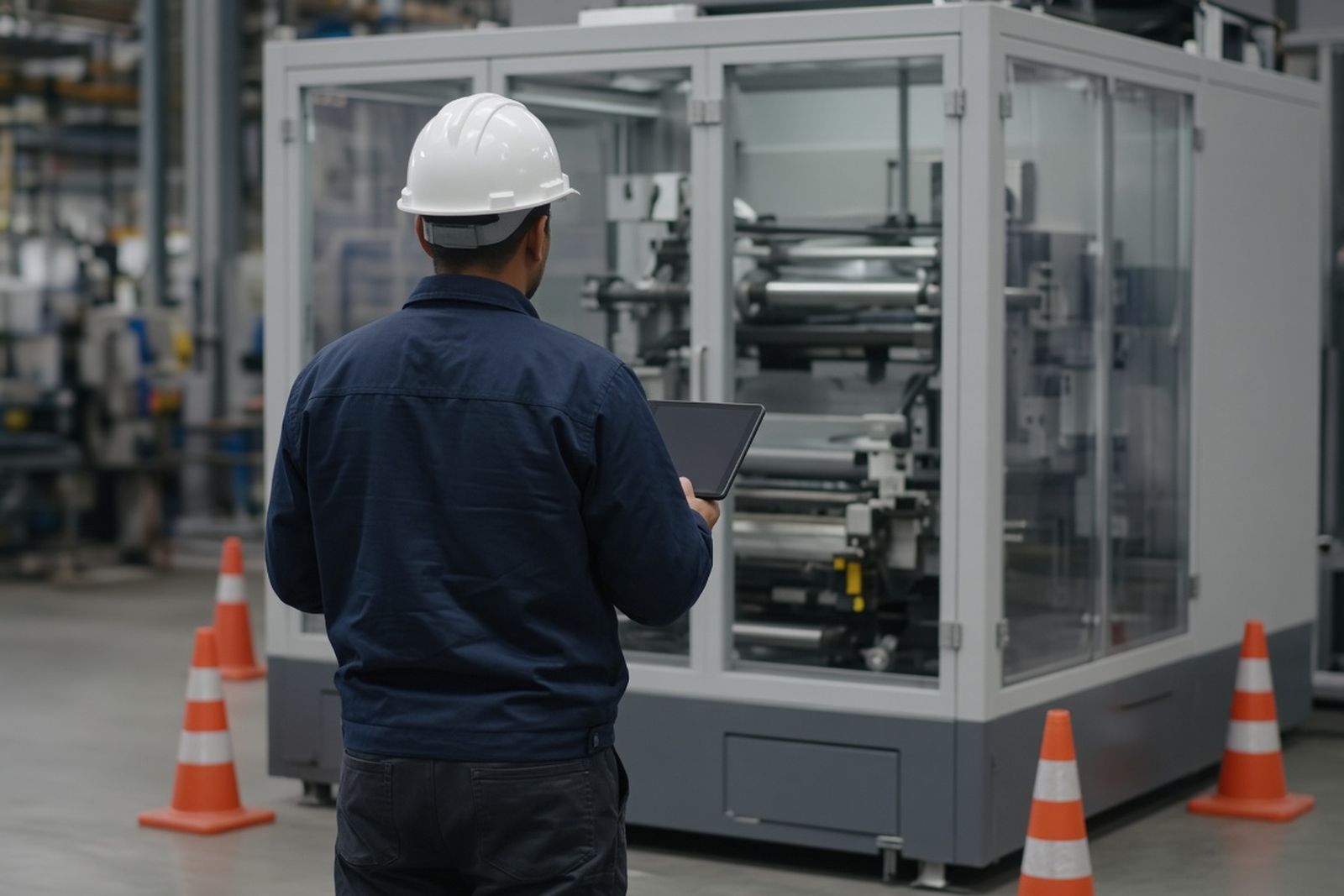
A workplace injury scene is surrounded by expensive, sensitive, and sometimes hazardous equipment. The tools a cleanup crew brings into that environment can protect it or damage it. A pressure washer that is fine on a driveway can drive contaminated water into bearings, electrical cabinets, and floor joints. A strong alkaline degreaser can etch aluminum or cloud polycarbonate guards.
Plants also have their own safety rules. Some areas are classified as hazardous locations where ordinary electrical tools could ignite vapors or dust. Others are confined spaces that require permits, atmospheric testing, and attendants. Food and pharmaceutical lines have sanitation programs that dictate which chemicals may touch product-contact surfaces.
When a contractor sends a proposal, it should reflect those realities. Generic equipment lists copied from residential jobs are a warning sign.
Your safety manager, maintenance lead, and, where relevant, your sanitation or quality manager should all review the list before the crew arrives. Each will catch different problems.
Protective equipment for your site
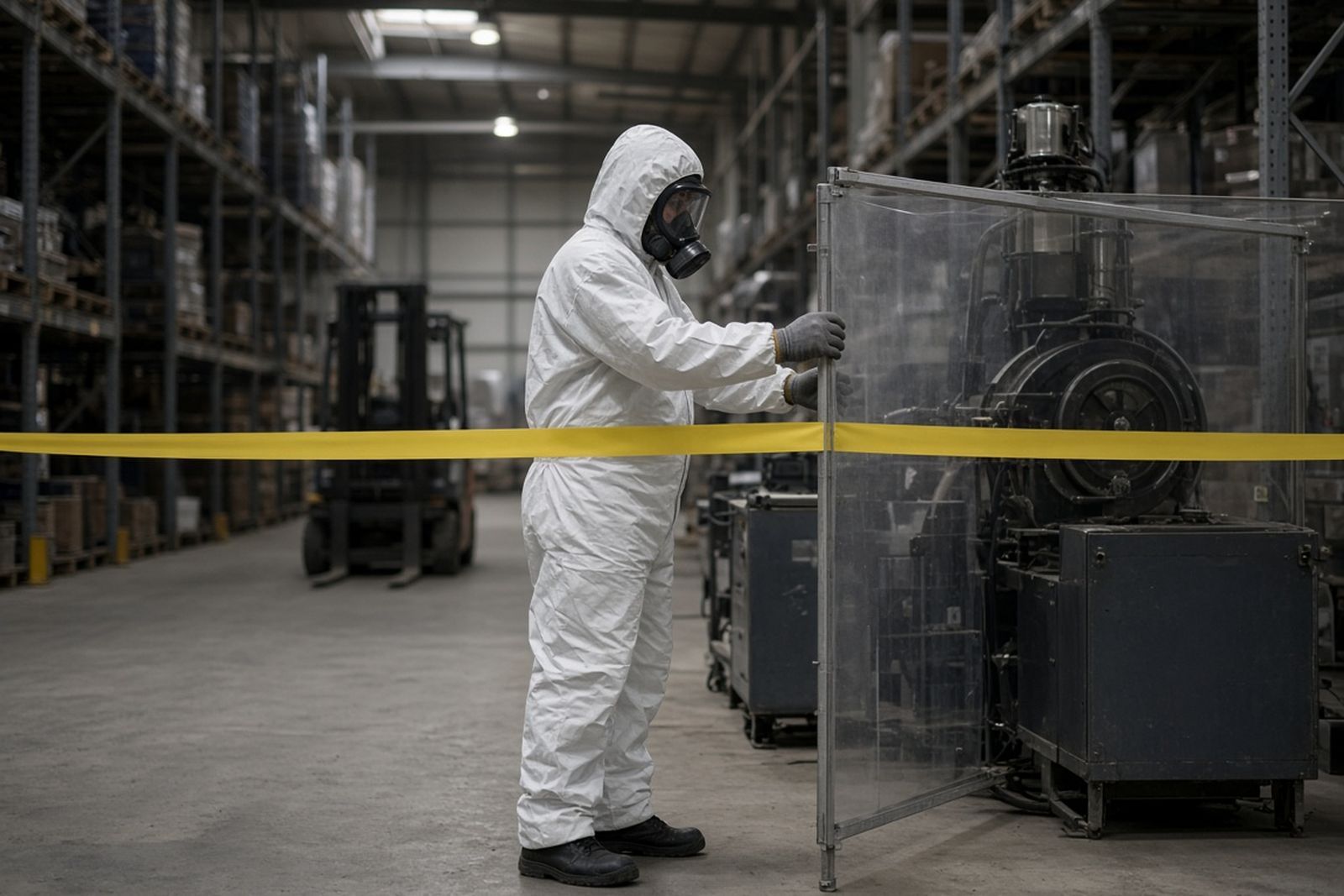
Industrial cleanup often needs more than the standard biohazard kit. Besides fluid-resistant coveralls, gloves, eye protection, and respirators, crews may need cut-resistant gloves or sleeves near metal fines and sharp edges, chemical-resistant suits and gloves where process chemicals are present, hearing protection in noisy areas, and safety footwear suited to oily floors.
Ask how the crew selected its protective equipment. The answer should reference your chemicals, your hazards, and any site-specific requirements such as flame-resistant clothing.
Expect the crew to follow your site's orientation and sign-in procedures. If they resist, that tells you something about how they will treat your other rules.
Evaluating proposed cleaning chemicals
Ask for the safety data sheet and, for disinfectants, the EPA registration number of every product the crew intends to use. Your environmental health and safety staff should compare those sheets against the chemicals already in use nearby to look for incompatibilities.
Pay attention to pH and material compatibility. Research on plastics suggests harsh products carry risks: in a 2024 experiment on detergent and disinfectant compatibility, Jennings and colleagues found that products above pH 8 accounted for 74% of failures. Many industrial degreasers are strongly alkaline, so ask whether the proposed product has been checked against your guards, housings, and coated floors.
For food and pharmaceutical plants, confirm whether any product is allowed on product-contact surfaces and what rinse is required afterward. Your sanitation program may already specify approved chemicals.
Finally, ask about quantities and disposal. Large volumes of rinse water mixed with blood, oil, and chemicals may need to be captured rather than sent to a floor drain.
When are pressure washers, scrubbers, and extractors appropriate?
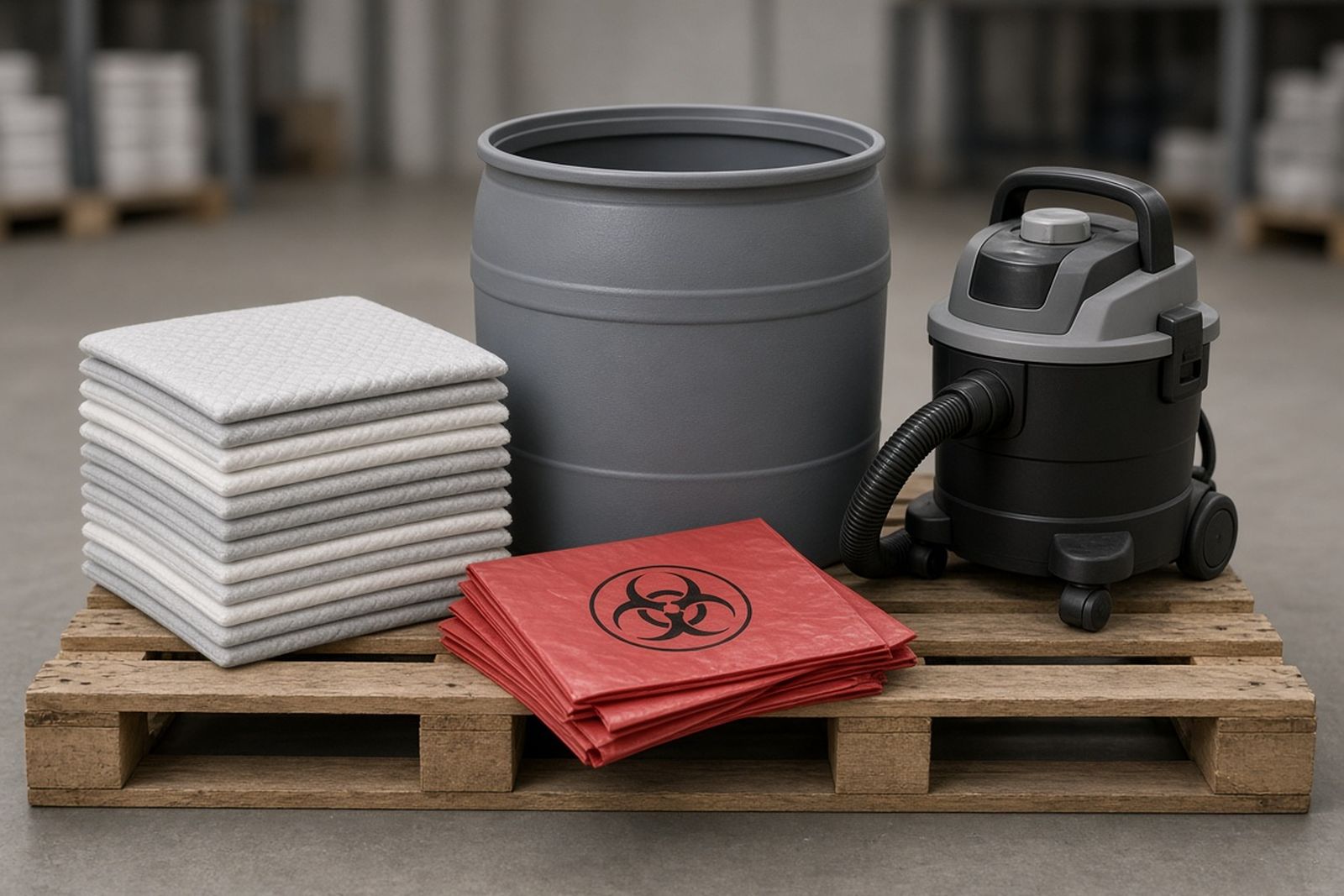
Mechanical equipment is often necessary to clean concrete and heavy machinery. Floor scrubbers with the right brushes can lift fluid and residue from coated floors. Hot water extractors can pull fluid back out of porous concrete. Wet vacuums with HEPA exhaust can capture liquid and debris without blowing contaminated air around.
Pressure washers deserve more caution. High pressure can aerosolize blood and body fluids, spreading contamination into the air and onto surfaces the crew did not intend to treat. It can also force water into bearings, motors, and electrical enclosures. Low-pressure rinsing is often safer around machinery and near sensitive equipment.
Ask the provider where and why they plan to use each machine, and how they will control overspray and runoff. Barriers, containment berms, and plastic sheeting can protect nearby areas.
If your floor has an epoxy or urethane coating, ask whether brushes and pads are rated for it. The wrong abrasive can remove coating along with contamination.
Scrubbers and extractors should arrive clean. Equipment that last ran at another biohazard or chemical job can introduce contamination to your site, and a food plant in particular may require proof that tanks, hoses, and brushes were cleaned and sanitized before entry. Asking how the contractor decontaminates its own machines between jobs is a reasonable part of the review.
Confined spaces and hazardous locations
Some industrial incidents involve pits, tanks, vaults, or other confined spaces, or areas where flammable vapors or combustible dust may be present. Those environments call for specific equipment and procedures.
For confined spaces, expect multi-gas monitors to check oxygen levels, flammability, and toxic gases before and during entry. Ventilation blowers, retrieval systems, and communication equipment may also be needed, along with a trained attendant outside the space.
In classified hazardous locations, lights, vacuums, and other electrical tools must be rated for that environment. Ordinary shop lights and extension cords can be ignition sources.
Ask the provider to confirm, in writing, that its equipment and procedures meet your site's requirements for these areas. If they are unfamiliar with the terms, they may not be the right fit for the job.
Guards, lockout devices, and machinery tools
Cleaning inside machinery often requires removing guards and panels, which means working on equipment that is normally protected, and every removed guard is a hazard until it is back in place and verified.
In most plants, lockout devices and procedures belong to the site, not the contractor. The cleanup provider should bring its own personal locks if your program requires them and should work under your authorized employees' direction.
Ask whether the crew has the hand tools needed to remove guards and panels safely, and who will reinstall and verify them. Guards left off or reinstalled incorrectly are a direct risk to the next operator.
Photographs of each guard before removal, and a checklist for reinstallation, are simple tools that prevent mistakes.
Lighting is another quiet necessity. The inside of a press, the underside of a conveyor, and the back of a mixer are dark places, and residue there is easy to miss with overhead plant lighting alone. Portable task lights, rated for the area where they will be used, make inspection far more reliable and help the crew avoid reaching blindly toward sharp edges.
What a joint proposal review usually changes
Proposals are best reviewed by your safety manager and maintenance lead together, and the same handful of changes comes up again and again. A conveyor transfer-point injury is a good test: a typical proposal might list a pressure washer, an alkaline degreaser, a quaternary disinfectant, HEPA wet vacuums, absorbent pads, and standard biohazard protective equipment.
Reviewers commonly ask for low-pressure rinsing in place of the pressure washer near conveyor motors and control boxes, and they confirm that the degreaser is compatible with aluminum frames and polycarbonate side guards. Sharp edges at transfer points justify cut-resistant gloves. If a nearby floor drain leads to the storm system, the reviewers will also want to know how rinse water will be contained.
A good contractor revises the plan in response, adding containment berms and a collection vacuum for rinse water, and supplies updated safety data sheets. Work then proceeds with fewer risks to both the equipment and the environment.
How will results be verified?
Verification tools belong in the proposal, not as an afterthought. Ask what the crew will use to confirm the area is clean.
Plants with existing sanitation programs often already own ATP meters and have baseline readings for key surfaces. Sharing those baselines with the contractor gives both sides a clear target and avoids disputes about whether a surface is clean enough.
- Visual inspection with adequate lighting, including inside housings
- ATP swabs or other rapid tests, especially on product-contact surfaces
- Photographs before, during, and after cleaning
- Records of products, dilutions, and contact times
- Moisture or residue checks on porous floors and joints
- Sign-off from site safety, maintenance, and sanitation leads
What should you do before you need a contractor?
The best time to evaluate equipment is before an accident. Meet with potential providers, walk them through your site, and share your safety rules, hazardous-location maps, confined-space inventory, and chemical lists. Ask them to describe the equipment they would bring for common scenarios.
Record the answers and keep them with your emergency plan. When an incident happens, you will already know which provider fits your plant and what tools to expect.
Think about what your own staff should keep on hand for the first minutes after an incident, too. Spill kits with absorbents suited to both oils and body fluids, barrier tape, disposable gloves, and sharps containers let supervisors contain a scene safely while waiting for professionals. Those kits should be stocked, inspected, and placed where supervisors can find them on every shift.
Wastewater discharge limits, waste classification, and reporting requirements depend on your facility type and permits, so ask your environmental lead and local wastewater utility to confirm them in advance.