Short answer
Before industrial accident cleanup begins, assess ten risks: unexpected machine startup from stored energy, bloodborne pathogen exposure, sharp edges and metal fines, reactions with process chemicals, confined space atmospheres, slippery floors, electrical hazards, ignition sources in flammable areas, damaged structures or suspended loads, and emotional strain on coworkers. A joint check with site safety and maintenance staff prevents most secondary injuries.
Why cleanup crews face risks the original accident did not
After a workplace injury, attention naturally focuses on the injured worker and on what caused the accident. The cleanup that follows can be overlooked as a safety concern, yet it often places people in the same hazardous spot, sometimes with guards removed and equipment partly disassembled.
Cleanup crews also bring new hazards with them: cleaning chemicals, water, pressure equipment, and extension cords. Those can interact with the plant's own hazards in ways that are easy to miss when everyone is eager to restart production.
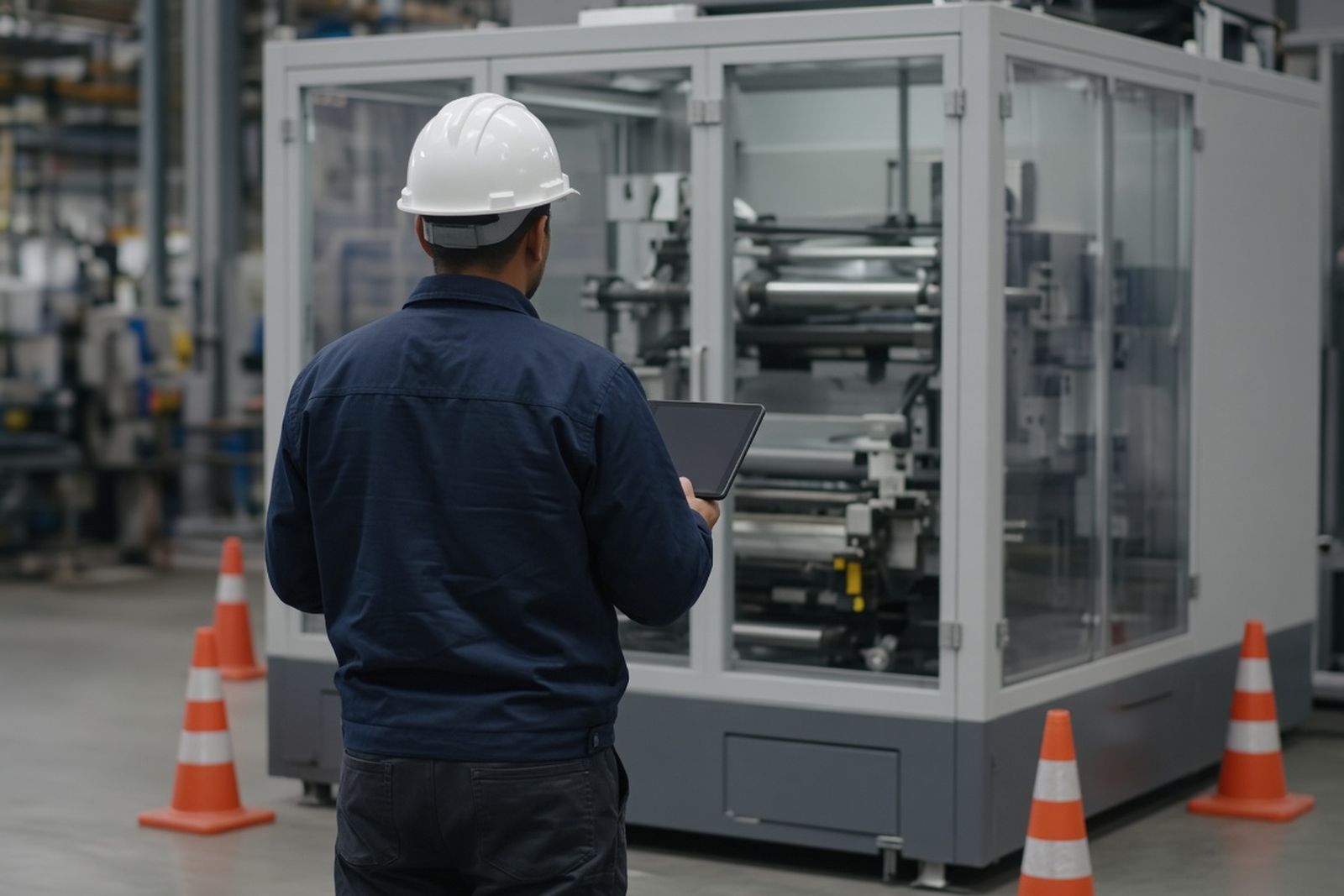
A joint risk check with the site's safety manager, maintenance lead, and the cleanup provider before work begins is the most reliable way to prevent a second incident. The ten risks below are a practical starting point.
Adapt them to your facility. A food plant, a foundry, a chemical blender, and a distribution center will weigh these risks differently.
Time pressure is a risk multiplier across all ten items. When a line is down and customers are waiting, people are tempted to skip a lockout step, reach in without checking for sharp edges, or grab the nearest chemical. Naming that pressure openly during the joint check, and agreeing that safety steps are not optional, helps everyone resist it.
Risk 1: stored energy and unexpected startup
Risk 1 is unexpected startup or release of stored energy. Machines involved in injuries often still hold energy after they stop: pressure in hydraulic and pneumatic lines, tension in springs and belts, raised rams or suspended loads, rotating flywheels, and charged capacitors. A crew reaching inside to clean blood from a press or conveyor faces the same hazard that may have caused the original injury.
Contact with objects and equipment is already a leading source of serious injury. It caused an annualized 860,050 days-away, restricted or transfer cases in private industry in 2023-24, a rate of 40.6 per 10,000 workers, according to the Bureau of Labor Statistics.
Before anyone begins, the site's authorized employees should apply lockout and tagout, release or block stored energy, and verify zero energy. Cleanup crews should apply personal locks if the site's program requires it and should never override or work around a lock.
If the machine was damaged in the accident, verify isolation with extra care. Damaged valves, switches, and gauges may not behave as expected.
Risk 2: bloodborne pathogen exposure
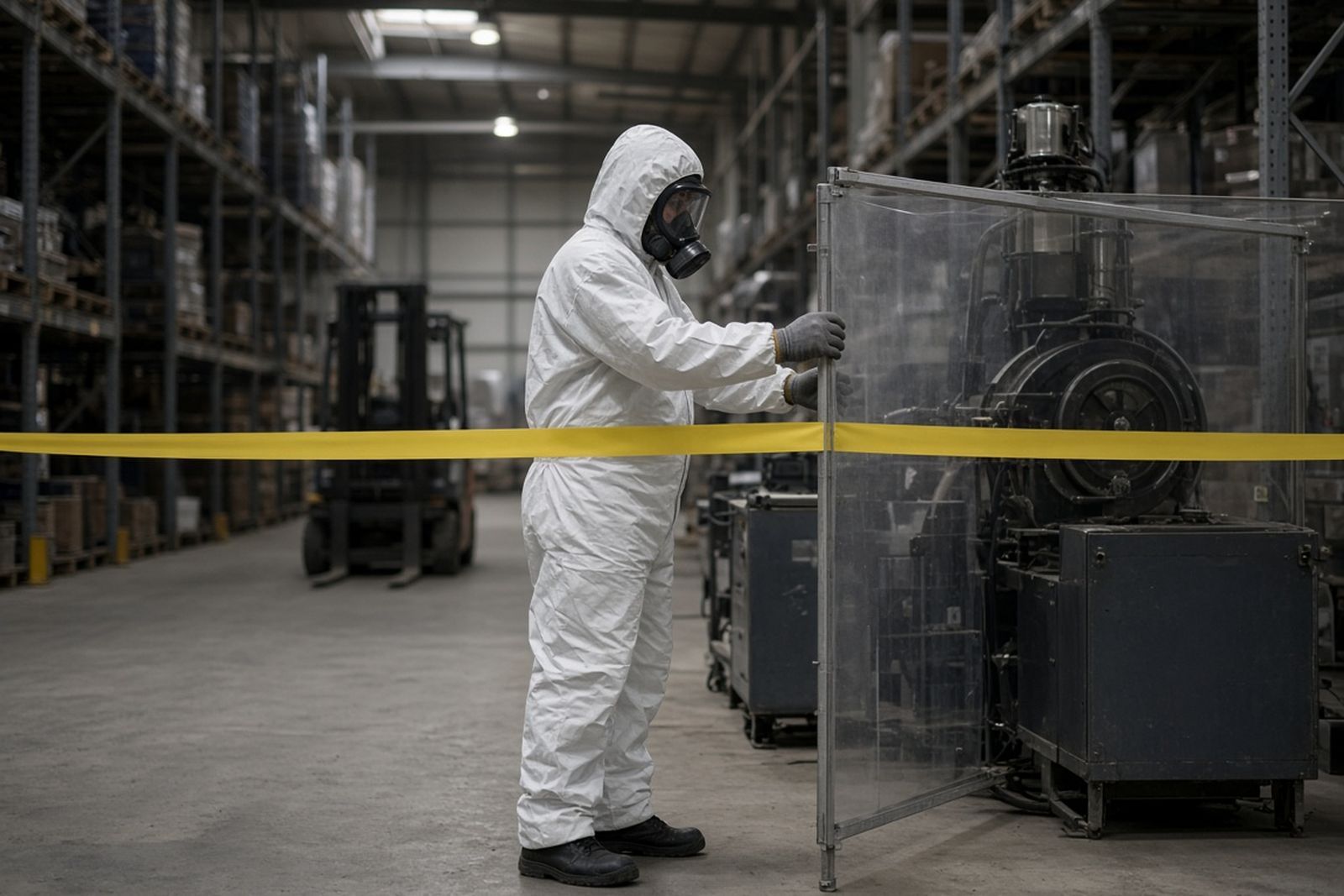
Risk 2 is bloodborne pathogen exposure. Blood and tissue at an injury scene may carry bloodborne viruses. Contact can happen through cuts, splashes to the eyes or mouth, or contaminated tools. Crews need fluid-resistant protective clothing, gloves, and eye and face protection, and workers covered by your bloodborne pathogens program should have been offered vaccination and training.
Risk 3: cuts from sharp edges and metal fines
Risk 3 is cuts from sharp edges and metal fines. Industrial scenes often include sharp tooling, broken guards, stamped parts, and fine metal particles mixed into fluids. Standard nitrile gloves tear easily in those conditions, which can turn a cut into a blood exposure.
Layer cut-resistant gloves under or over fluid-resistant gloves where sharp hazards exist. Use tools to remove debris, and keep a rigid container on hand for sharp waste.
Pay attention to hands inside machinery. Pinch points, blades, and edges are often out of sight.
Risk 4: reactions with process chemicals
Risk 4 is reactions with process chemicals. Many plants store and use acids, caustics, oxidizers, solvents, and reactive materials. A disinfectant or degreaser introduced near those chemicals can react, releasing heat or toxic gases. Chlorine-based products, for example, can release chlorine gas when mixed with acids.
Exposure to harmful substances or environments caused 820 U.S. worker deaths in 2023, falling to 687 in 2024, according to the Bureau of Labor Statistics. Review safety data sheets for chemicals near the scene and for every cleaning product before work begins, and keep incompatible materials apart.
Risk 5: hazardous atmospheres in confined spaces
Risk 5 is hazardous atmospheres in confined spaces. Pits, tanks, vaults, and machine enclosures can hold low oxygen, flammable vapors, or toxic gases, and cleaning chemicals can make those conditions worse.
Follow your site's permit-required confined space procedures. Test the atmosphere before entry and monitor it continuously, ventilate the space, station an attendant outside, and have a rescue plan ready.
Risks 6 and 7: slippery floors and electrical hazards
Risk 6 is slips and falls on contaminated floors. Blood mixed with oil, coolant, or hydraulic fluid creates extremely slippery surfaces. Adding water and detergent during cleanup makes them worse. Use absorbents to remove bulk fluid first, wear slip-resistant footwear, mark wet areas, and limit foot traffic.
Risk 7 is electrical hazards. Cleanup introduces water near motors, control panels, junction boxes, and extension cords. Damaged equipment may have exposed wiring. De-energize and lock out electrical systems in the work area, use ground-fault protection on portable tools, and avoid spraying water into electrical enclosures.
Risk 8: ignition in flammable or combustible atmospheres
Risk 8 is ignition in flammable or combustible atmospheres. Some areas contain flammable vapors or combustible dust. Ordinary lights, vacuums, and power tools can ignite them. Fires and explosions caused 104 fatal work injuries in the United States in 2023 and 93 in 2024, according to the Bureau of Labor Statistics.
Confirm whether the work area is a classified hazardous location and use only equipment rated for it. Keep flammable cleaning products away from ignition sources.
Risks 9 and 10: damaged structures and emotional strain
Risk 9 is damaged structures and suspended loads. An accident may have damaged racking, mezzanines, guardrails, overhead conveyors, or cranes. Loads may be hanging or stacked unsafely. Crews working beneath or beside compromised structures are at risk if something shifts. Have maintenance or engineering staff inspect and secure structures before cleanup starts.
Risk 10 is emotional strain on coworkers and cleanup staff. Employees who witnessed the accident, gave first aid, or knew the injured worker may be deeply affected. Asking them to clean the scene can intensify that impact and increase the chance of mistakes.
Assign cleanup to trained staff who were not directly involved, or to an outside provider. Offer employee assistance resources to affected workers. If an incident involved a death by suicide, share information about the 988 Suicide and Crisis Lifeline, which is available by call or text.
Supervisors should also watch for signs that someone is struggling in the days after an incident, not only on the day itself.
A nine-point pre-cleanup checklist
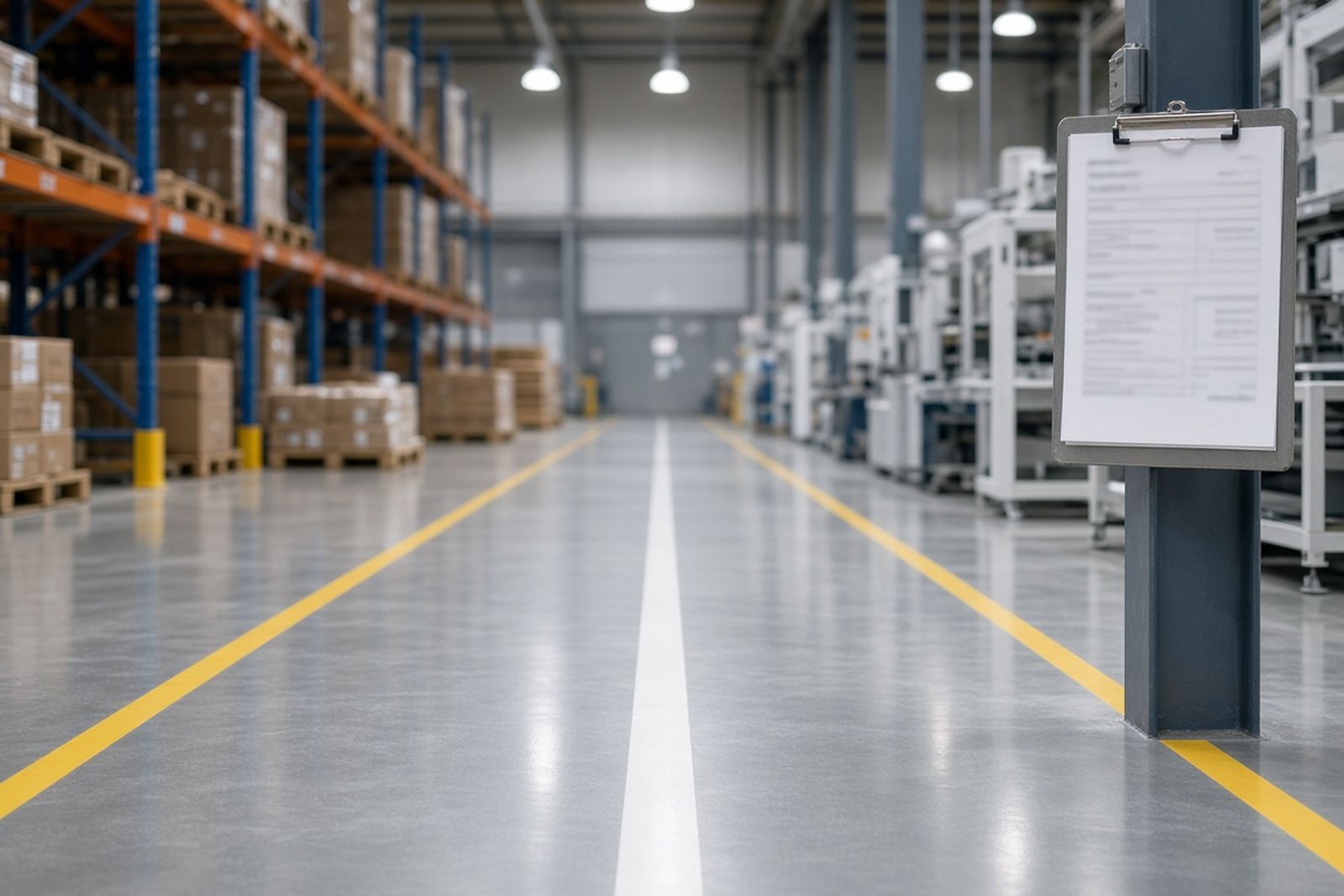
A written checklist keeps the joint review focused and consistent across shifts.
- Is the scene released by investigators and the site's safety lead?
- Is all energy isolated, locked out, and verified at zero?
- Are sharp edges, tooling, and metal fines identified?
- Have safety data sheets for nearby chemicals and cleaning products been reviewed?
- Does the work involve a confined space, and is a permit in place?
- Is the area a classified hazardous location, and is equipment rated for it?
- Are electrical systems de-energized where water will be used?
- Are structures, racking, and overhead loads inspected and secure?
- Are the people doing the work trained, equipped, and not directly affected by the event?
Reducing these risks before an accident happens
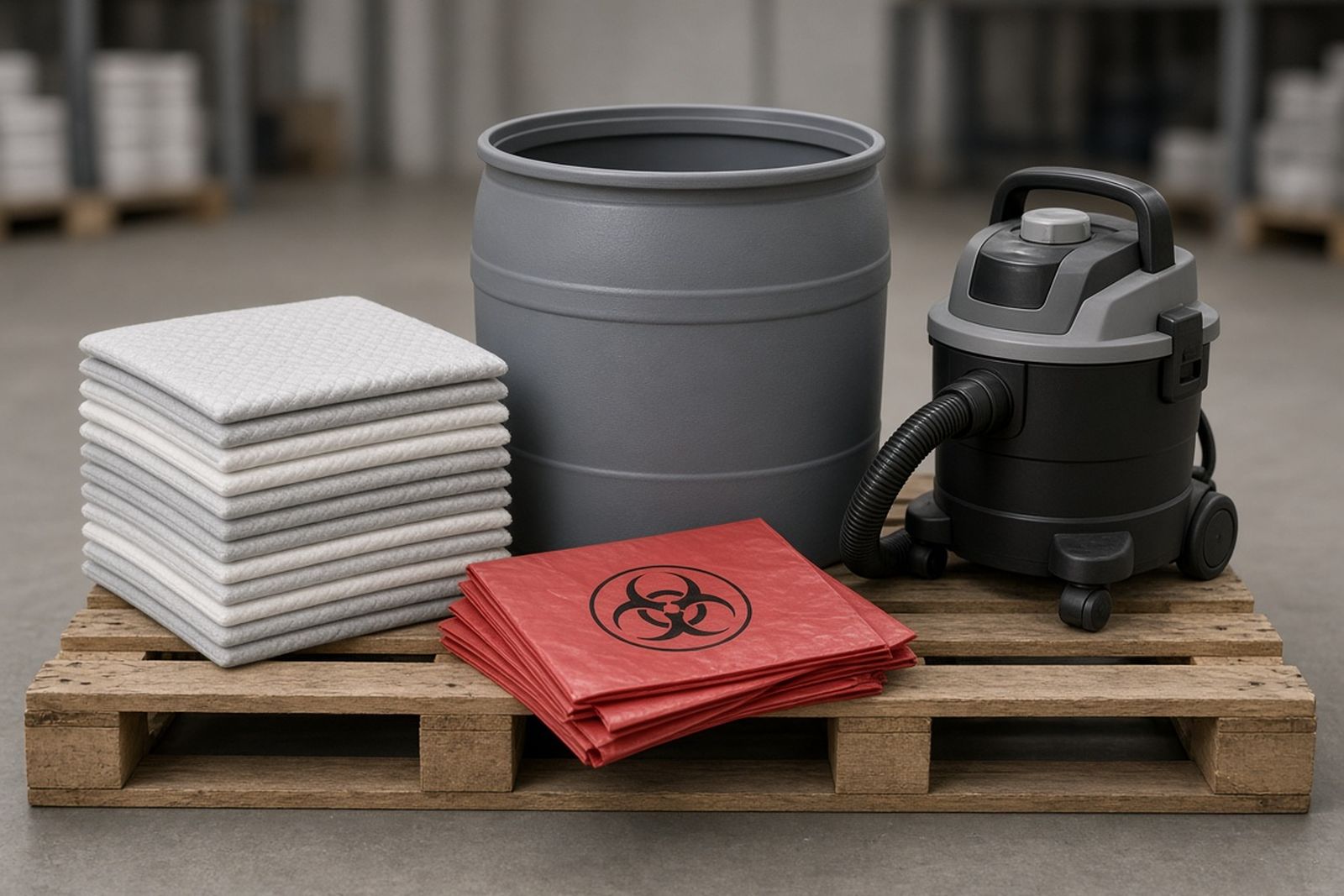
Much of this work can be done in advance. Map where hazardous chemicals, confined spaces, and classified areas are located. Keep safety data sheets current and easy to find. Train employees covered by your bloodborne pathogens program and stock spill kits with cut-resistant gloves and absorbents suited to oils and body fluids.
Identify a cleanup provider with industrial experience and walk them through your site before you need them. Agree on how the joint risk check will work.
After each incident, review how the cleanup went. Note any near misses, missing supplies, or confusion about responsibilities, and update your checklist. Each review makes the next response safer and faster.
Also ask your OSHA area office whether your state runs its own occupational safety plan, which may add requirements for lockout, confined spaces, or bloodborne pathogens.