Industrial Accident Cleanup: Choosing a Company
Evidence to request from industrial accident cleanup providers: business identity, applicable training, insurance, scope assumptions, waste routing, verification, availability, and responsibility for subcontractors.
The articles in this category help you check out a provider before an accident happens, not during one. You will find lists of questions to bring to a planning call. You will also find warning signs that a company lacks industrial experience. Other articles cover the training and paperwork that tend to show skill in plant and warehouse settings. Some compare local firms with national networks. They explain what each may offer when your facilities are spread across several regions. The focus is on proof you can check, such as written procedures and sample reports, not sales talk or badges.
Get an email reply about industrial accident cleanup
Send a short message to the follow-up inbox. A coordinator can reply by email. This form does not send emergency help; call 911 first if anyone is in danger.
Choosing well matters because an industrial cleanup affects safety, rules, production, and sometimes lawsuits all at once. A provider that is comfortable wiping up blood in a home may not understand lockout teamwork, hazardous waste work, or the permit habits of a factory. On the other hand, a chemical spill company may not be set up for blood cleanup. These articles help you find a partner whose experience fits the mix of hazards your site could realistically face. Many facilities approve a vendor ahead of time through purchasing and EHS review. That way, a trusted contact is already on file when something goes wrong.
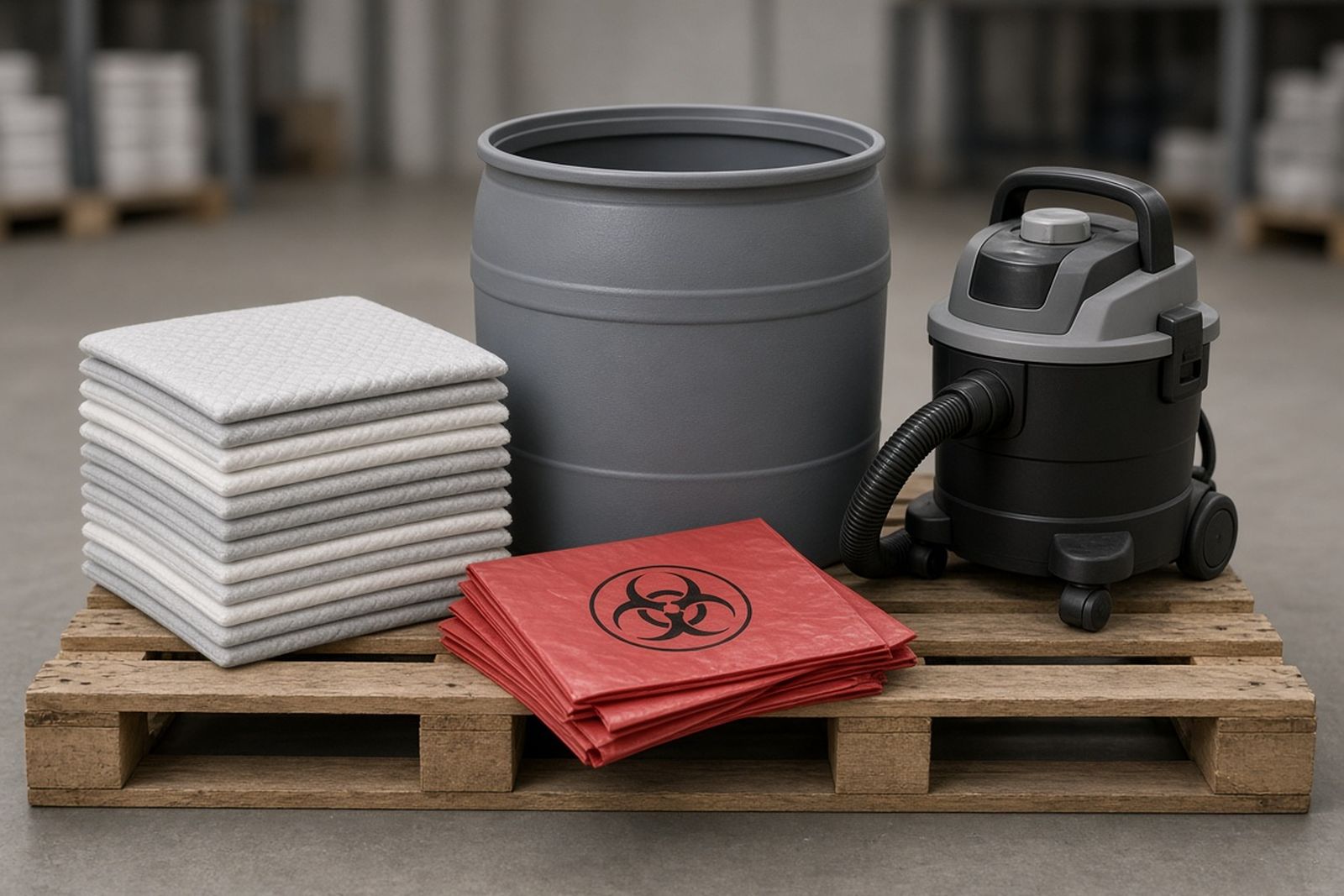
10 Questions to Ask Before Hiring an Industrial Accident Cleanup Company
Ten questions plant, warehouse and site managers should ask a cleanup company before letting it onto the floor after a serious workplace injury.
Before you hire a company to clean up after an industrial accident, ask ten things. Ask about its work with machines and lockout, which means shutting off and locking a machine's power. Ask about its programs for bloodborne germs and chemical safety. Ask how it handles spots where chemicals and blood are mixed, and which products and wet times it uses. Ask how it records and disposes of waste, and how it works with investigators and your safety team. Ask how it hands the area back. Clear, specific answers point to a company that fits an industrial site.
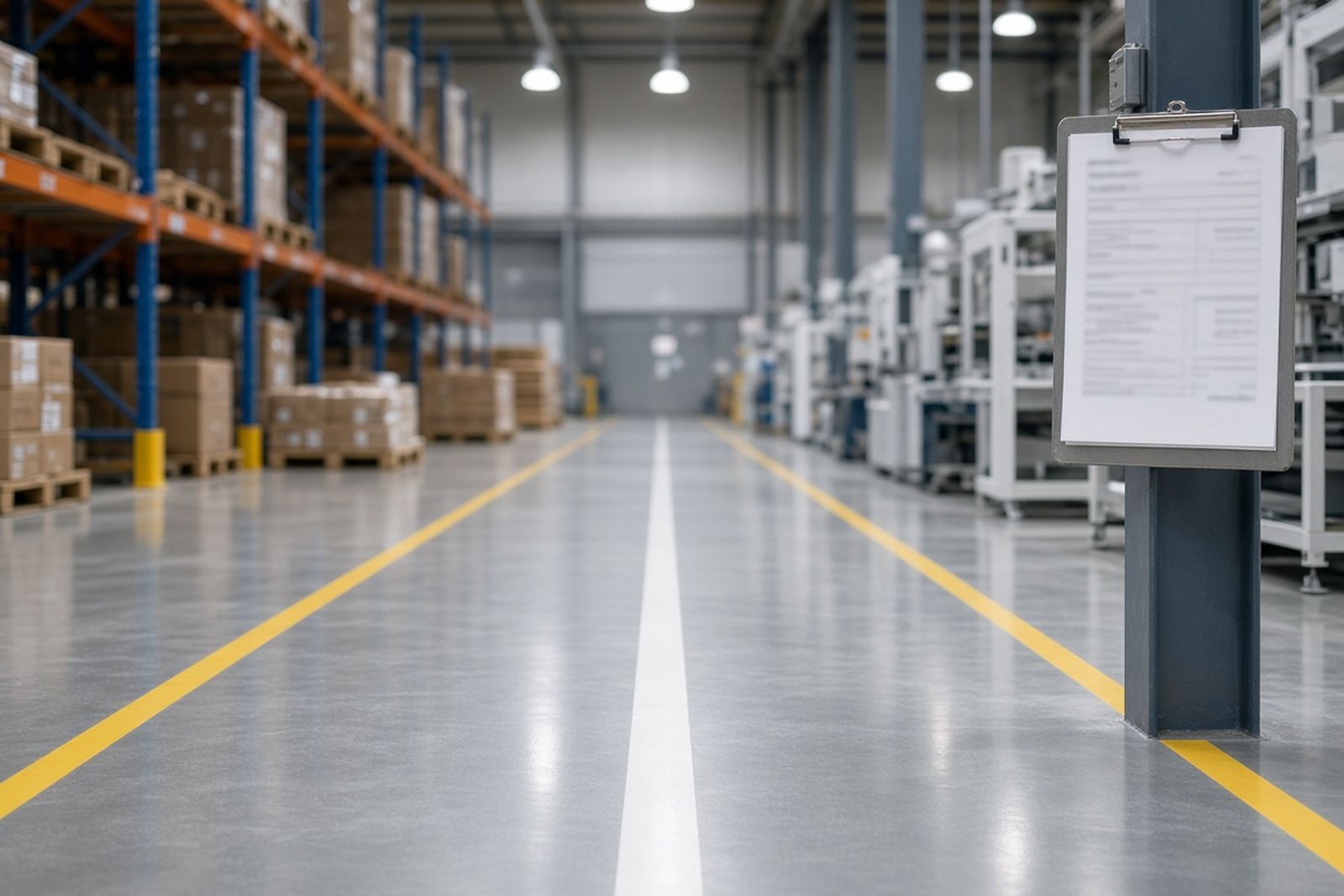
Red Flags When Hiring Industrial Accident Cleanup Services
Warning signs plant and site managers should catch before hiring a cleanup contractor after a serious workplace injury, from scene disturbance to vague scopes.
After a serious workplace injury, red flags in a cleanup contractor include pressure to start before investigators release the scene, no questions about lockout and energized equipment, unnamed chemicals, no plan for mixed biological and industrial contamination, missing safety data sheets, informal waste handling, and no written scope or completion report. A qualified contractor coordinates with EHS and treats the area as both a biohazard and an industrial worksite.
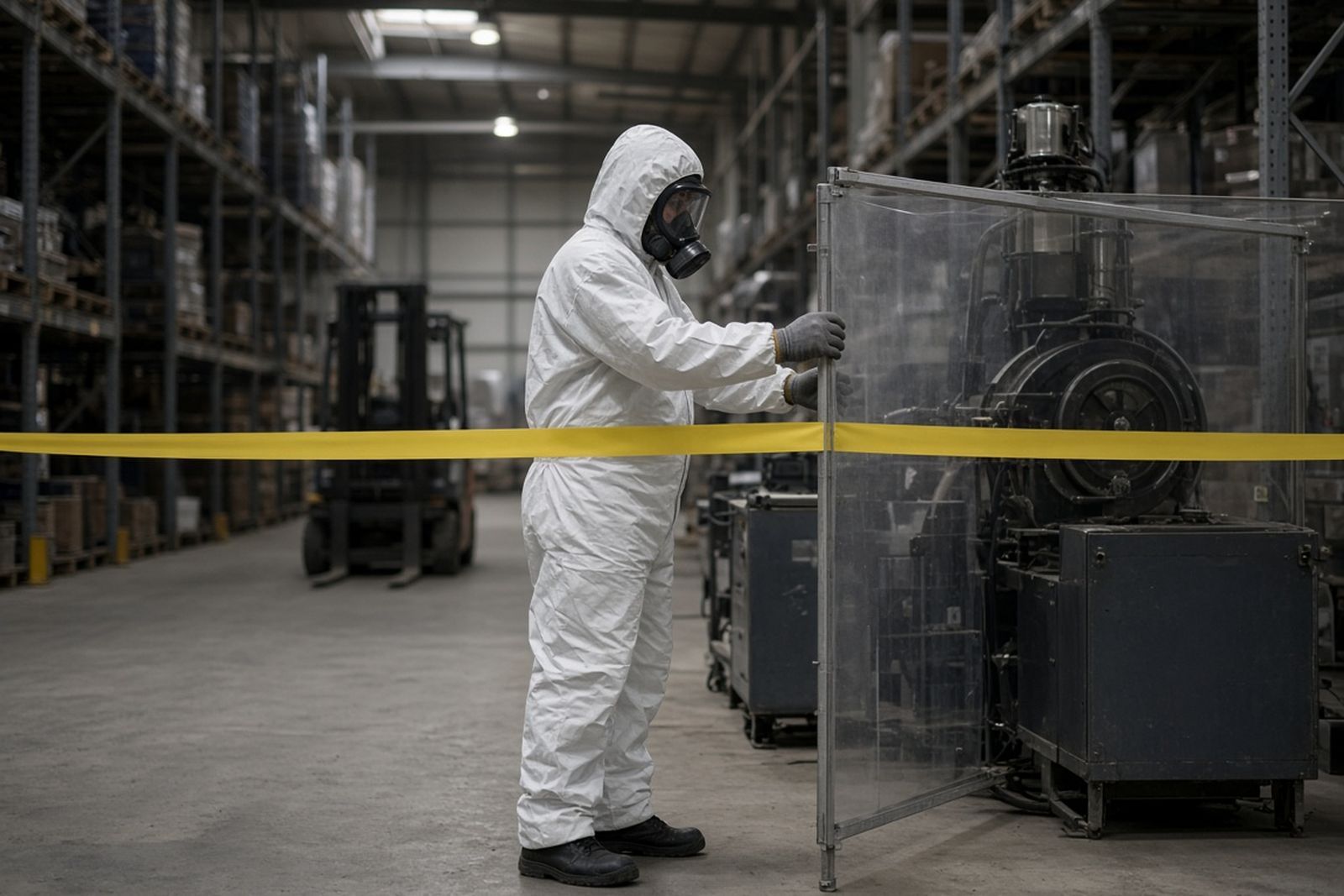
Training, Documentation, and Credentials for Industrial Accident Cleanup
The training records, safety programs, insurance and final papers a plant manager should require from a company cleaning up after a workplace injury.
For industrial accident cleanup, these are the credentials that matter. Look for written training on bloodborne germs, breathing protection, chemical safety and shutting off machine power. Look for a written safety program, insurance that fits your site and any required state or local license. The company should also have experience working under a host site's safety rules. The papers the company hands over afterward become part of your accident file. These include waste records and a final report.
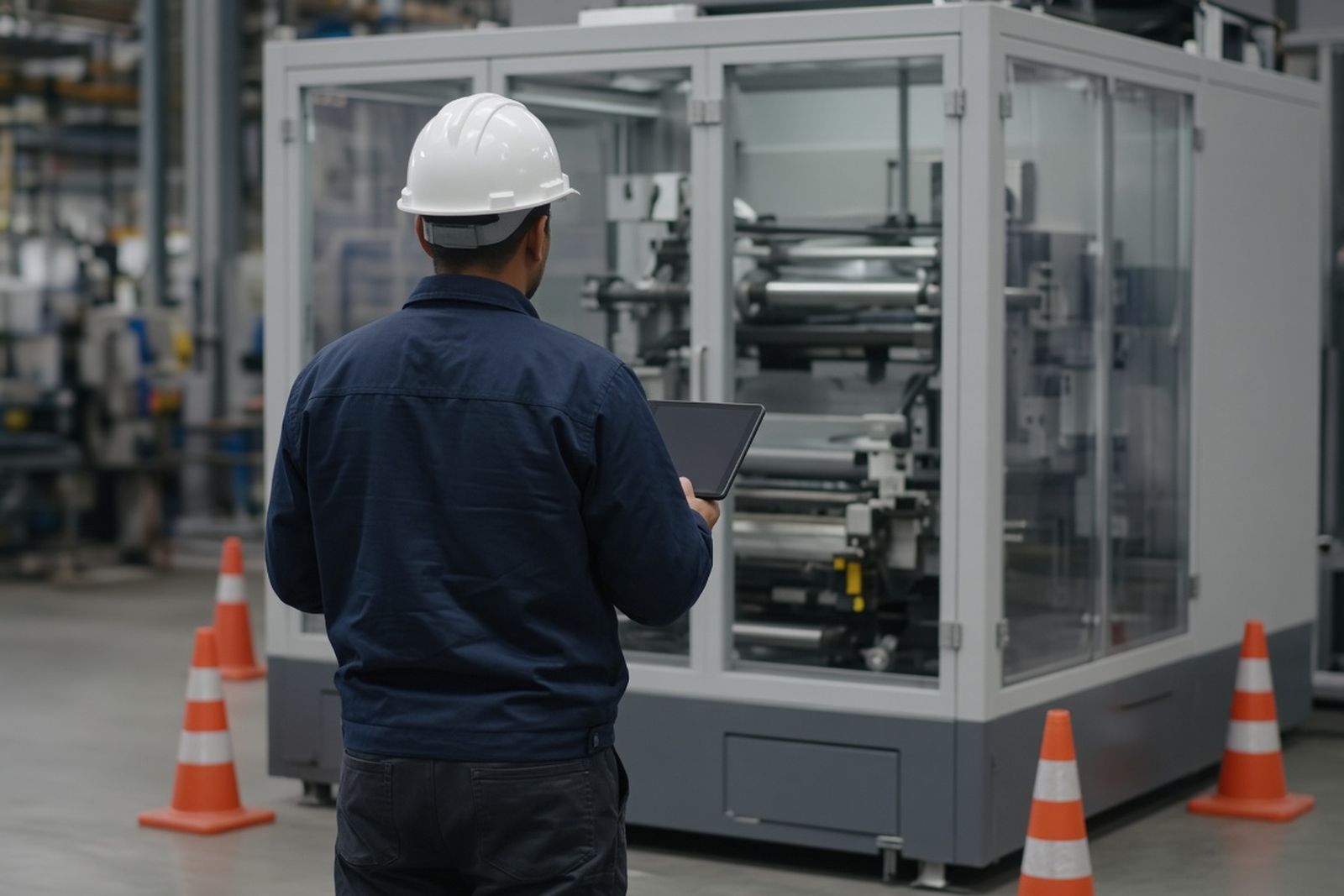
How to Compare Local and National Industrial Accident Cleanup Providers
Local remediation firms and national industrial service companies each bring strengths to plant accident cleanup. Compare them on crews, scope, and safety.
Local industrial accident cleanup firms often reach your plant faster, know regional regulators and haulers, and put owners directly on site. National companies can cover many facilities under one agreement, bring heavy equipment and chemical response depth, and standardize reporting, though they may rely on subcontractors. Judge both on the crew that will actually arrive, their biological and chemical capability, their safety record, and how they fit your contractor program.
Sourced figures on choosing a company
- 81%
81% reported bleach use on high-touch surfaces in contact-isolation rooms.
Read with care: 47 of 273 contacted participated; practices were reported rather than observed.
Source: Han et al. (2021)47 US hospital environmental-services respondents across 26 states; 2019 survey.
- 98.1%
Manual wiping met the study's disinfection-success criterion on 98.1% of surfaces versus 75.5% for UV-C.
Read with care: Specific device, protocol and success criterion; no patient infection endpoint.
Source: Knobling et al. (2023)Naturally contaminated surfaces in a comparative field test.
- 8
Products above pH 8 accounted for 74% of failures in the experiment.
Read with care: Accelerated test conditions; not a failure rate for installed equipment.
Source: Jennings et al. (2024)Eight wipe formulations tested on healthcare plastics under fixed strain for seven days.
These figures are public research and agency data, not this network's own job records. Keep each number with its population, year and limits; none of them predicts cost, timing or outcome at a specific property.
What research has found
Findings from published studies of people and properties in situations like this one. They describe what researchers observed in a specific group; they are not predictions for your case.
The most common reported disinfection frequency shifted from between patients to twice daily.
Sporicidal products were common in contact-isolation rooms but uncommon in ordinary rooms.
Choosing a Company: common questions
What should we ask an industrial cleanup company during pre-qualification?
Ask how they handle accidents that involve both blood and chemical hazards. Ask how they work with your lockout and confined-space programs. Ask what paperwork they provide when the job is done. Request a sample report with private details removed. Ask who will supervise on site and what training that person has. Their answers should show industrial experience, not only home jobs.
What warning signs suggest a provider is not suited to plant work?
Be careful if a company suggests hosing contamination into floor drains. Also be careful if it waves off the need for your EHS team or cannot explain where the waste will go. Pushing back on your site safety rules is another concern. So is a bid that offers a fixed price without asking about equipment, chemicals, or access. Good providers ask detailed questions before they give a price.
Is a national provider better than a local one for multi-site operations?
Neither type is always better. A national network may offer the same report format at every location. A local firm may know regional disposal sites and regulators well. What matters is who actually does the work at each site. Their training and methods should match your standards. Ask whether jobs are handed to subcontractors, and how quality is checked when they are.
How much should safety records weigh in choosing a cleanup contractor?
A lot, since the crew will work in your facility among your people and equipment. Review their injury history, their safety program, and how they handle accidents. Ask how they would fit into your safety rules for contractors. A contractor that is careful about its own crew's safety is more likely to respect your site rules too.
Should we choose a contractor our insurer recommends?
An insurer's suggestion can help. But you usually have the right to choose any qualified contractor. Judge a recommended firm using the same standards you would use for others. Ask your insurer whether choosing a different contractor affects the claim. Get their answer in writing. Keep that record with the claim file.
How do we evaluate a contractor we have never worked with in an emergency?
Focus on the basics. Check safety paperwork, insurance, and related experience. Look for clear answers about lockout, waste, and records. Ask for references if time allows. Have your EHS staff member supervise closely at the start. Write down how you judged the company so the choice can be reviewed later. Even a short call to one reference can show how the firm communicates under pressure.
What should a contractor provide before starting work in our plant?
Expect a written work plan, safety paperwork, proof of insurance, and a list of crew members. You should also get product safety data sheets and a waste plan. The crew should attend your site safety orientation. Having these before work begins helps avoid delays and mix-ups. If an item is missing, decide whether work can safely begin without it and note who approved that choice. Keep copies of everything in the job file so the record is complete for later review.
Related community polls
Every count is a real visitor vote; nothing is seeded or padded. One vote per poll per device, and you can change your answer.
After a serious injury on the floor, what was your hardest early decision?
How did your facility handle cleanup after a serious blood incident?
More on industrial accident cleanup
Industrial Accident Cleanup services
See how workplace injury cleanup, chemical spill response, equipment cleaning, and confined space work are planned and ordered for plants and job sites.
Costs explained
What drives the price, published cost ranges, and how to read a written quote line by line.
Insurance and payment
Which policies may respond, how to document a claim, and what to do if coverage is denied.
Planning tools
Planners and checklists built for facility managers. They cover cost ranges, contractor checks, insurance steps, first-day actions, waste sorting, and in-house risk.
Community polls
Compare your instincts with other operations and safety leaders on scene holds, restart pressure, choosing a contractor, and supporting affected workers.
Knowledge quiz
Test what you know about spotting hazards, scene control, sealing off areas, disinfecting, waste paths, and records before an accident puts it to use.