Short answer
Environmental responsibility in industrial accident cleanup means containing released fluids before they reach drains or soil, choosing cleaning products that do not create new hazards, characterizing mixed waste correctly, keeping wash water out of storm systems, and telling neighbors and regulators what they need to know. It runs alongside worker protection, not against it, and it depends heavily on decisions made in the first hour.
Why does the environment enter the picture after a workplace injury?
When someone is hurt on the job, attention rightly goes to the injured worker and to the people who responded. The environmental side of the event often gets noticed only later, when someone finds a sheen on a retention pond or a neighbor calls about a smell.
Industrial accidents frequently release more than blood. A forklift that strikes a rack may puncture a drum. A machine injury may coincide with a hydraulic hose failure. A fall from a mezzanine might knock over a container of solvent. Those materials can move quickly across a slab toward floor drains, loading docks, and gravel yards.
Cleanup is the moment where you either contain that material or spread it. Responsible practice means thinking about where every liquid, rag, and bucket of rinse water will end up before anyone starts scrubbing.
Contain first: drains, doors, and joints
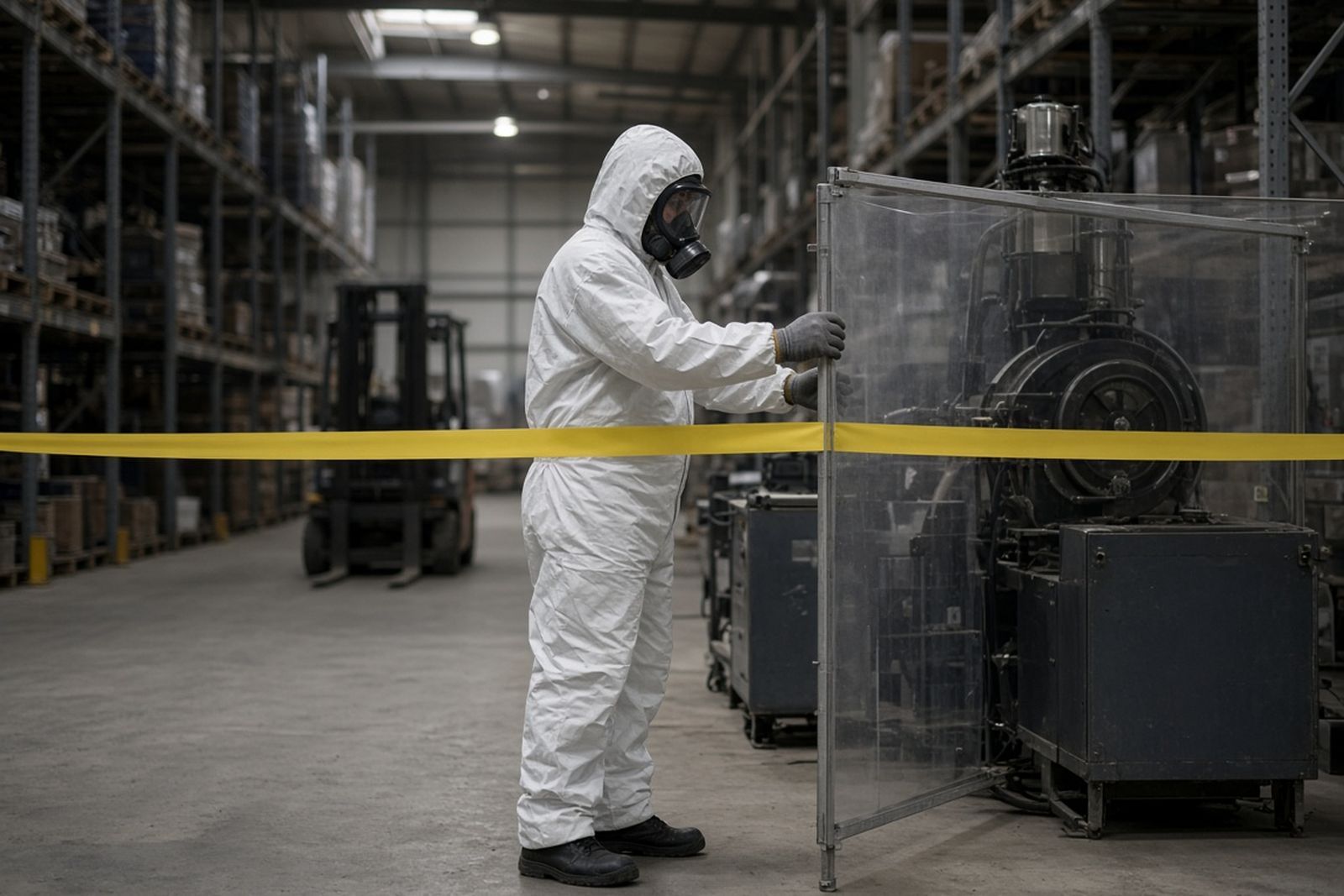
Once the injured person is being cared for and the area is safe to approach, the first environmental priority is to stop spreading liquids from reaching pathways that leave the building. That usually means drains, doorways to the yard, and cracks or joints in the floor that lead to soil.
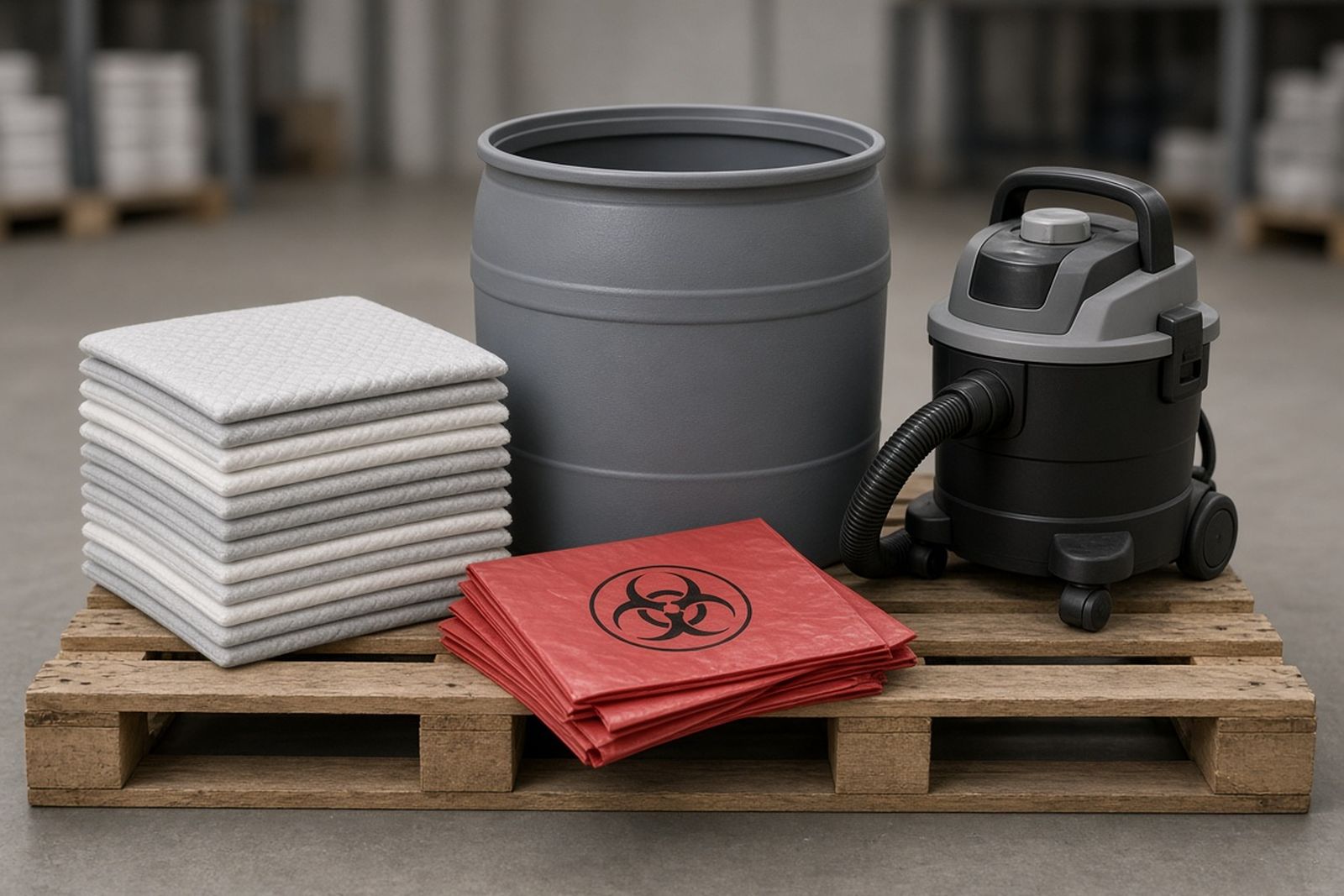
Drain covers, absorbent socks, and booms are inexpensive and should be stocked near equipment that holds fluids. Trained employees can often place them without disturbing the injury area itself, but if investigators have asked that the scene be preserved, confirm what you may do before acting.
Some releases, depending on the substance and quantity, trigger reporting to environmental agencies within tight timeframes. Your EHS manager should make that call, not a supervisor under pressure.
- Floor drains and trench drains, especially those that lead to storm sewers
- Overhead doors and dock plates that open to paved yards
- Expansion joints and cracked concrete over native soil
- Sumps and pits that may overflow if pumps start automatically
- Outdoor areas where rain could carry residues off site
How can cleanup chemicals create a second environmental problem?
The products used to clean up can be just as important as what was spilled. Degreasers, solvents, and concentrated disinfectants each carry their own hazards. Used carelessly, they increase the chemical load headed to your wastewater system or into waste drums.
Compatibility is the first concern. Some disinfectants react with residues from certain process chemicals, and some cleaners can mobilize oils that were otherwise sitting on a surface. Before a remediation crew begins, it should review the safety data sheets for every substance at the scene alongside the ones for its own products.
Quantity is the second. Following label directions for dilution and application avoids unnecessary chemical use. More is rarely better, and excess product ends up in rinse water or absorbent that then needs disposal.
Water use is the third. Hosing a slab spreads contamination and creates a large volume of wastewater. Absorbent, mechanical scrubbing, and wet vacuum recovery produce far less liquid to manage.
Where rinsing cannot be avoided, collect the water rather than letting it run to a drain. A wet vacuum, a portable containment berm, or a temporary sump lets you hold the rinse water until someone decides where it may legally and safely go.
Waste that is both biological and chemical
Mixed waste is one of the hardest parts of industrial accident cleanup. An absorbent pad soaked with hydraulic oil and blood does not fit neatly into either the plant's oily waste program or a regulated medical waste container.
The key is to keep waste streams separate wherever possible from the start. Oil that has not contacted blood goes to the oily waste stream. Blood-contaminated items that have not contacted chemicals go to regulated medical waste. Only the genuinely mixed materials need special handling, and the volume of that category stays small if crews sort as they work.
For the mixed category, your EHS team, the remediation contractor, and your waste haulers need to agree on how the material will be characterized, packaged, and transported. Some haulers will accept it under specific conditions; others will not. Documenting the decision and keeping disposal receipts protects you if questions arise later.
Porous items create their own waste decisions. Wooden pallets, cardboard, rags, and fabric seat covers that have absorbed both blood and chemicals are usually better removed than cleaned. Removing them adds to waste volume, but trying to decontaminate them in place often uses large amounts of product and water and still leaves residue behind. Weigh the options with your contractor rather than defaulting to either extreme.
What the broader data says about industrial releases
Accidental releases are part of a larger picture of how industry manages chemicals. The EPA reported that facilities released 3.3 billion pounds of Toxics Release Inventory chemicals in 2023, 21% less than in 2014. Most of that total reflects routine operations, not accidents, but it shows the scale of materials that facilities must manage every day.
Accidents specifically draw close attention. The U.S. Chemical Safety Board, via Safety+Health, reported that it received 586 accidental release reports between March 2020 and December 2025, and that 54.8% involved serious injuries and 15.4% fatalities. Those figures reflect events serious enough to meet the board's reporting rule, and they underline how often releases and injuries occur together.
For your facility, the lesson is practical: plan cleanup for the injury and the release at the same time, because they frequently arrive together.
Talking with neighbors and the community
Industrial accidents that involve odors, visible vapors, or emergency vehicles attract attention. Neighbors want to know what happened and whether they are at risk. Silence invites rumor.
Research on community response to spills shows how widely news travels. In a study of the 2014 West Virginia chemical spill, Savoia and colleagues found that 89% in affected counties heard of the spill on the day it occurred. When people learn about an event that quickly, a facility that shares clear, accurate information early is more likely to be trusted.
Keep public statements factual and coordinate them with any agencies involved. Explain what was released, what has been done to contain it, whether any precautions are recommended, and how people can reach you with questions. Protect the privacy of the injured worker.
Advance preparation and contractor expectations
Most of what makes cleanup environmentally responsible happens before the accident. Map every drain on your site and mark on the map where it discharges. Stock spill kits and drain covers near equipment and loading areas. Train a small group of employees to use them. Review outdoor loading stations too: a sloped curb that directs spills to a collection sump rather than toward a storm drain can keep a failed hose coupling from becoming an off-site release.
Pre-arrange waste handling for oily, chemical, and biological materials, including a plan for small quantities of mixed waste. Keep a current list of every chemical on site with safety data sheets. Establish a relationship with a remediation provider that understands both bloodborne and chemical hazards.
When these pieces are in place, the environmental response to an injury becomes part of your normal emergency routine rather than an afterthought.
A qualified industrial accident cleanup company should treat environmental protection as part of the job, not an add-on.
Ask for a closeout package that includes photographs, product lists, waste manifests or receipts, and a description of where any wastewater went. Those documents support your own environmental recordkeeping and help if a regulator asks questions later. Before work begins, ask how it will approach containment, product selection, waste, and water.
- How will you prevent contamination from reaching drains, soil, or the yard during the work?
- Which products will you use, and have you checked them against our process chemicals?
- How much water will you use, and how will you recover it?
- How will you separate oily, chemical, biological, and mixed waste?
- Which licensed haulers will take each waste stream?
- What records will you give us when the job is done?